Gaultheria antipoda
G. Forst.
Snowberry, Bush snowberry
iNaturalist· cc-by-nc
(c) Maurice, some rights reserved (CC BY-NC), uploaded by Maurice
iNaturalist· cc-by
(c) Jacqui Geux, some rights reserved (CC BY)
iNaturalist· cc-by
(c) Jacqui Geux, some rights reserved (CC BY)
Summary
Source: WikipediaGaultheria antipoda, commonly known as snowberry or fools beech, is a shrub in the family Ericaceae. It is endemic to New Zealand.
Description
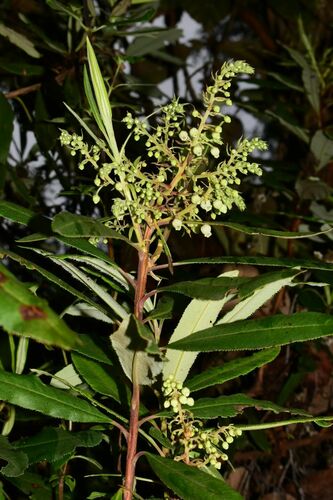
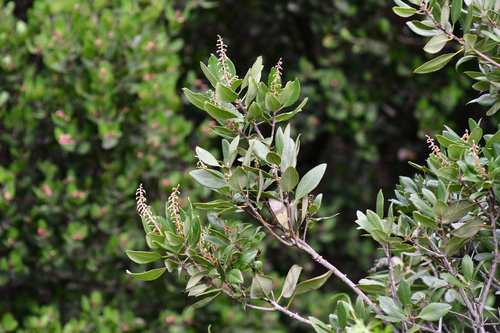
A shrub. It can be low and spreading or upright. It grows about 30-200 cm high. The branches are covered with fine silvery hairs and brownish bristles. The leaves are oblong. They are 15 cm long. They are thick and leathery. The leaves are deep green. They have blunt teeth. The leaves are shiny and have very easy to see veins. The leaves often turn red in winter. The flowers are small and red or white. The fruit are white or sometimes red and 12 mm wide.
Edible Uses
The fruit can be eaten raw or cooked. It has a good flavour — sweet and juicy early in the season, though it tends to become rather tasteless later on. Each fruit is about 12mm in diameter.
Traditional Uses
The fruit are eaten.
This uses section is brief — help expand it
Medicinal Uses
None known.
Distribution
It is a warm temperate plant. It grows in alpine and subalpine regions in New Zealand. It needs a good moist soil rich in humus. It suits hardiness zones 8-9.
Where It Grows
New Zealand*,
Cultivation
Prefers a moist but not boggy humus rich soil in shade or semi-shade. A peat and moisture loving species, it requires a lime-free soil. Plants are not very hardy in Britain, they are only likely to succeed outdoors in the milder areas of the country. A polymorphic species, it is very variable in leaf size and shape. Plants in this genus are notably resistant to honey fungus.
Propagation
Seed requires cold stratification — pre-chill for 4–10 weeks, then surface sow in lime-free compost in a shady part of the greenhouse, keeping the compost moist. Germination usually occurs within 1–2 months at 20°C, but seedlings are prone to damping off. Water carefully, ensure good ventilation, and consider watering with a garlic infusion to reduce damping off. Prick out seedlings into individual pots at about 25mm tall and grow on in light shade in the greenhouse for at least the first winter. Plant out in late spring or early summer. Protect from spring frosts for the first few years outdoors, as seedlings are susceptible. Leaves remain very small for the first few years. Cuttings of half-ripe wood, 3–6cm long, taken July/August in a shaded frame; roots form in late summer or spring, with a good success rate. Divide in spring just before new growth begins — larger clumps can go straight into permanent positions, but smaller clumps are best potted up in a cold frame until rooting well, then planted out in spring. Layering is also possible.
Other Uses
None known.
Notes
There are about 170 Gaultheria species. (At least all the ones in New Zealand have edible fruit)
Synonyms
Also Known As
Koropuku, Rohutu, Takapo, Taupuka
References (9)
- Brooker, 1986,
- Brooker, et al
- Crowe, A., 1997, A Field Guide to the Native Edible Plants of New Zealand. Penguin. p 53
- Etherington, K., & Imwold, D., (Eds), 2001, Botanica's Trees & Shrubs. The illustrated A-Z of over 8500 trees and shrubs. Random House, Australia. p 343
- Facciola, S., 1998, Cornucopia 2: a Source Book of Edible Plants. Kampong Publications, p 95
Show all 9 references Hide references
- Fl. ins. austr. 34. 1786
- Matthews, J., 1987, New Zealand Native Plants for your Garden. Pacific Publishers, p 50
- Plants for a Future database, The Field, Penpol, Lostwithiel, Cornwall, PL22 0NG, UK. http://www.scs.leeds.ac.uk/pfaf/
- Skinner, G. & Brown, C., 1981, Simply Living. A gatherer's guide to New Zealand's fields, forests and shores. Reed. p 38
More from Ericaceae
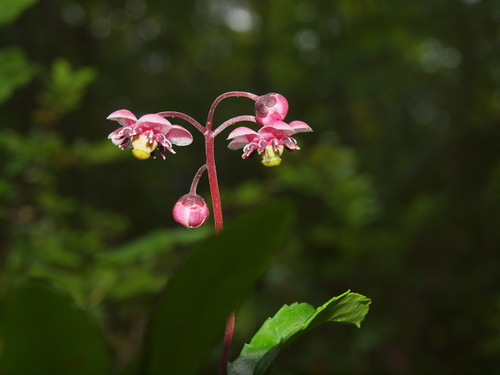
Chimaphila umbellata
Spotted wintergreen, Prince's pine
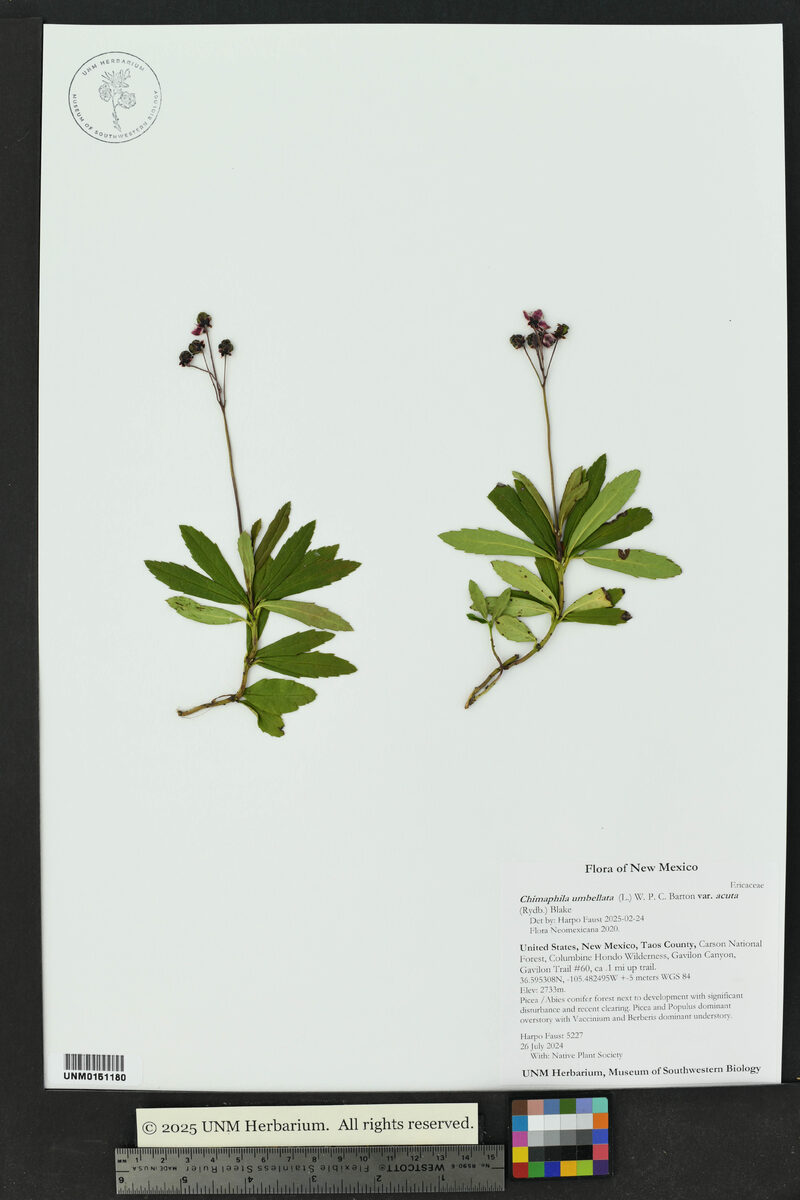
Chimaphila umbellata ssp. acuta
Pipsissewa
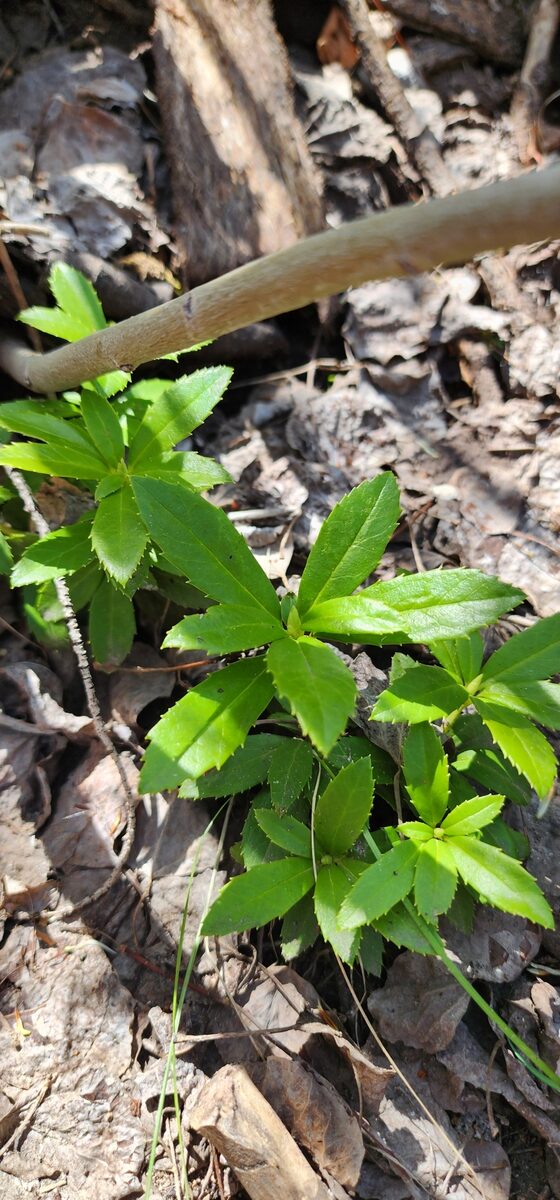
Chimaphila umbellata ssp. occidentalis
Pipsissewa, prince’s pine
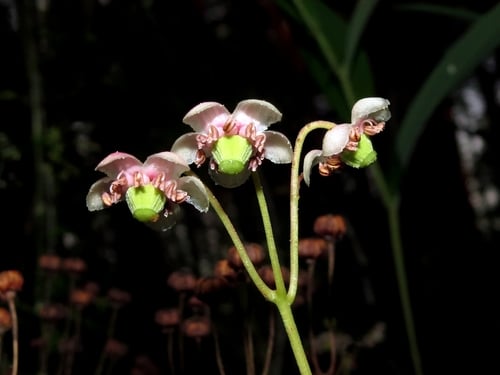
Chimaphila umbellata subsp. cisatlantica
Pipsissewa, Prince's pine
Comarostaphylis discolor
Comarostaphylis diversifolia
Summer-holly, Mock Arbutus