Gaultheria shallon
Pursh
Salal, Shallon, Western wintergreen
iNaturalist· cc-by-nc
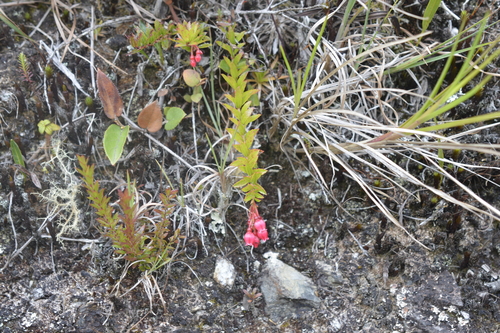
(c) maxillarynode, some rights reserved (CC BY-NC)
iNaturalist· cc-by
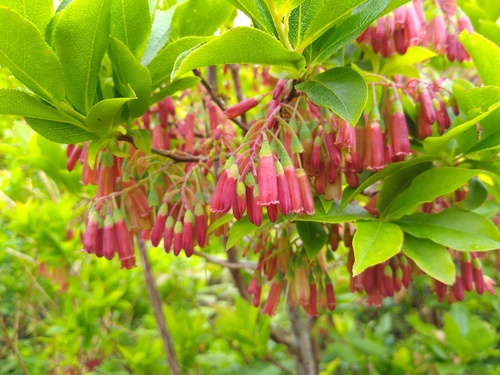
(c) Gavin Slater, some rights reserved (CC BY)
iNaturalist· cc-by
(c) Gavin Slater, some rights reserved (CC BY)
Summary
Source: WikipediaGaultheria shallon is an evergreen shrub in the heather family (Ericaceae), native to western North America. Common names include salal (), shallon, or (mainly in Britain) gaultheria.
Description
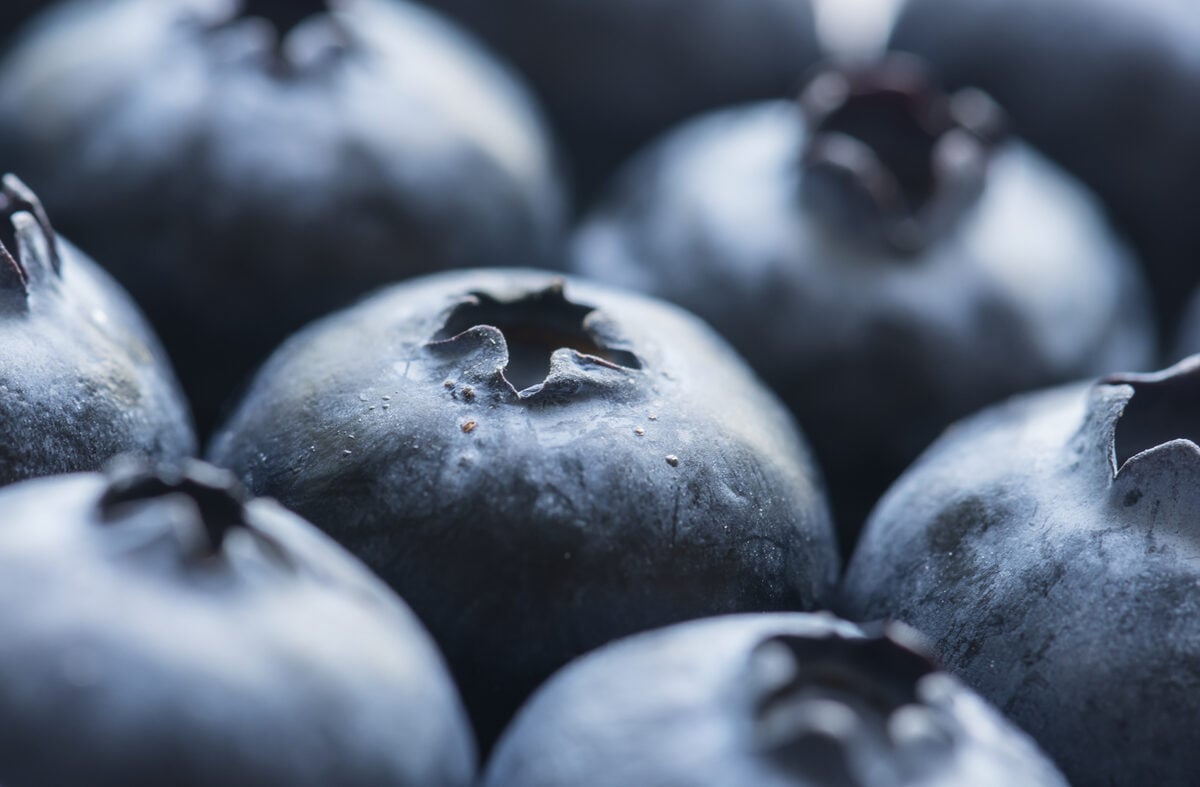
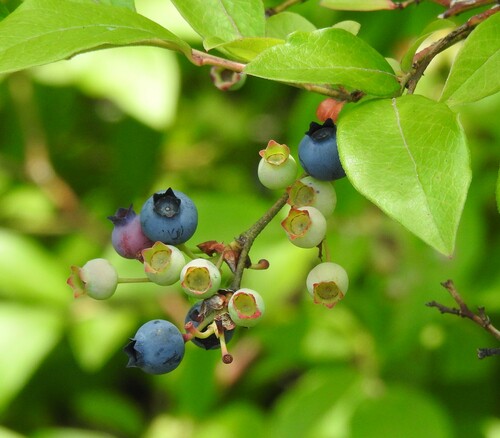
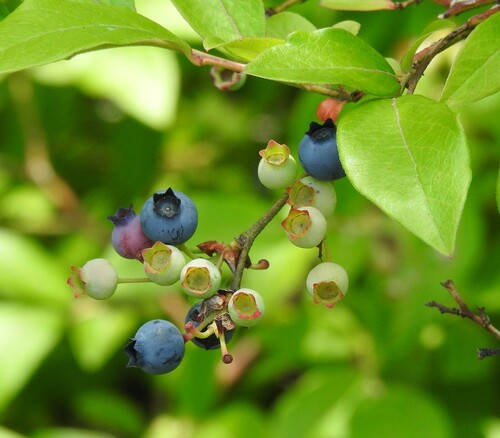
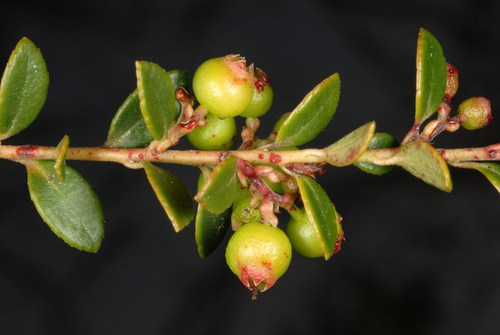
A suckering shrub. It grows to 1.2-3 m high. It spreads by underground suckers. The branches also take root along the ground. The leaves are broadly oval and 10 cm long. The flowers occur in loose flower clusters. They are white or pink and at the end of branches. The fruit are fleshy and purple. They are 12 mm long. They have many small seeds. The fruit are edible.
Edible Uses
The fruit can be eaten raw, cooked, or dried for later use. It is sweet and juicy with a pleasant flavour and makes good eating straight from the plant. The fruit, which is about 10mm in diameter and produced over several weeks in late summer, can also be made into preserves, pies, and drinks, or dried and used like raisins. A pleasant tea can also be made from the leaves.
Traditional Uses
The fruit can be eaten fresh or dried. The fruit are used in preserves, pies, jellies, jams and syrup. They can be dried and stored. They can be eaten like raisins. The fruit are used for drinks and made into wines.
Medicinal Uses
A poultice of toasted, pulverised leaves has been applied to cuts, and a poultice of chewed leaves has been applied to burns and sores. The leaves have been chewed to dry the mouth. An infusion of the leaves has been used as a stomach tonic and as a treatment for diarrhoea, coughs, TB, and similar complaints.
Distribution
It is a temperate plant. It is native to North America. It grows naturally in mixed evergreen forests. It suits shady spots. It is very cold hardy. It does well in moist, humus rich, peaty soil. It suits hardiness zones 5-9.
Where It Grows
Alaska, Australia, Britain, Canada, Europe, North America*, Tasmania, USA,
Cultivation
Prefers a moist but not boggy humus rich soil in shade or semi-shade, but it can also succeed in full sun. A peat and moisture loving species, it requires a lime-free soil. One report says that it can succeed in dry shade and another that it can withstand considerable drought once it is established. Plants are hardy to about -20°c. A vigorous suckering plant, it can be invasive when growing in good conditions, but responds to cutting back. It also succeeds when planted under trees. Plants in this genus are notably resistant to honey fungus. An evergreen.
Propagation
Seed requires cold stratification — pre-chill for 4–10 weeks, then surface sow in lime-free compost in a shady part of the greenhouse and keep the compost moist. Germination is usually good, typically within 1–2 months at 20°C, but seedlings are prone to damping off. Water carefully, ensure good ventilation, and watering with a garlic infusion can also help prevent damping off. Prick out seedlings into individual pots when about 25mm tall and grow on in light shade in the greenhouse for at least their first winter. Plant out in late spring or early summer; seedlings are susceptible to spring frosts and may need protection for their first few years outdoors. Leaves remain very small for the first few years. Take cuttings of half-ripe wood 3–6cm long in July/August in a shaded frame; roots form in late summer or spring with a good success rate. Divide in spring when new growth is about 7cm tall. Divided plants can be slow to establish, so it is best to pot up clumps and grow them on in a shaded cold frame until rooting well, then plant out in spring.
Other Uses
A purple dye is obtained from the fruit, and a greenish-yellow dye from the infused leaves. Makes a ground cover plant for shady positions under trees, spreading slowly by suckers. Space plants about 90cm apart each way.
Other Information
They have been eaten in large amounts by Native Americans on the NW Pacific coast.
Notes
There are about 170 Gaultheria species.
Synonyms
References (29)
- Beckstrom-Sternberg, Stephen M., and James A. Duke. "The Foodplant Database." http://probe.nalusda.gov:8300/cgi-bin/browse/foodplantdb.(ACEDB version 4.0 - data version July 1994)
- Bodkin, F., 1991, Encyclopedia Botanica. Cornstalk publishing, p 488
- Brickell, C. (Ed.), 1999, The Royal Horticultural Society A-Z Encyclopedia of Garden Plants. Convent Garden Books. p 458
- Cundall, P., (ed.), 2004, Gardening Australia: flora: the gardener's bible. ABC Books. p 626
- Elias, T.S. & Dykeman P.A., 1990, Edible Wild Plants. A North American Field guide. Sterling, New York p 160
Show all 29 references Hide references
- Esperanca, M. J., 1988. Surviving in the wild. A glance at the wild plants and their uses. Vol. 2. p 194
- Etherington, K., & Imwold, D., (Eds), 2001, Botanica's Trees & Shrubs. The illustrated A-Z of over 8500 trees and shrubs. Random House, Australia. p 344
- Etkin, N.L. (Ed.), 1994, Eating on the Wild Side, Univ. of Arizona. p 74
- Facciola, S., 1998, Cornucopia 2: a Source Book of Edible Plants. Kampong Publications, p 96
- Fl. Amer. sept. 1:283. 1813-1814
- Glowinski, L., 1999, The Complete Book of Fruit Growing in Australia. Lothian. p 181
- Hedrick, U.P., 1919, (Ed.), Sturtevant's edible plants of the world. p 326
- Heller, C. A., 1962, Wild Edible and Poisonous Plants of Alaska. Univ. of Alaska Extension Service. p 40
- Jackes, D. A., Edible Forest Gardens
- Kermath, B. M., et al, 2014, Food Plants in the Americas: A survey of the domesticated, cultivated and wild plants used for Human food in North, Central and South America and the Caribbean. On line draft. p 385
- Kiple, K.F. & Ornelas, K.C., (eds), 2000, The Cambridge World History of Food. CUP p 1847
- Lyle, S., 2006, Discovering fruit and nuts. Land Links. p 221
- MacKinnon, A., et al, 2009, Edible & Medicinal Plants of Canada. Lone Pine. p 122
- Moerman, D. F., 2010, Native American Ethnobotany. Timber Press. p 243
- Morley, B. & Everard, B., 1970, Wild Flowers of the World. Ebury press. Plate 161
- Plants for a Future database, The Field, Penpol, Lostwithiel, Cornwall, PL22 0NG, UK. http://www.scs.leeds.ac.uk/pfaf/
- Saunders, C.F., 1948, Edible and Useful Wild Plants. Dover. New York. p 102
- Self, M., 199, Phoenix Seeds catalogue. p 17
- Turner, N., 1995, Food Plants of Coastal First Peoples. Royal BC Museum Handbook p 77
- USDA, ARS, National Genetic Resources Program. Germplasm Resources Information Network - (GRIN). [Online Database] National Germplasm Resources Laboratory, Beltsville, Maryland. Available: www.ars-grin.gov/cgi-bin/npgs/html/econ.pl (10 April 2000)
- Wiersema, J. H. & Leon, B., 2013, World Economic Plants. A Standard Reference CRC Press. 2nd Ed. p 319
- World Checklist of Useful Plant Species 2020. Royal Botanic Gardens, Kew
- Young, J., (Ed.), 2001, Botanica's Pocket Trees and Shrubs. Random House. p 408
- www.desert-tropicals.com