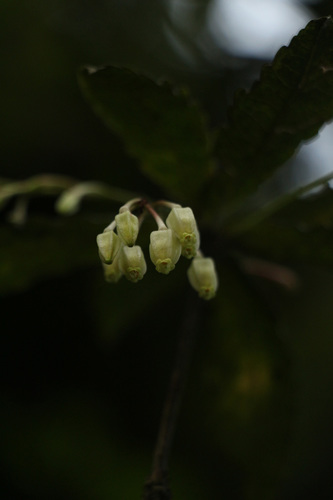
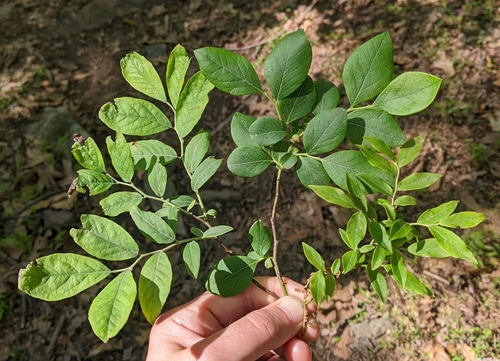
Gaultheria trichophylla
Royle
East wintergreen, Checkberry, Himalayan snowberry
iNaturalist· cc-by-nc-sa
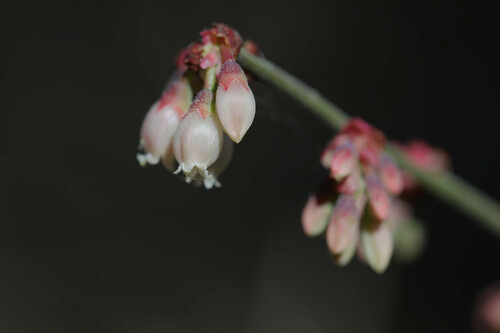
(c) Phuentsho, some rights reserved (CC BY-NC-SA), uploaded by Phuentsho
iNaturalist· cc-by
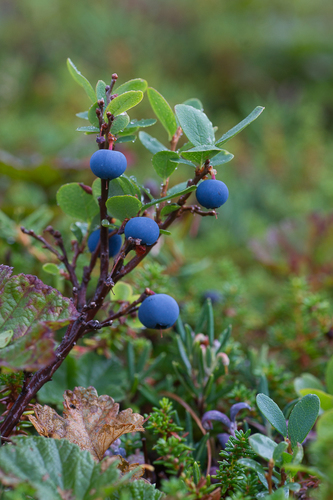
(c) Morten Ross, some rights reserved (CC BY)
iNaturalist· cc-by-nc
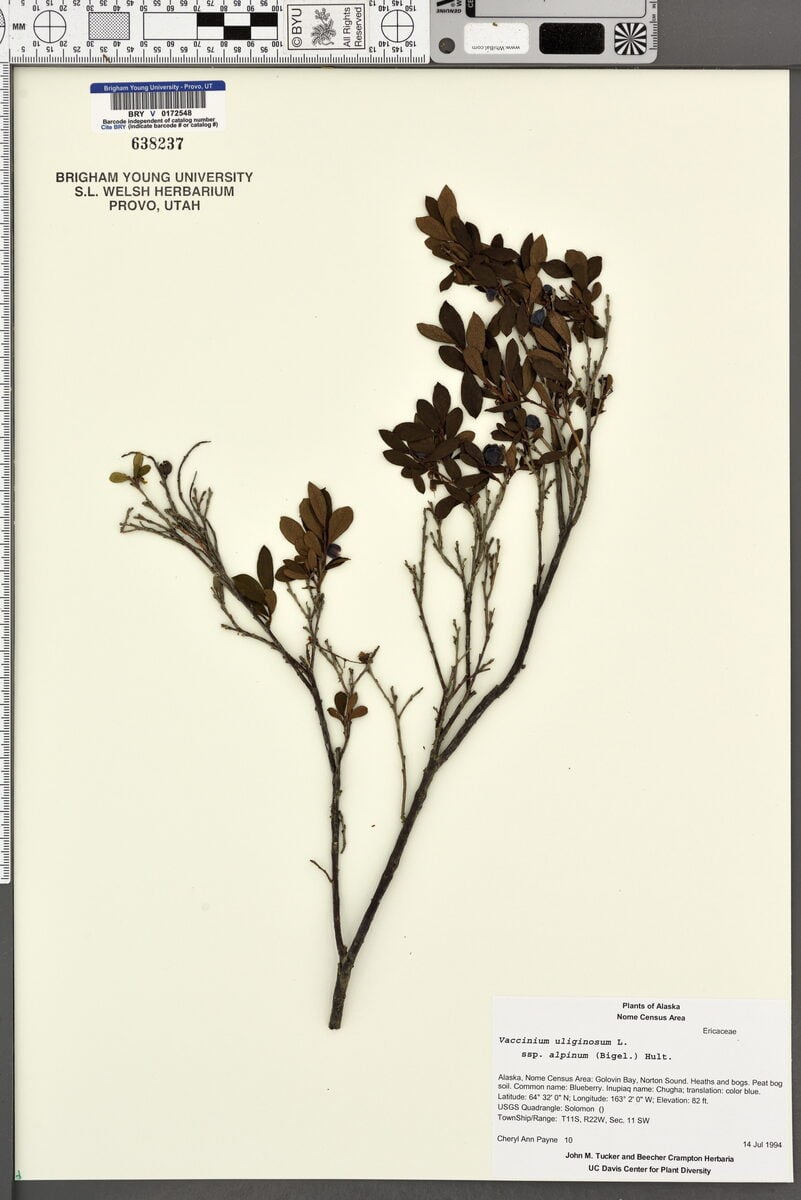
(c) Basu Dev Poudel, some rights reserved (CC BY-NC)
Summary
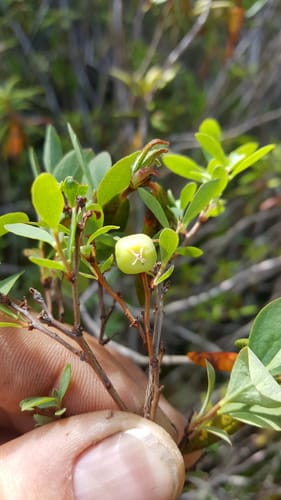
Source: WikipediaGaultheria trichophylla, commonly known as Himalayan snowberry, is a species of plant in the heath and heather family, native to the Himalayas. The flowers range in color from red, to pink, to white; fruits are blue-colored berries; and leaves are approximately 3 mm (0.12 in) in length. In volume one of his book Illustrations of the Botany and Other Branches of the Natural History of the Himalayan Mountains, and of the Flora of Cashmere, J. Forbes Royle wrote this about the natural habitat of G. trichophylla: "This plant is an inhabitant of cold and lofty situations, as Jumnotri, the top of Choor, and of the mountains surrounding Cashmere, and like many plants of such situations is furnished with setae on the younger upper parts of branches, probably to protect them from the severity of the cold. The calyx is adherent to the lower part of the capsule, becomes succulent, and forms an edible fruit in the month of September."
Description
A small shrub which lies along the ground. It has wiry, branches with rough hairs. The leaves have short stalks. The leaves are alternate. They are 0.5-1.4 cm long by 0.2-0.4 cm wide. The leaves are oblong with rounded teeth along the edge. The flowers occur singly. They are in the axils of leaves and are pinkish white. The fruit is a capsule. It is round and covered with a fleshy blue outer ring of petals. It is edible. There are many very small seeds.
Edible Uses
The blue, ovoid fruit can be eaten raw or cooked and measures approximately 10 x 6mm.
Traditional Uses
The ripe fruit are eaten raw. They are sweet and have a scent. The leaves are used for tea.
This uses section is brief — help expand it
Medicinal Uses
None known.
Distribution
A subtropical plant. In Nepal it grows from 2700-4500 m altitude. In Uttar Pradesh in India it grows between 2500-4000 m altitude. In Sichuan and Yunnan.
Where It Grows
Asia, Bhutan, China, Himalayas, India, Indochina, Myanmar, Nepal, New Zealand, Northeastern India, Pakistan, SE Asia, Sikkim, Tibet,
Cultivation
Prefers a moist but not boggy humus rich soil in sun or semi-shade. A peat and moisture loving species, it requires a lime-free soil. Prefers a fairly light open position so long as the soil is kept moist. This species is not hardy in the colder areas of the country, it tolerates temperatures down to between -5 and -10°c. This species does not always fruit well in Britain. The plant can make a good nesting place for mice, these mice then eat the bark of the stems in winter causing die-back. The bruised leaves release a hot, aromatic fragrance. Plants in this genus are notably resistant to honey fungus.
Propagation
Seed requires cold stratification — pre-chill for 4–10 weeks, then surface sow in lime-free compost in a shady part of the greenhouse and keep the compost moist. Germination is usually good, typically within 1–2 months at 20°C, but seedlings are prone to damping off. Water carefully, ensure good ventilation, and watering with a garlic infusion can also help prevent damping off. Prick out seedlings into individual pots when about 25mm tall and grow on in light shade in the greenhouse for at least their first winter. Plant out in late spring or early summer; seedlings are susceptible to spring frosts and may need protection for their first few years outdoors. Leaves remain very small for the first few years. Take cuttings of half-ripe wood 3–6cm long in July/August in a shaded frame; roots form in late summer or spring with a good success rate. Divide in spring when new growth is about 7cm tall. Divided plants can be slow to establish, so it is best to pot up clumps and grow them on in a shaded cold frame until rooting well, then plant out in spring.
Other Uses
A useful ground cover for shady places.
Production
In the Himalayas it flowers May-June and fruits July to October.
Other Information
The fruit are eaten by children.
Notes
There are about 170 Gaultheria species.
Synonyms
Also Known As
Aak-mrep, Ani gnonzing, Bher, Bhui kaphal, Bhuil, Bhuinala, Chhewaa, Gundung, Jheri, Dwarf false snowberry, Saachaan, Shachando, Sombu, Tunglu, Vish
References (13)
- Chettri, N. & Sharma, E., Non-timber Forest Produce: Utilization, Distribution and Status in the Khangchendzonga Biosphere Reserve, Sikkim, India.
- Flora of Pakistan. www.eFloras.org
- Gautam, R. S., et al, 2020, Wild Edible Fruits of Nepal. Int. J. Appl. Sci. Biotechnol. Vol 8(3): 289-304
- Ill. bot. Himal. Mts. 1(8):260; 2(8): t. 63, fig. 3. 1835
- Manandhar, N.P., 2002, Plants and People of Nepal. Timber Press. Portland, Oregon. p 242
Show all 13 references Hide references
- Negi, K.S., 1988, Some little known wild edible plants of U.P. Hills. J. Econ. Tax. Bot. Vol. 12 No. 2 pp 345-360
- Plants for a Future database, The Field, Penpol, Lostwithiel, Cornwall, PL22 0NG, UK. http://www.scs.leeds.ac.uk/pfaf/
- Polunin, O., & Stainton, A., 2006, Flowers of the Himalaya, Oxford India Paperbacks. p 234
- Rawat, G.S., & Pangtey, Y.P.S., 1987, A Contribution to the Ethnobotany of Alpine Regions of Kumaon. J. Econ. Tax. Bot. Vol. 11 No. 1 pp 139-147
- Skinner, G. & Brown, C., 1981, Simply Living. A gatherer's guide to New Zealand's fields, forests and shores. Reed. p 39 (As Gaultheria nana - possibly incorrect)
- Tsering, J., et al, 2017, Ethnobotanical appraisal on wild edible plants used by the Monpa community of Arunchal Pradesh. Indian Journal of Traditional Knowledge. Vol 16(4), October 2017, pp 626-637
- Upreti, K., et al, 2010, Diversity and Distribution of Wild Edible Fruit Plants of Uttarakhand. Bioversity Potentials of the Himalaya. p 172
- Uprety, Y., et al, 2016, Traditional use and management of NTFPs in Kangchenjunga Landscape: implications for conservation and livelihoods. Journal of Ethnobiology and Ethnomedicine (2016) 12:19