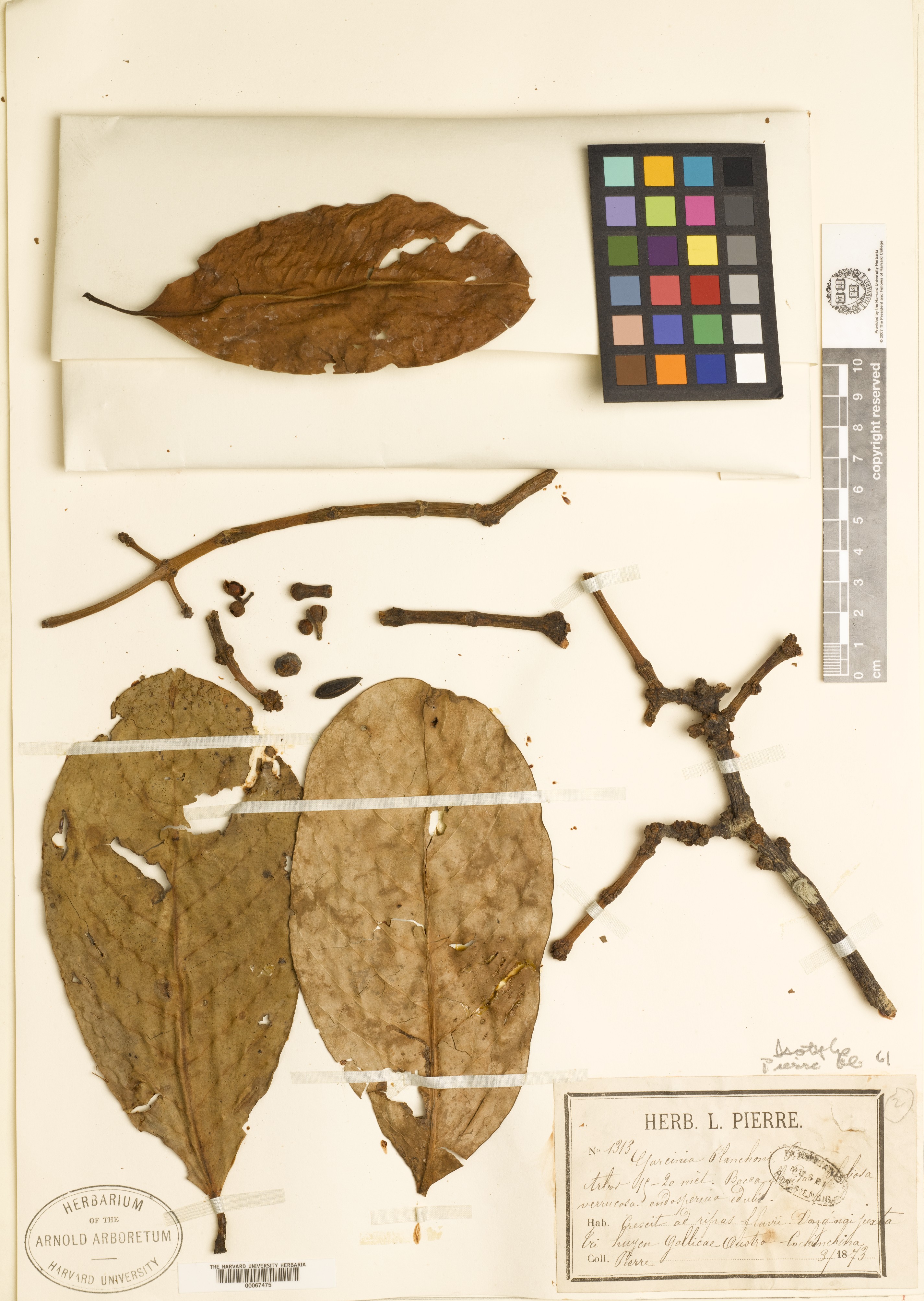
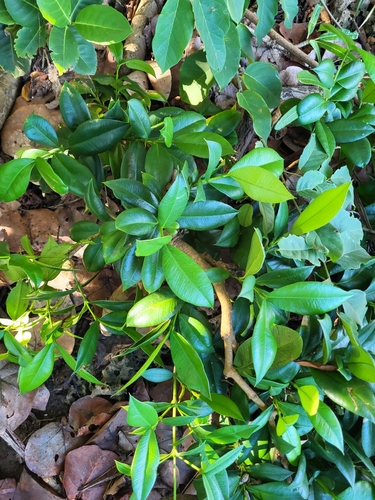
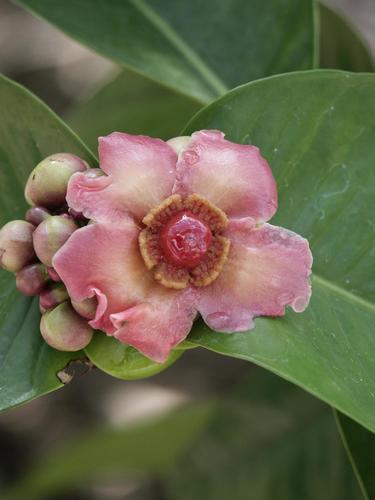
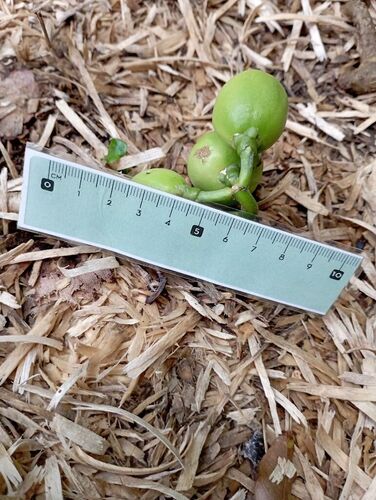
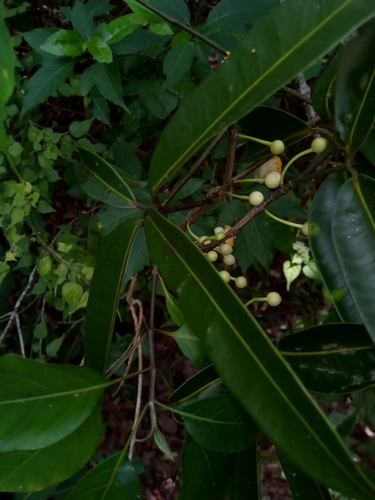
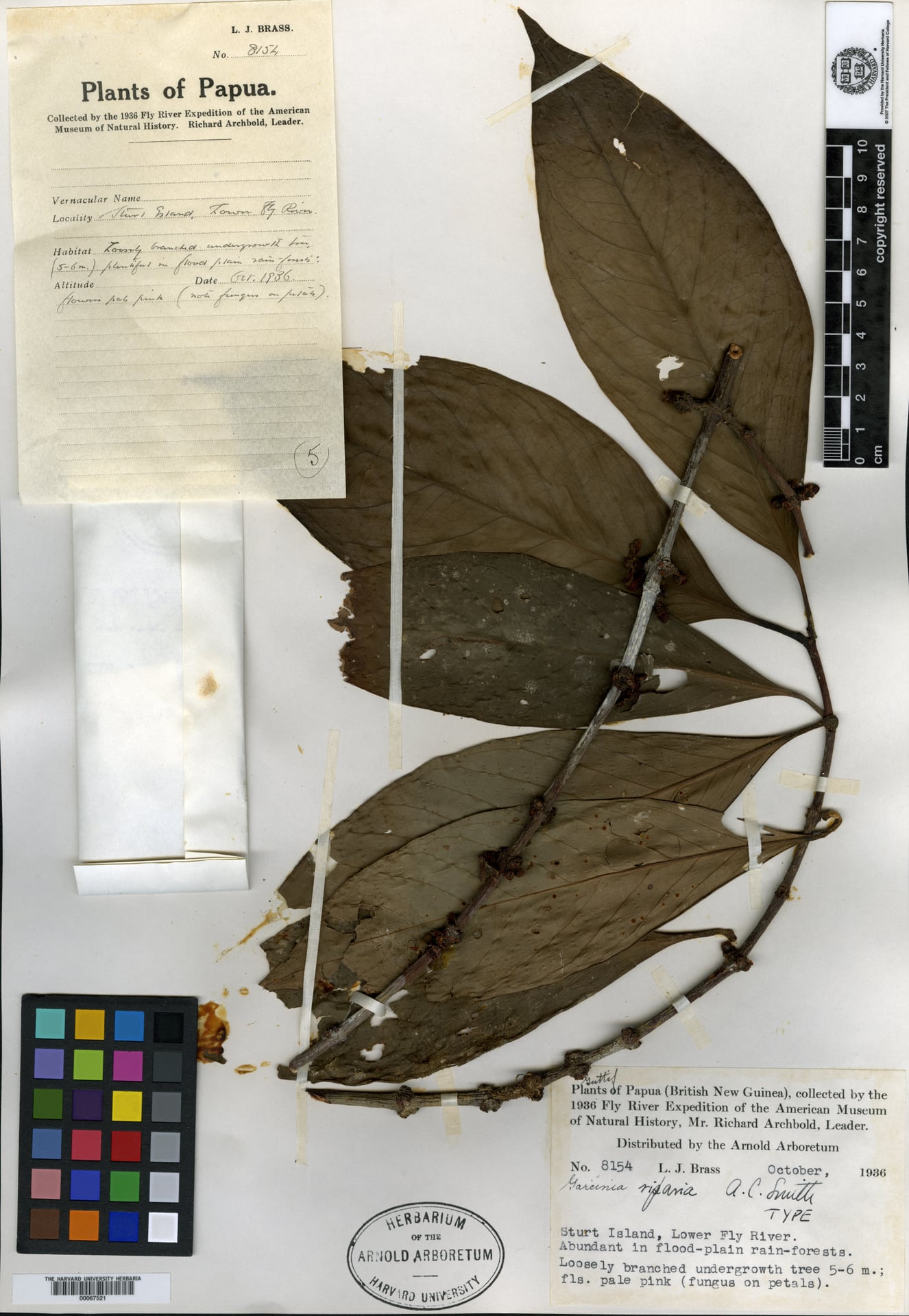
Garcinia gummi-gutta
(L.) Roxb.
Malabar tamarind
iNaturalist· cc-by-sa
(c) Markoramses, some rights reserved (CC BY-SA)
iNaturalist· cc-by-nc-nd
(c) Livia Iacolare, some rights reserved (CC BY-NC-ND)
Summary
Source: WikipediaGarcinia gummi-gutta is a tropical species of Garcinia native to South Asia and Southeast Asia. Common names include Garcinia cambogia (a former scientific name), as well as brindle berry, and Malabar tamarind. The fruit looks like a small pumpkin and is green to pale yellow in color. Although it has received considerable media attention purporting its effects on weight loss, there are reports of liver toxicity associated with the Hydroxycut commercial preparation containing the fruit extract, with clinical evidence indicating it has no significant effect on weight loss.
Description
A tree. It grows 14 m high. The leaves are sword shaped and 13 cm long. Male and female flowers are separate. Male flowers are yellow and in groups of 3-4 in the axils of leaves. The female flowers are larger and in the axils of leaves near the ends of branches. The fruit is orange coloured and segmented. It is about 5-7 cm across. It has a thin, smooth skin. The pulp is yellow and sweet. There are 6-8 seeds.
Edible Uses
Garcinia gummi-gutta is used in cooking, including in the preparation of curries to add a sour flavor. The fruit rind and extracts of Garcinia species are used in many traditional recipes used in food preparation in Southeast Asian countries. In the Indian Ayurvedic medicine, "sour" flavors are said to activate digestion. The extract and rind of G. gummi-gutta is a curry condiment in India. It is an essential souring ingredient in the southern Thai variant of kaeng som, a sour curry. In southwest India, the Coorg people make a vinegar known as kachampuli from the species' fruit.
Traditional Uses
It is used in Asian cooking to give acid flavours. The rind is dried and used to sour tamarind like condiments for fish dishes and curries. The leaves are used as a substitute for tamarind. The fruit are also pickled. The fruit is used as juice. The seeds yield an edible fat.
Medicinal Uses
A decoction made from the plant (part not specified) is used in the treatment of rheumatism and bowel complaints. An extract obtained from the mature fruit rind, Hydroxy Citric Acid, is used as a treatment against obesity.
Known Hazards
In addition to possible liver damage, hydroxycitric acid can cause dry mouth, nausea, gastrointestinal discomfort, and headaches.
Distribution
It is a tropical plant. It suits the hot, wet, tropical lowlands. In Sri Lanka it grows up to 500 m above sea level.
Where It Grows
Asia, China, Himalayas, India, Indochina, Indonesia, Malaysia, Nepal, Northeastern India, Philippines, SE Asia, Sri Lanka, Thailand,
Cultivation
Plants can be grown from fresh seeds. The hard seed coat needs to be broken. Seeds should be soaked in water before planting.
Propagation
Seed - best sown as soon as it is ripe, though viability can be maintained for 1 - 2 months in moist storage at 20°c. We have no specific information on this species, but the seed of most members of the genus can be slow to germinate, even if sown fresh, often taking 6 months or more.
Other Uses
Gamboge, a gum-resin obtained from the plant, is used as a yellow dye, as an illuminant and in varnishes, water colours etc. Gamboge is a gum-resin which is obtained from the bark, branches and fruits of several species in the genus Garcinia. It contains around 70 - 80% resin with 15 - 25% gum and is used primarily as a pigment, being used to dye cloth (the yellow silken robes of Buddhist monks are often dyed with it), as well as supplying a golden-yellow colouring to varnishes, lacquers, paints, ink, water colours etc. An extract of the fruit is used as an ingredient in commercial cosmetic preparations as a skin conditioner. An extract of the fruit peel is used as an ingredient in commercial cosmetic preparations as an astringent. The wood is used in construction and furniture making. The tree provides good shade for shade-loving crops such as ginger, or it can be grown in association with other field crops, including medicinal plants. The tree can also be grown as a perennial intercrop with coconut and areca nut.
Production
In southern India plants fruit April to May. In Northeastern India fruit are available May to July.
Other Information
Available in Chinese stores in Australia. It is a cultivated fruit tree.
Notes
There are about 300 Garcinia species.
Nutrition
| Part | Moisture | kJ | kcal | Protein | Vit A | Vit C | Iron | Zinc |
|---|---|---|---|---|---|---|---|---|
| Fruit | 86.9 | — | 39 | 0.6 | — | — | — | — |
Synonyms
Also Known As
Aradal, Akouk, Dharambe, Gamboge, Goraka, Inli, Kadumpuli, Kana goraka, Karukkampuli, Kodakkapuli, Kodampuli, Kodapuli, Kodukka puli, Kouk, Kowagota, Oante huli, Oante puli, Pinampuli, Rata goraka, Simachinta, Simai hunase, Upagi mara, Vilaiti, Vilati-amli
References (26)
- Ambasta, S.P. (Ed.), 2000, The Useful Plants of India. CSIR India. p 229
- Arora, R. K., 2014, Diversity in Underutilized Plant Species - An Asia-Pacific Perspective. Bioversity International. p 73
- Biswas, S. C., et al, 2018, Diversity of wild edible minor fruits used by the ethnic communities of Tripura, India. Indian Journal of Traditional Knowledge. Vol 17(2), April 2018, pp 282-289
- Burkill, I.H., 1966, A Dictionary of the Economic Products of the Malay Peninsula. Ministry of Agriculture and Cooperatives, Kuala Lumpur, Malaysia. Vol 1 (A-H) p 1063
- Chandrashekara, U. M., 2009, Tree species yielding edible fruit in the coffee-based homegardens of Kerala, India: their diversity, uses and management. Food Sec. 1:361-370
Show all 26 references Hide references
- Facciola, S., 1998, Cornucopia 2: a Source Book of Edible Plants. Kampong Publications, p 79
- Flowerdew, B., 2000, Complete Fruit Book. Kyle Cathie Ltd., London. p 161
- Hedrick, U.P., 1919, (Ed.), Sturtevant's edible plants of the world. p 322
- J. B. A. P. M. de Lamarck & L. A. J. Desrousseaux, Encycl. 3:701. 1792 - an illegitimate, superfluous name (ICBN Art. 52)
- Jose, D. T. & Sasidharan, N., 2016, Checklist of wild edible plants of Aralam Wildlife sanctuary, Kerala, India. South Indian Journal Of Biological Sciences 2016; 2(1); 141‐144
- Macmillan, H.F. (Revised Barlow, H.S., et al) 1991, Tropical Planting and Gardening. Sixth edition. Malayan Nature Society. Kuala Lumpur. p 300
- Martin, F. W., et al, 1987, Perennial Edible Fruits of the Tropics. USDA Handbook 642 p 28 (As Garcinia cambogia)
- Narayanan, M. K., R., et al, 2011, Ethnobotanically important trees and their uses by Kattunaikka tribe in Wayanad Wildlife Sanctuary, Kerala, India. Journal of Medicinal Plants research. 5(4): 704-612
- Nazarudeen, A., 2010, Nutritional composition of some lesser-known fruits used by the ethnic communities and local folks of Kerala. Indian Journal or Traditional Knowledge. Vol. 9(2): 398-402
- Rajapaksha, U., 1998, Traditional Food Plants in Sri Lanka. HARTI, Sri Lanka. p 108 (As Garcinia cambogia)
- Ramachandran, V.S. and Nair, V.J., 1981, Ethnobotanical studies in Cannanore District, Kerala State (India). J Econ. Tax. Bot. Vol 2 pp 65-72
- Ramachandran,V. S., & Udhayavani, C., 2013, Knowledge and uses of wild edible plants by Paniyas and Kurumbas of Western Nilgiris, Tamil Nadu. Indian Journal of Natural Products and Resources. 4(4) December 2013, pp 412-418
- Ravikrishna, S., 2011, Ethno-medico-botanical survey on Wild Edible fruits of Udupi Taluq, Udupi p 75
- Seidemann J., 2005, World Spice Plants. Economic Usage, Botany, Taxonomy. Springer. p 161 (As Garcinia cambogia)
- Singh, H.B., Arora R.K.,1978, Wild edible Plants of India. Indian Council of Agricultural Research, New Delhi. p 76
- Solomon, C., 2001, Encyclopedia of Asian Food. New Holland. p 2, 165
- Tyagi, R. K., et al, 2004, Conservation of Spices Germplasm in India. Indian J. Plant Genet. Resour. 17(3): 163-174 (As Garcinia cambogia)
- Ulian, T., et al, 2020, Unlocking plant resources to support food security and promote sustainable agriculture. Plants, People, Planet. 2020;2:421–445.
- World Checklist of Useful Plant Species 2020. Royal Botanic Gardens, Kew
- www.worldagroforestrycentre.org/treedb/
- Yesodharan, K. & Sujana, K. A., 2007, Wild edible plants traditionally used by the tribes in the Parambokulam Wildlife Sanctuary, Kerala, India. Natural Product Radiance 6(1) pp 74-80