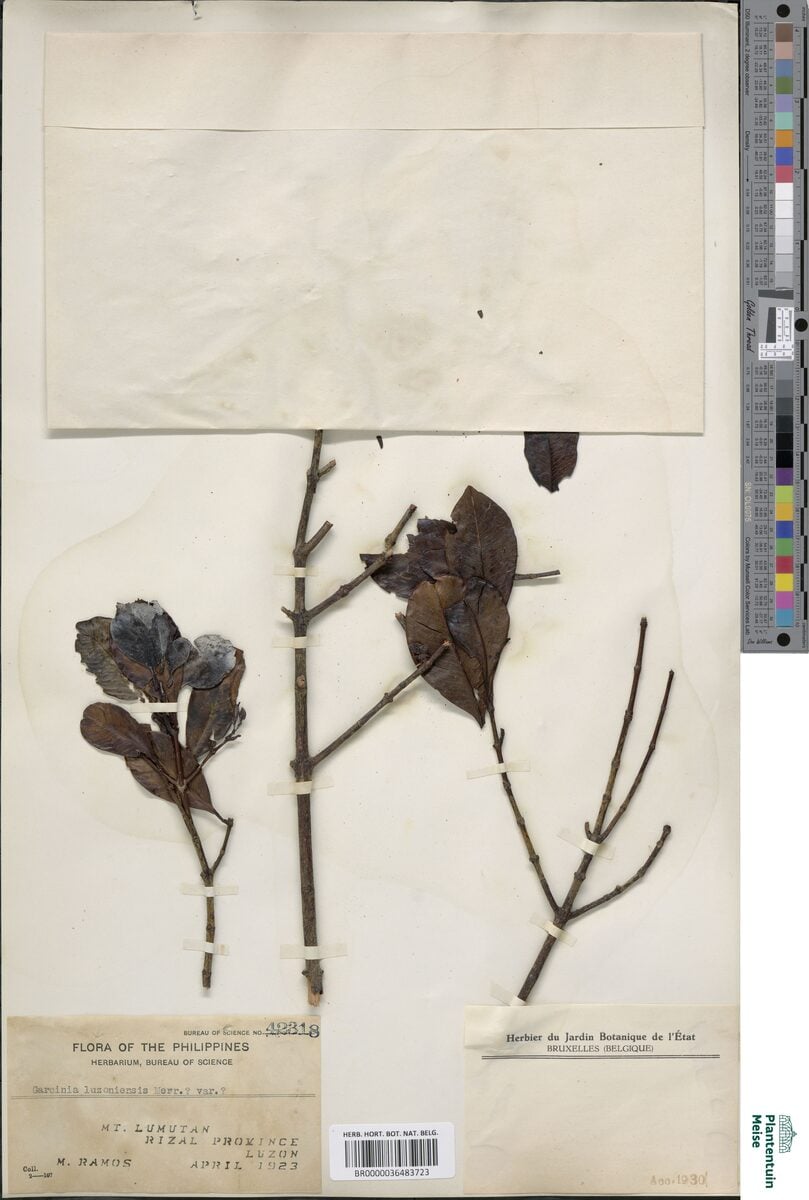
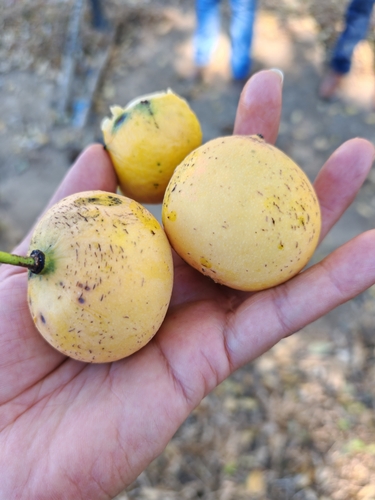
Garcinia travancorica
Bedd.
wikimedia· cc0
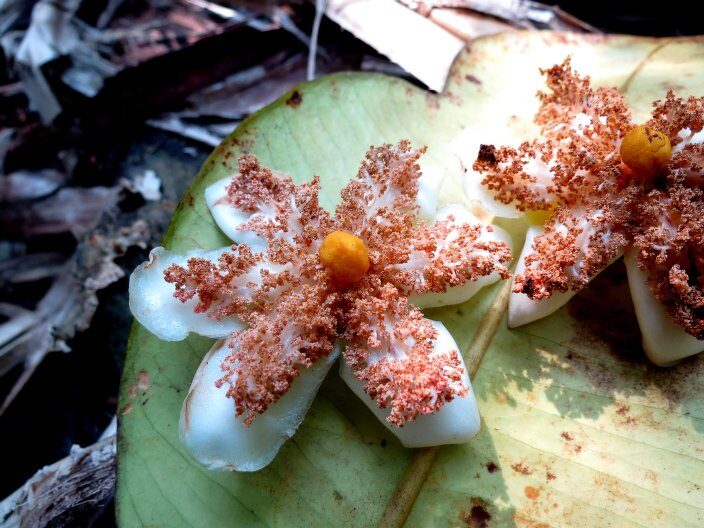
Wikimedia Commons - Govindoo
wikimedia· cc-by-sa
Wikimedia Commons - Yercaud-elango
Summary
Source: WikipediaGarcinia travancorica is a species of flowering plant in the family Clusiaceae. It is found only in India. It is threatened by habitat loss.
Description
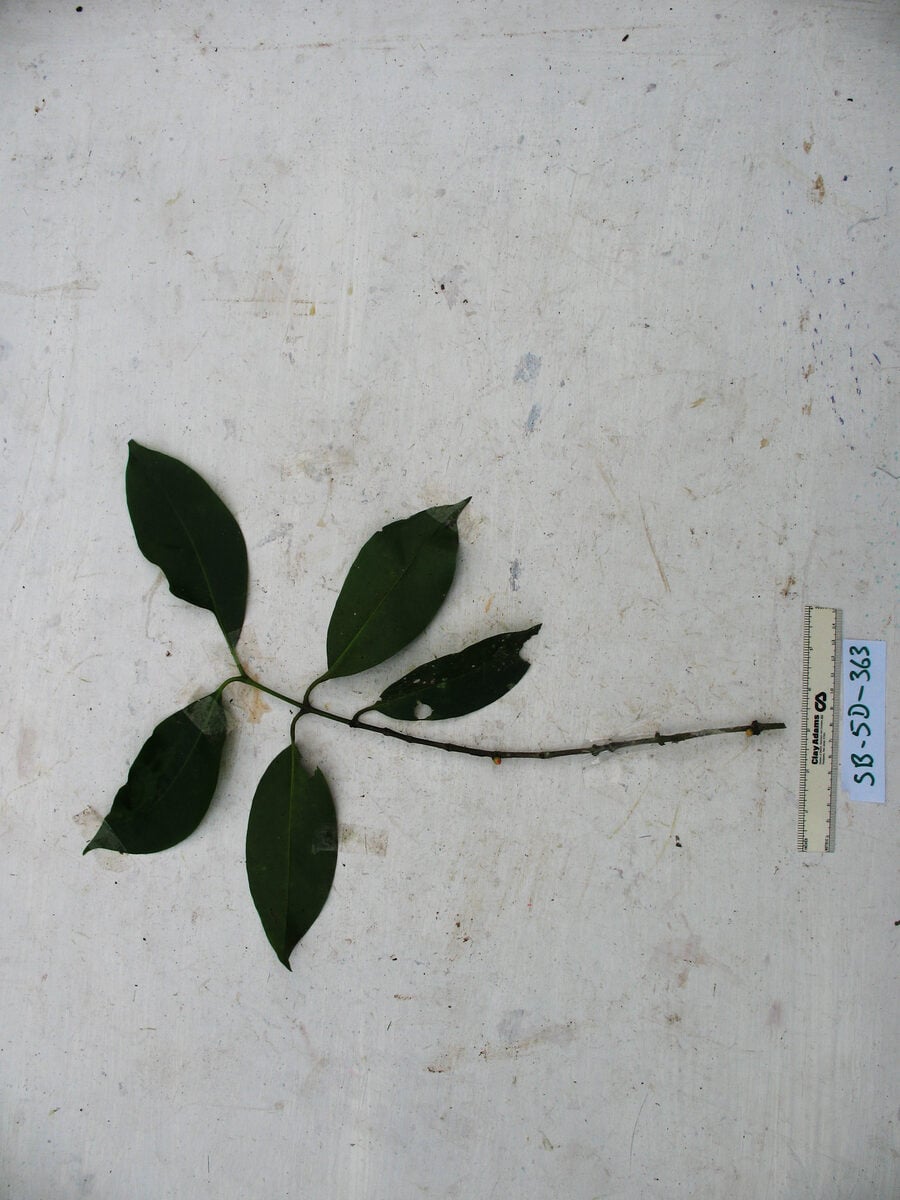
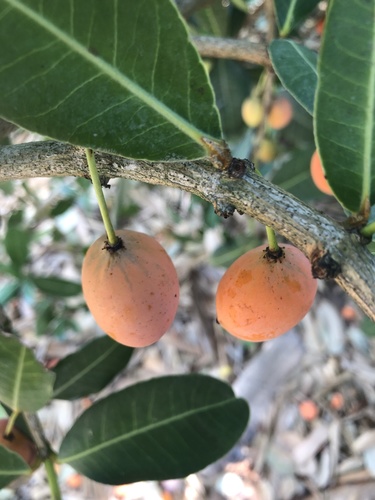
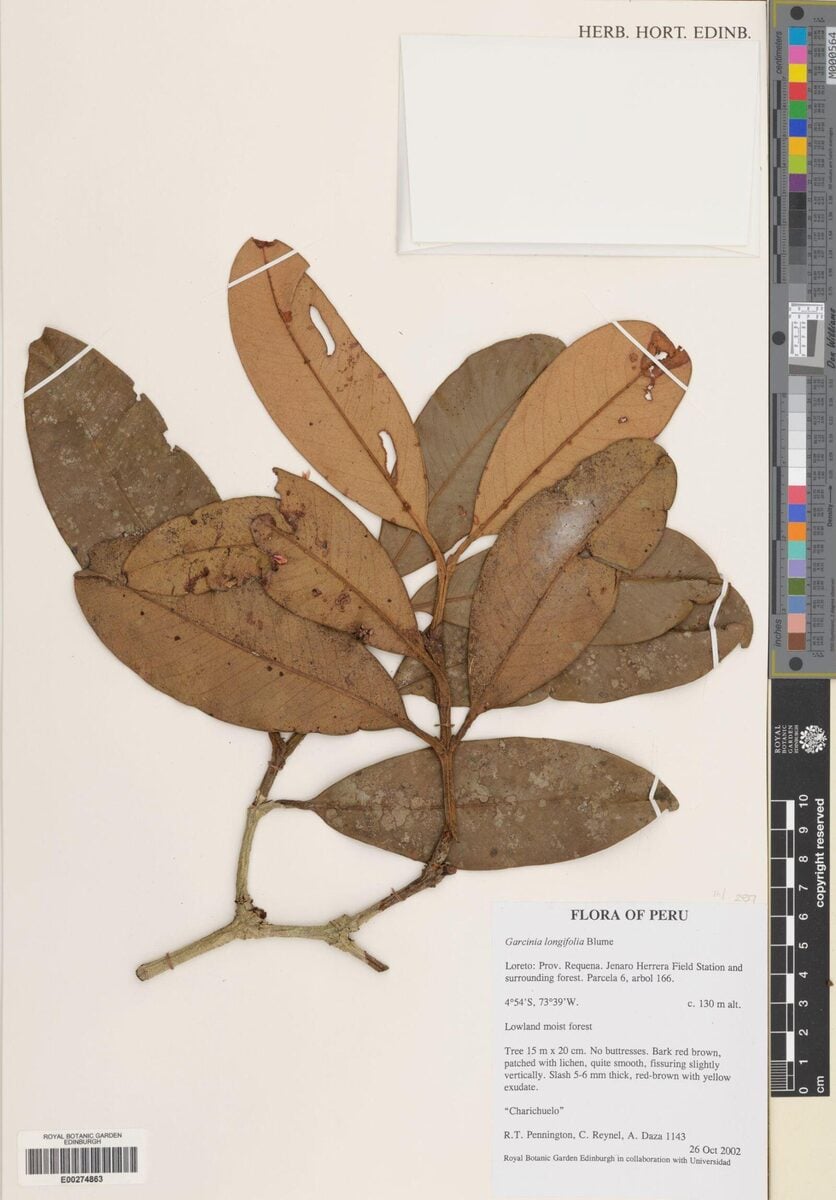
A tree. It grows 12 m tall. The small branches are 4 sided. The leaves are simple and opposite. The leaf bases overlap. The leaf blade is 5-11 cm long by 2-3 cm wide. They are narrowly oblong. The fruit is a berry 4-5 cm long by 1-3 cm wide. There are 1-2 brown seeds.
Medicinal Uses
Gamboge, a gum-resin obtained from the plant, is used as an ointment. Gamboge has been employed in western medicine as a hydragogue-cathartic, but is little used now.
Distribution
It is a tropical plant. It grows in wet evergreen forest. It occurs between 900-1,600 m above sea level in Tamil Nadu. It is in areas with a rainfall of 200-400 cm. The temperature is 16°-24°C.
Where It Grows
Asia, India,
Propagation
Seed - we have no specific information on this species, but the seed of most members of the genus can be slow to germinate, even if sown fresh, often taking 6 months or more.
Other Uses
Gamboge, a gum-resin obtained from the plant, is used as a yellow dye, as an illuminant and in varnishes, water colours etc. Gamboge is a gum-resin which is obtained from the bark, branches and fruits of several species in the genus Garcinia. It contains around 70 - 80% resin with 15 - 25% gum and is used primarily as a pigment, being used to dye cloth (the yellow silken robes of Buddhist monks are often dyed with it), as well as supplying a golden-yellow colouring to varnishes, lacquers, paints, ink, water colours etc. The wood is yellowish-brown with a pale yellow sapwood. It is hard, heavy and close grained.
Production
In southern India plants flower and fruit between May to September.
Also Known As
Attukaruka, Kolivala, Malampongu, Pulimaranga
References (1)
- Recovery plan for selected ETMP's and Conservation Models. Chapter 5 p 177 (Off internet)