Garcinia spicata
(Wight & Arn.) Hook. f.
iNaturalist· cc-by-nc
(c) raghu_menon, some rights reserved (CC BY-NC)
wikimedia· cc0
Wikimedia Commons - Daderot
wikimedia· cc0
Wikimedia Commons - Daderot
Summary
Source: WikipediaGarcinia spicata is a species of medium tree with 30 ft in the family Clusiaceae. It is native to India and Sri Lanka. The tree produces a fruit which is edible and has been described as being similar to durian in flavor. It is sometimes called garlic fruit or bitter garcinia. It is planted as an ornamental in sea spray areas.
Description
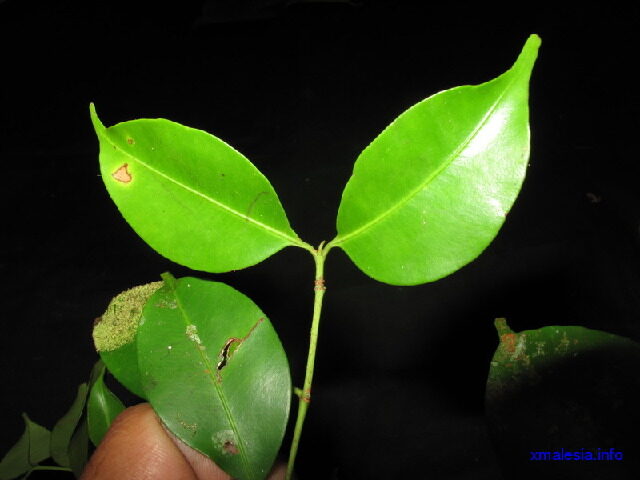
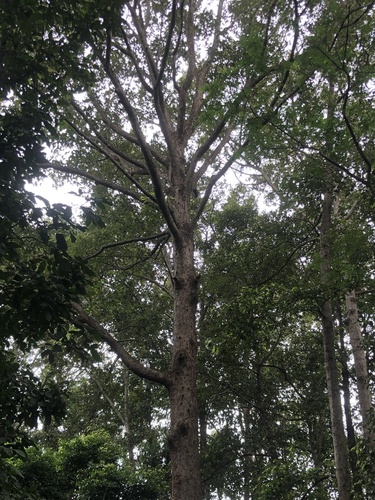
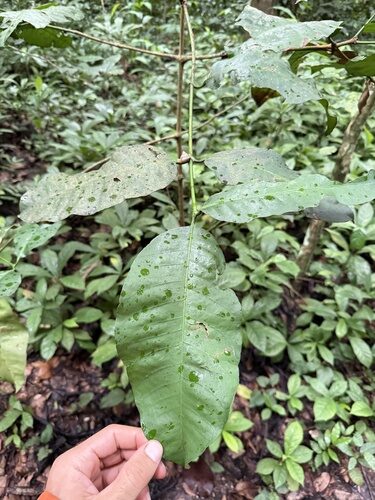
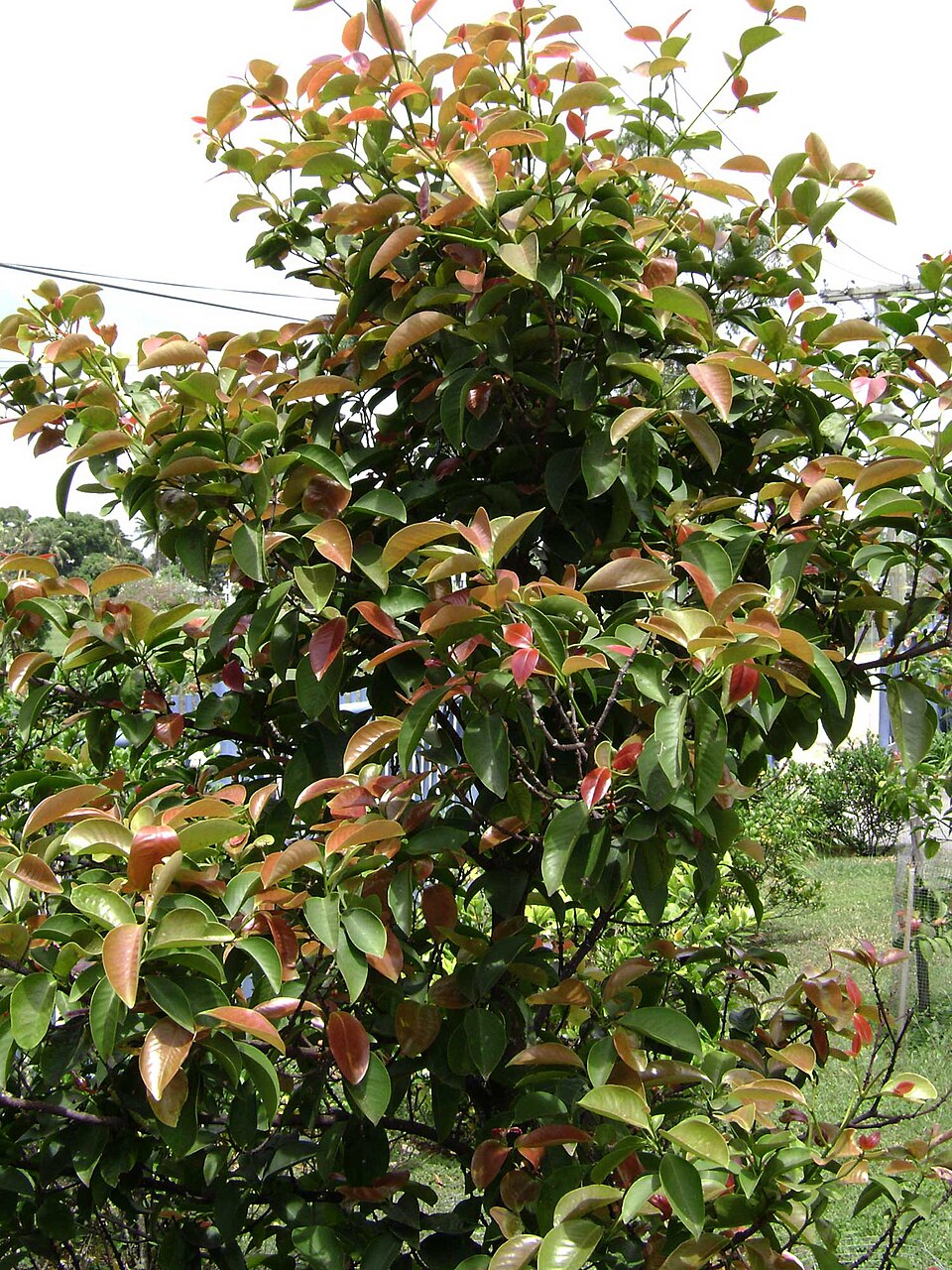
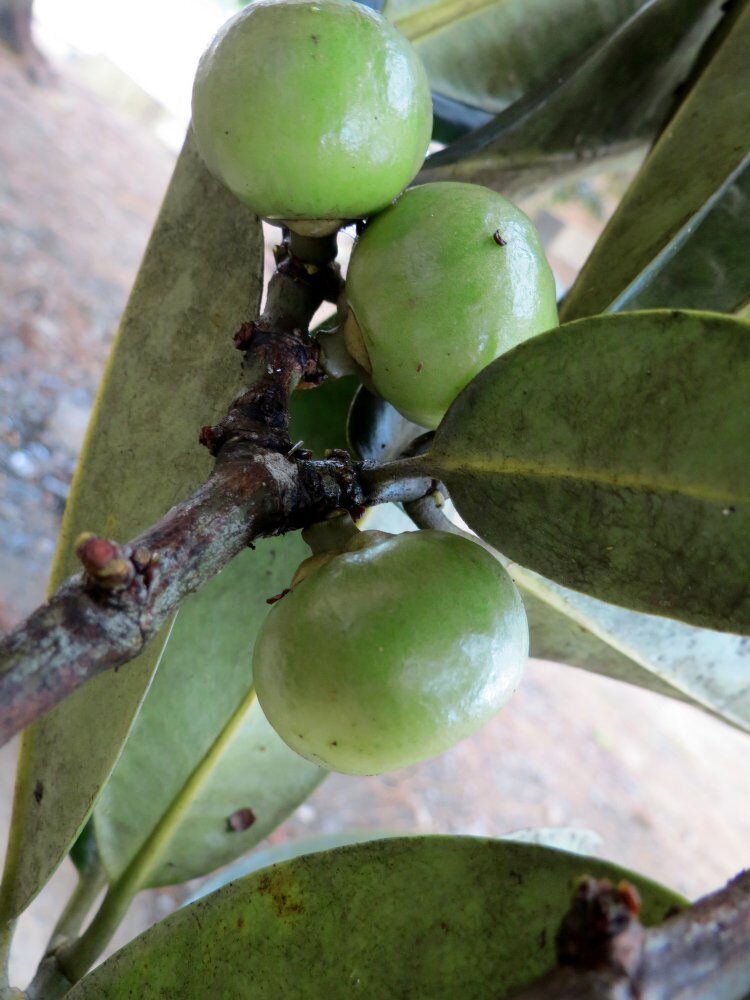
A tree. It grows to 10 m tall. It is a wide spreading tree. The leaves are deep green. The leaves are large and broadly oval. They are 20 cm long. New leaves are coppery pink. The flowers do not have stalks. They are white and waxy and grow on the stems and twigs. The fruit are round and dark green. They turn orange to yellow when ripe. They are 2.5 cm across.
Edible Uses
Fruit. A sweet, acidi flavour wirh a bitter after taste. a berry, broadly oblong, yellowish, smooth, with bad odour, pulp , 3-4 cm across,; seeds 1-3, up to 2.5 cm long, oblong, latterly flattened Fruit fleshy berry, globose, 3-4 x 2.5-3.5 cm across, yellow, smooth with sweet pulp and bad odour, encased by persistent sepals and crowned by 2-3 mm long stigma. Seeds 1-3, oblong ovoid, about 2.5 cm long, compressed laterally, covered with juicy pulp.
Traditional Uses
The fruit are eaten raw.
This uses section is brief — help expand it
Medicinal Uses
The plant is used medicinally.
Distribution
A tropical plant. It needs a warm humid location. It can tolerate salt spray. It grows up to 1,000 m above sea level. In Rockhampton Botanical gardens.
Where It Grows
Asia, Australia, India, Northeastern India, Sri Lanka,
Cultivation
Plants can be grown from seeds. It is slow growing.
Other Uses
A milky, white to yellowish-green, sticky latex exudes from the bark, branches and fruit. The unripe fruit yields a chrome-yellow pigment. The pale yellow to cream-white wood is hard. A good timber.
Production
In NE India plants flower and fruit May to February. In southern India fruit are available March to May
Other Information
The fruit is edible but not very attractive.
Notes
There are about 300 Garcinia species.
Synonyms
Also Known As
Dieng-soh-kwang, Haldi, Jangli-ramphal, Kokattai, Manja nangu, Manjananku, Pidatha, Tavir
References (9)
- Ambasta, S.P. (Ed.), 2000, The Useful Plants of India. CSIR India. p 231
- Barwick, M., 2004, Tropical and Subtropical Trees. A Worldwide Encyclopedic Guide. Thames and Hudson p 195
- J. Linn. Soc., Bot. 14:386. 1875
- Jadhav, R., et al, 2015, Forest Foods of Northern Western Ghats: Mode of Consumption, Nutrition and Availability. Asian Agri-History Vol. 19, No. 4: 293-317
- Jeeva, S., 2009, Horticultural potential of wild edible fruits used by the Khasi tribes of Meghalaya. Journal or Horticulture and Forestry Vol. 1(9) pp. 182-192
Show all 9 references Hide references
- Lim, T. K., Edible Medicinal and Non-Medicinal Plants: Volume 2, Fruits.
- Sawian, J. T., et al, 2007, Wild edible plants of Meghalaya, North-east India. Natural Product Radiance Vol. 6(5): p 417
- Singh, H.B., Arora R.K.,1978, Wild edible Plants of India. Indian Council of Agricultural Research, New Delhi. p 61
- Singh, V. B., et al, (Ed.) Horticulture for Sustainable Income and Environmental Protection. Vol. 1 p 217