Ficus lepicarpa
Blume
Saraca fig
iNaturalist· cc-by-nc
(c) aswad andriyanto, some rights reserved (CC BY-NC)
iNaturalist· cc-by-nc
(c) aswad andriyanto, some rights reserved (CC BY-NC)
iNaturalist· cc-by-nc
(c) aswad andriyanto, some rights reserved (CC BY-NC)
Description
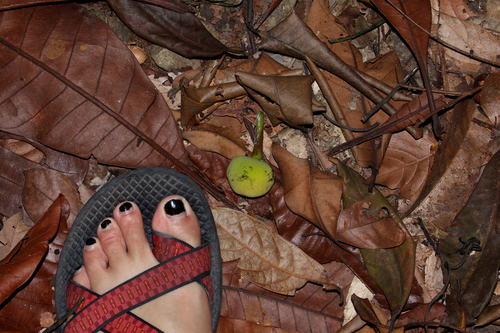
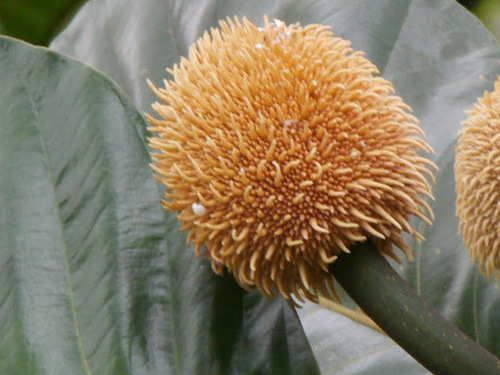
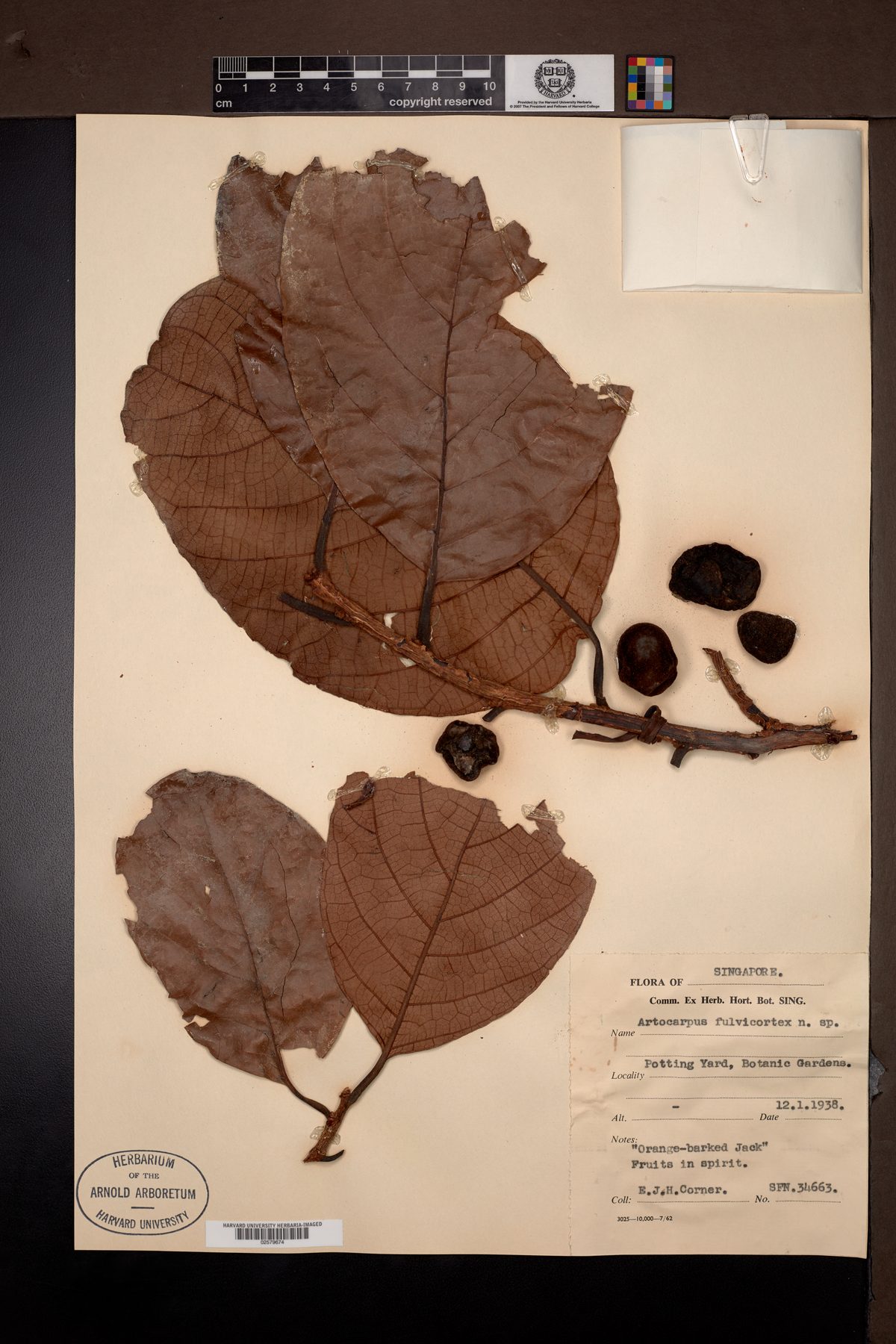
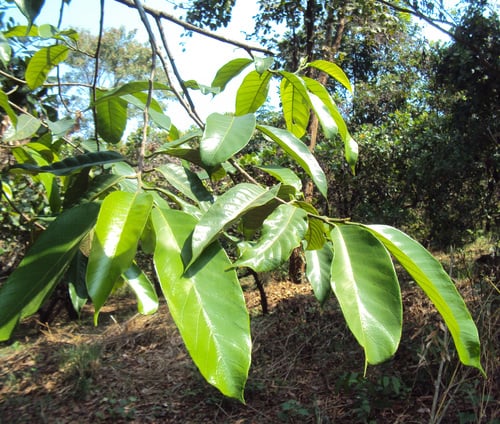
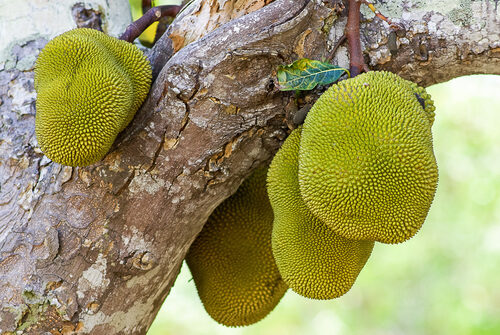
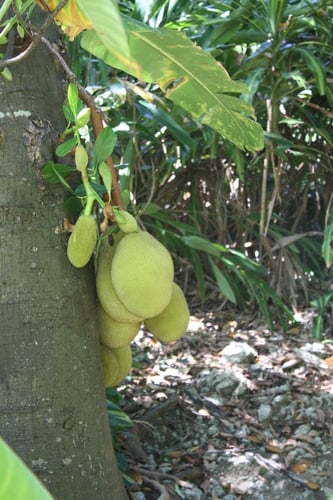
A fig. It is a small tree. It grows 5-15 m tall. The leaves are alternate and simple. The leaves are broadly oval and 11-32 cm long by 4-15 cm wide. The fruit is a fig. It is oval and 1-3 cm across. It is yellow-brown. There are often 1-2 together in the axils of leaves along the twigs.
Edible Uses
The young shoots are eaten raw as a vegetable, and the ripe fruit are eaten.
Traditional Uses
The young shoots are eaten raw as a vegetable. The fruit are eaten.
This uses section is brief — help expand it
Distribution
A tropical plant. It mostly grows along streams. It grows in humid forests and on rocky banks of rivers. It grows up to 1,700 m above sea level. It can be on limestone.
Where It Grows
Asia, Indochina, Indonesia*, Malaysia, Myanmar, Philippines, SE Asia, Thailand,
Cultivation
Fig trees have a unique form of fertilization, each species relying on a single, highly specialized species of wasp that is itself totaly dependant upon that fig species in order to breed. The trees produce three types of flower; male, a long-styled female and a short-styled female flower, often called the gall flower. All three types of flower are contained within the structure we usually think of as the fruit. The female fig wasp enters a fig and lays its eggs on the short styled female flowers while pollinating the long styled female flowers. Wingless male fig wasps emerge first, inseminate the emerging females and then bore exit tunnels out of the fig for the winged females. Females emerge, collect pollen from the male flowers and fly off in search of figs whose female flowers are receptive. In order to support a population of its pollinator, individuals of a Ficus spp. must flower asynchronously. A population must exceed a critical minimum size to ensure that at any time of the year at least some plants have overlap of emmission and reception of fig wasps. Without this temporal overlap the short-lived pollinator wasps will go locally extinct.
Notes
There are about 800-1000 Ficus species. They are mostly in the tropics. There are 120 Ficus species in tropical America.
Synonyms
Also Known As
Ara, Benjing, Benjing tjaj, Bisoro, Buku-buku, Chalukpho, Engeruoh, Kara, Kelupang gajah, Krerungan, Luwing, Lyubyub etem, Sengkoak, Sulu-talobog, Wilada banju
References (9)
- Burkill, I.H., 1966, A Dictionary of the Economic Products of the Malay Peninsula. Ministry of Agriculture and Cooperatives, Kuala Lumpur, Malaysia. Vol 1 (A-H) p 1028
- Martin, F.W. & Ruberte, R.M., 1979, Edible Leaves of the Tropics. Antillian College Press, Mayaguez, Puerto Rico. p 206
- Milow, P., et al, 2013, Malaysian species of plants with edible fruits or seeds and their evaluation. International Journal of Fruit Science. 14:1, 1-27
- Ochse, J.J. et al, 1931, Vegetables of the Dutch East Indies. Asher reprint. p 501
- PROSEA (Plant Resources of South East Asia) handbook, Volume 2, 1991, Edible fruits and nuts.
Show all 9 references Hide references
- Slik, F., www.asianplant.net
- Suwardi, A. B., et al, 2020, Wild edible fruits generate substantial income for local people of the Gunung Leuser National Park, Aceh Tamiang Region. Ethnobotany Research & Applications 20:11
- Terra, G.J.A., 1973, Tropical Vegetables. Communication 54e Royal Tropical Institute, Amsterdam, p 46
- World Checklist of Useful Plant Species 2020. Royal Botanic Gardens, Kew