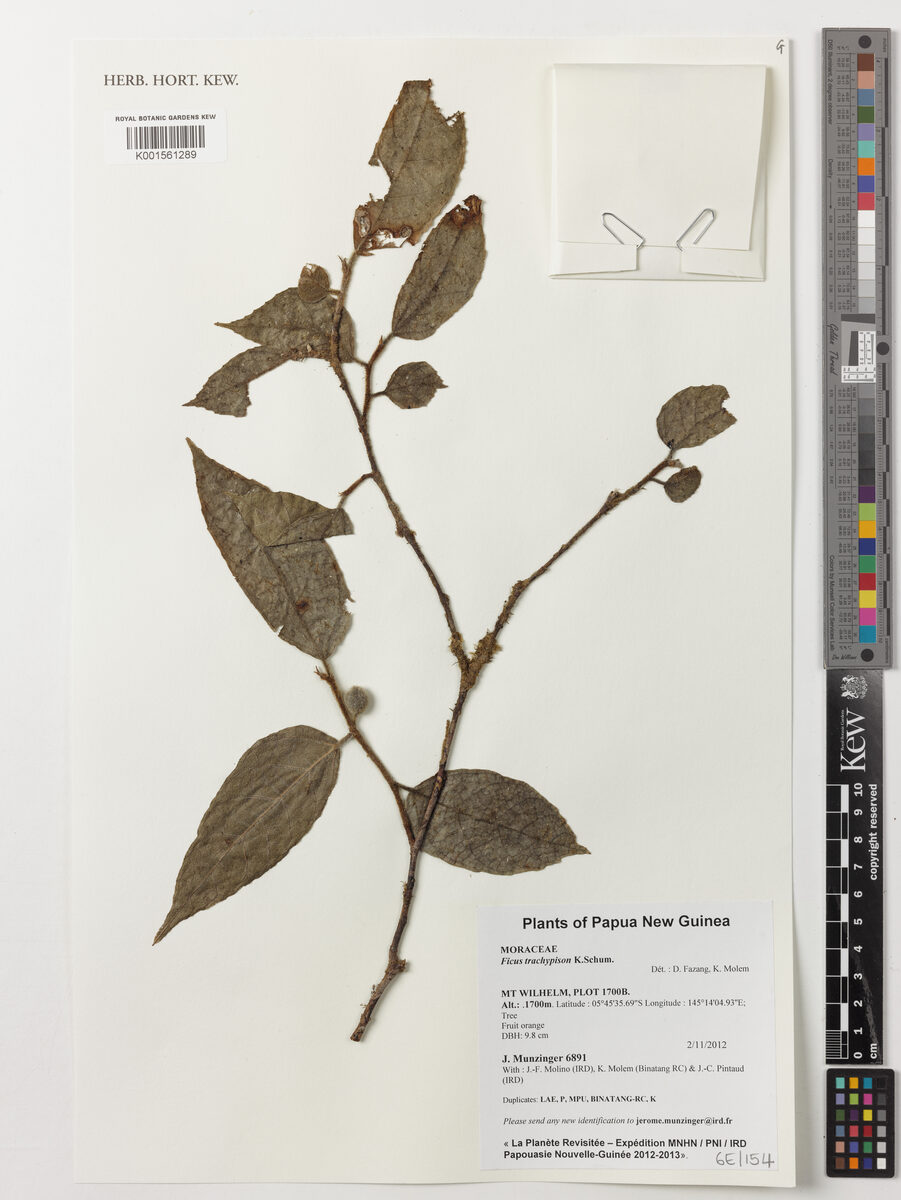
Helicostylis tomentosa - (Poepp. & Endl.) Rusby
(Poepp. & Endl.) Rusby
Letterhout, Letter Wood
gbif· cc-by-nc
Geovane Siqueira
gbif· cc-by-nc
Geovane Siqueira
gbif· cc-by-nc
esa_bt
Description
Helicostylis tomentosa is an evergreen Tree growing to 20 m (65ft) by 20 m (65ft) at a medium rate. See above for USDA hardiness. It is hardy to UK zone 10. Suitable for: light (sandy), medium (loamy) and heavy (clay) soils and prefers well-drained soil. Suitable pH: mildly acid, neutral and basic (mildly alkaline) soils. It cannot grow in the shade. It prefers moist soil.
Edible Uses
Fruit - raw. A delicious flavour. The yellow, more or less globose fruit can be around 3cm in diameter.
Medicinal Uses
Febrifuge Hallucinogenic Stomachic. The red, milky sap from the bark is drunk as an hallucinogen in order to contact the spirits. The rasped bark, mixed with alcohol, is used as a remedy for stomach cramps and pain accompanying a high fever. Extracts prepared from the inner bark have been pharmacologically evaluated and are reported to elicit central nervous system depressant effects; and certain of the effects are described as being similar to those expected with Cannabis sativa. Because of the close taxonomic relationship of this species to Cannabis, one might expect similar types of chemical constituents in both genera. Whether or not the effects are due to the presence of cannabinoids remains to be determined.
Known Hazards
The latex of this tree is considered to be toxic when ingested.
Distribution
S. America - Brazil, Bolivia, Peru, Ecuador, Colombia, Venezuela, the Guyanas; C. America - Panama.
Where It Grows
SOUTHERN AMERICA: French Guiana, Guyana, Suriname, Venezuela, Brazil, Amazonas, Pará, Rio de Janeiro,
Cultivation
Young plants require the dappled shade of the woodland, but become more tolerant of light as they grow larger, eventually accepting full sun. A dioecious species, both male and female forms need to be grown if fruit and seed are required.
Propagation
Seed - best sown as soon as it is ripe in a partially shaded position in a nursery seedbed. A low germination rate can generally be expected, with the seed sprouting within 40 - 60 days.
Other Uses
Furniture Latex Wood Other Uses: The tree contains a yellow latex. The heartwood is dark brown, somewhat streaked or variegated with black and yellow; it is sharply demarcated from the wide band of golden, lustrous sapwood. Lustre is medium in the heartwood; texture medium; grain straight to roey; without distinctive odour or taste. The wood is moderately heavy, with very good mechanical properties, durable and resistant to wood-eating insects. It is rated fair to good in all machining operations but does cause excessive dulling of cutting edges; takes a high natural polish. Easy to work, it is used in general construction for purposes such as scantlings, beams, door and window frames, floors etc; also for lathe work and making furniture.
Synonyms
Also Known As
Letterhout, Letter Wood - Dutch (Suriname), Manletterhout - Dutch (Suriname), Amoro do mato, Jaquinha, Xopahi