Ficus watkinsiana
F. M. Bailey
Strangling Fig, Watkin’s Fig, Nipple Fig, Bellinger River fig, Green-leaved Moreton Bay Fig
iNaturalist· cc-by-nc
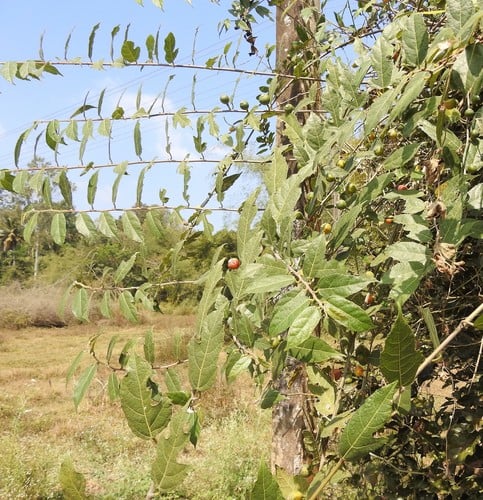
(c) Pete Woodall, some rights reserved (CC BY-NC), uploaded by Pete Woodall
iNaturalist· cc-by-nc
(c) Pete Woodall, some rights reserved (CC BY-NC), uploaded by Pete Woodall
iNaturalist· cc-by-nc
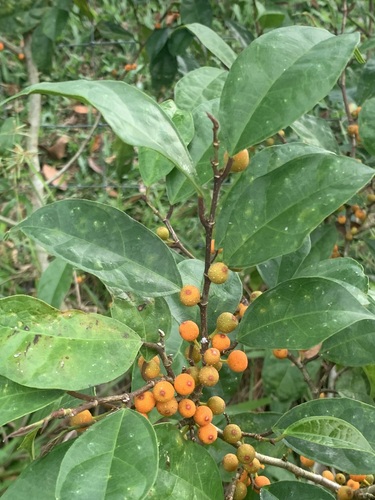
(c) toohey-forest-wildlife, some rights reserved (CC BY-NC), uploaded by toohey-forest-wildlife
Summary
Source: WikipediaFicus watkinsiana, commonly known as Watkins' fig, nipple fig or the green-leaved Moreton Bay fig is a rainforest strangler fig that is endemic to Australia. It occurs in two populations—one in northeast Queensland and the other in southeast Queensland and northeast New South Wales. It was first described in 1891, and has the conservation status of Least Concern.
Description
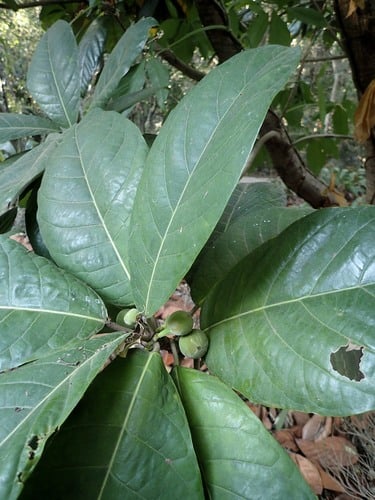
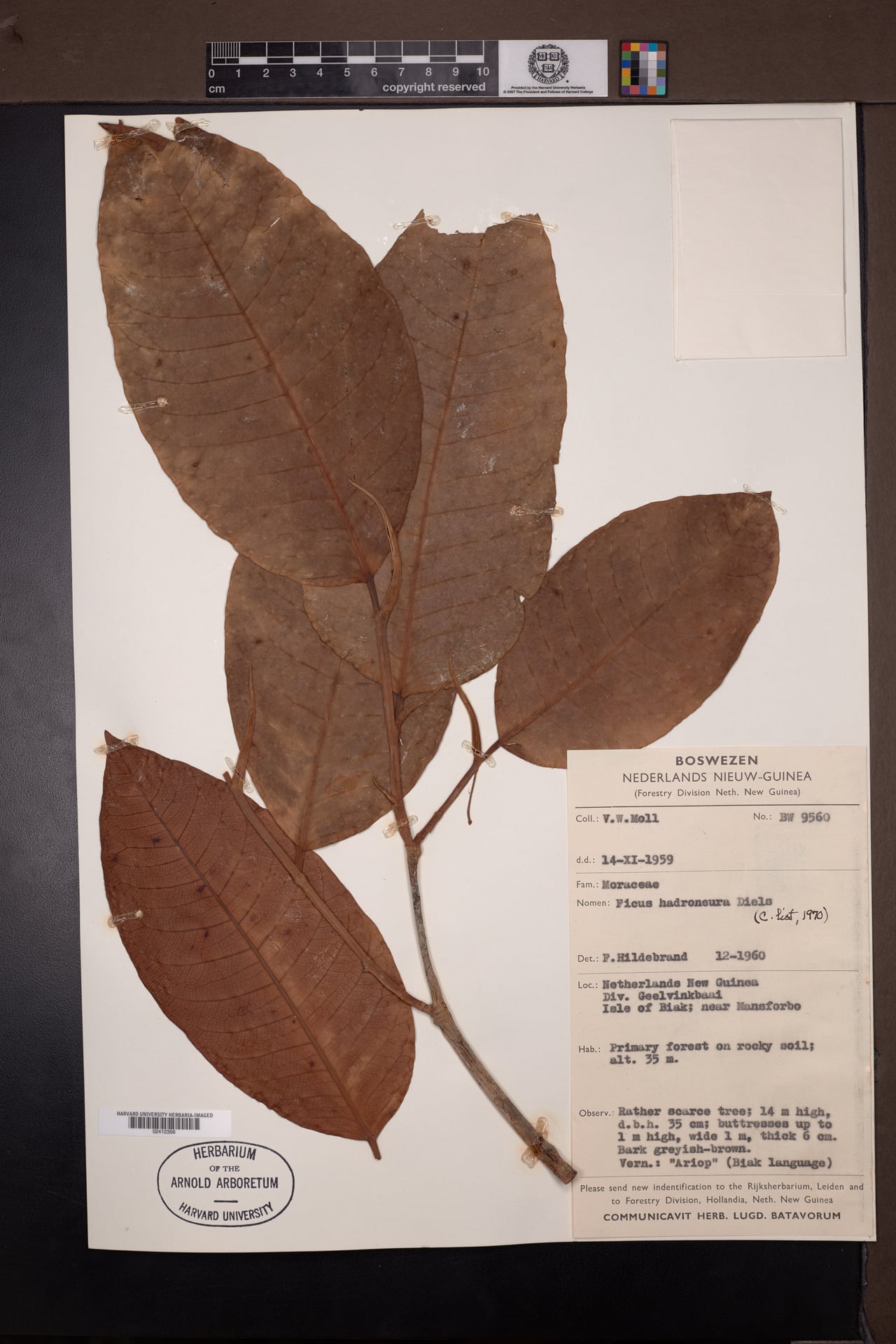
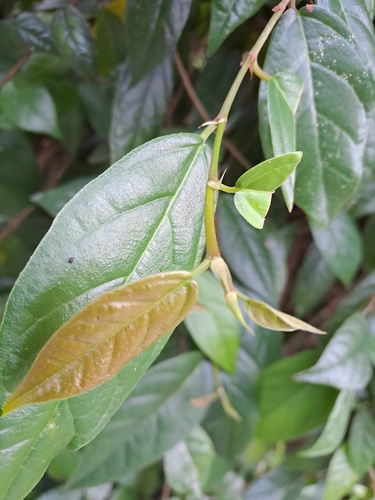
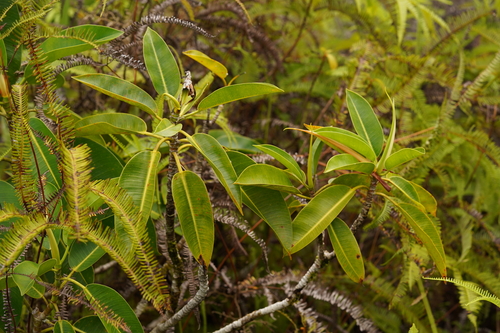
A strangler fig which can grow to 60 m tall. It is often 25-35 m high and 15-30 m wide. It is a large tree with a spreading crown. It has strangler roots. The bark is grey and has pustules. The young shoots are bright green. The leaves are simple and 8-25 cm long by 10-15 cm wide. They are smooth. The leaf stalks are 4-7 cm long. The fruit are 20-40 mm long by 15-30 mm wide. They occur singly or in pairs in the axils of leaves. The fruit are dark purple with pale spots. The fruit are edible.
Edible Uses
The dark purple fruit are edible and can be eaten fresh.
Distribution
It can grow from tropical to temperate regions. It likes high rainfall. They grow naturally in rainforest in New South Wales and SE Queensland in Australia. It grows between 400-1100 m altitude. Geelong Botanical Gardens. It suits hardiness zones 8-10.
Where It Grows
Australia*,
Cultivation
Plants are grown from seed or aerial layers. The seed are removed from the fig and mixed with sand before sowing as they are very small. Take the seed from ripe purple-black fruit.
Notes
There are about 800-1000 Ficus species. They are mostly in the tropics. There are 120 Ficus species in tropical America.
Nutrition
| Part | Moisture | kJ | kcal | Protein | Vit A | Vit C | Iron | Zinc |
|---|---|---|---|---|---|---|---|---|
| Fruit | 71 | 380 | 91 | 0.7 | — | — | 0.8 | 0.3 |
Synonyms
References (18)
- Beasley, J., 2011, Plants of Tropical North Queensland - the compact guide. Footloose publications. p 96
- Bodkin, F., 1991, Encyclopedia Botanica. Cornstalk publishing, p 474
- Cherikoff V. & Isaacs, J., The Bush Food Handbook. How to gather, grow, process and cook Australian Wild Foods. Ti Tree Press, Australia p 162,
- Cooper W & Cooper W T, 1994, Fruits of the Rain Forest. RD Press p 138
- Cooper, W. and Cooper, W., 2004, Fruits of the Australian Tropical Rainforest. Nokomis Editions, Victoria, Australia. p 328
Show all 18 references Hide references
- Cundall, P., (ed.), 2004, Gardening Australia: flora: the gardener's bible. ABC Books. p 604
- Elliot, W.R., & Jones, D.L., 1992, Encyclopedia of Australian Plants suitable for cultivation. Vol 4. Lothian. p 293 (Photo)
- Flora of Australia, Volume 3, Hamamelidales to Casuarinales, Australian Government Publishing Service, Canberra (1989) p 40
- Haslam, S., 2004, Noosa's Native Plants. Noosa Integrated Catchment Assn. Inc. p 340
- Hibbert, M., 2002, The Aussie Plant Finder 2002, Florilegium. p 102
- Jackes, B.R., 2001, Plants of the Tropics. Rainforest to Heath. An Identification Guide. James Cook University. p 67
- Jones D, L, 1986, Ornamental Rainforest Plants in Australia, Reed Books, p 221
- Low, T., 1991, Wild Food Plants of Australia. Australian Nature FieldGuide, Angus & Robertson. p 81
- Low, T., 1992, Bush Tucker. Australia’s Wild Food Harvest. Angus & Robertson. p 64
- Queensland Bot. Bull. 2:18. 1891
- Ratcliffe D & P., 1987, Australian Native Plants for Indoors. Little Hills press. p 91
- Townsend, K., 1994, Across the Top. Gardening with Australian Plants in the tropics. Society for Growing Australian Plants, Townsville Branch Inc. p 216
- Williams, J.B., Harden, G.J., and McDonald, W.J.F., 1984, Trees and shrubs in rainforests of New South Wales and Southern Queensland. Univ. of New England, Armidale. p 66