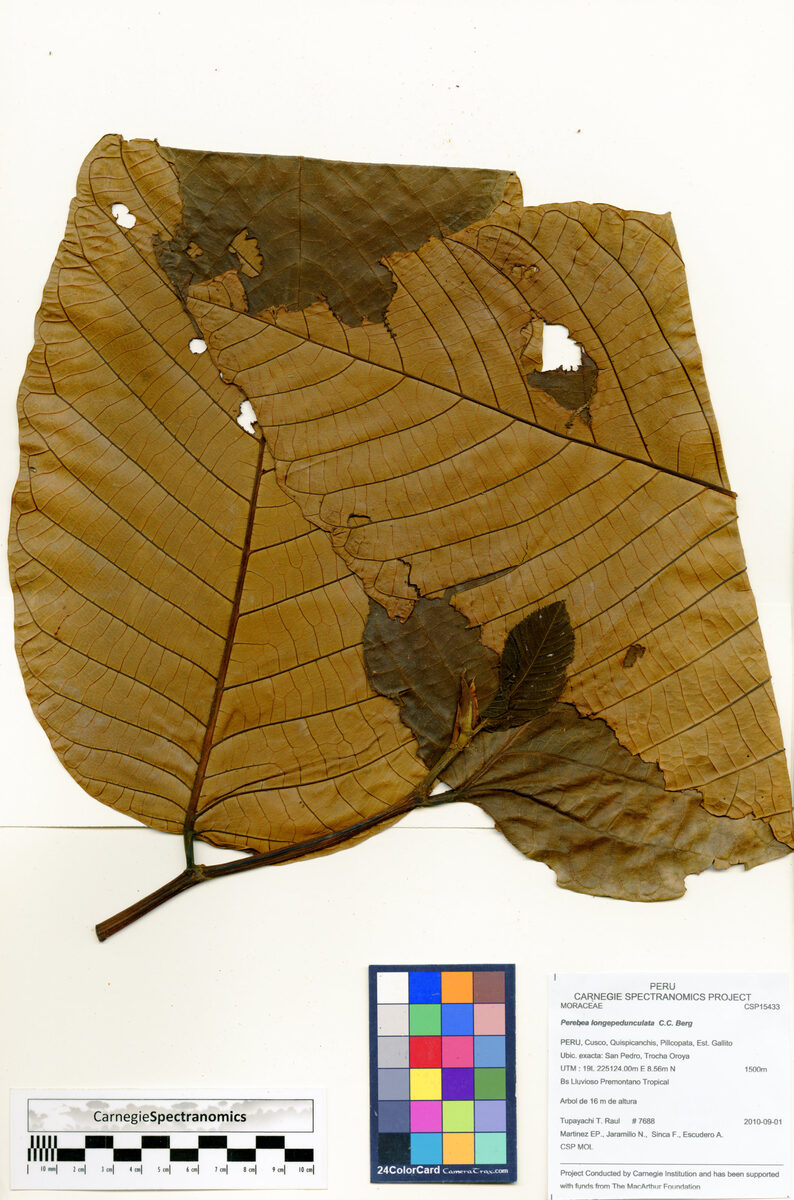
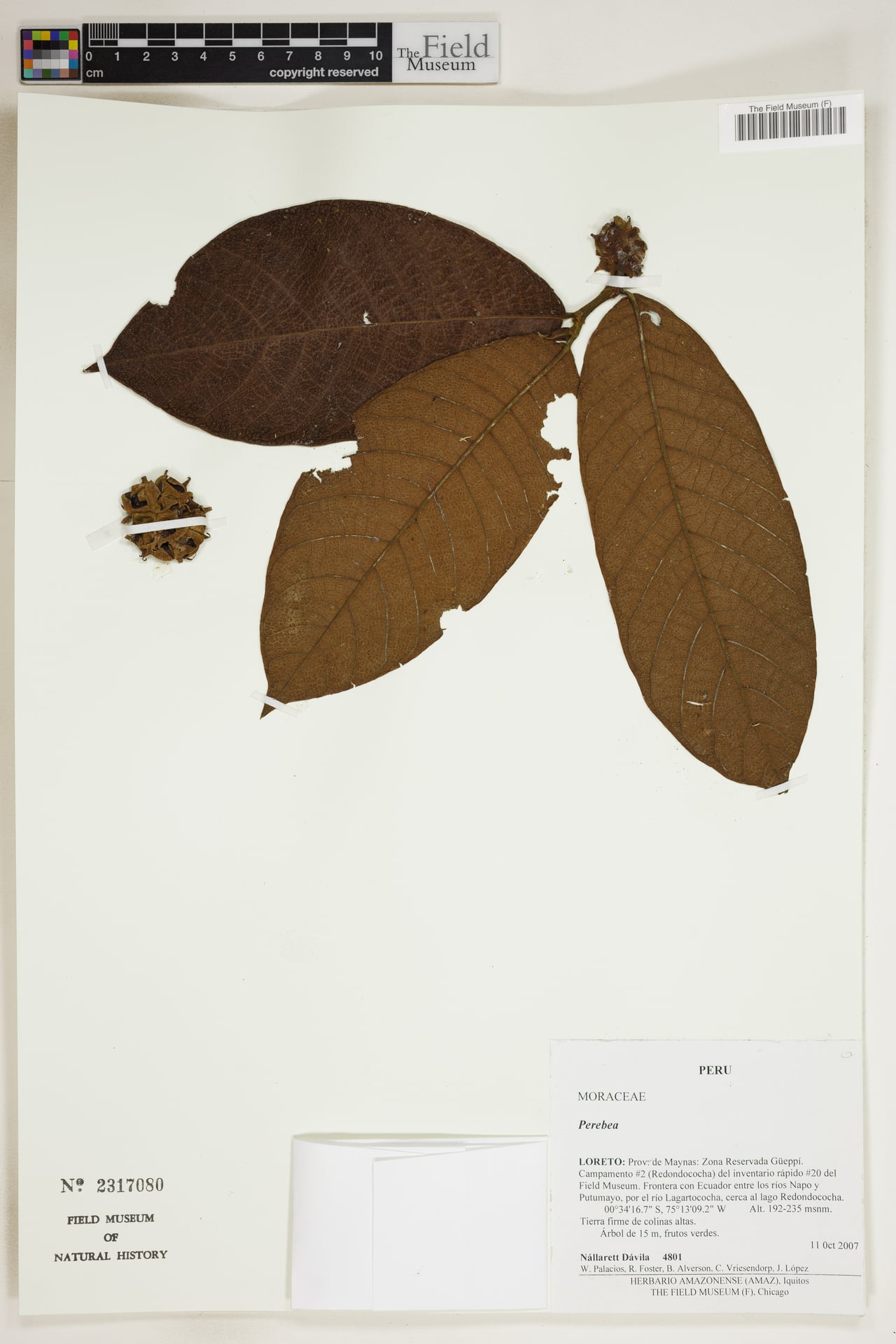
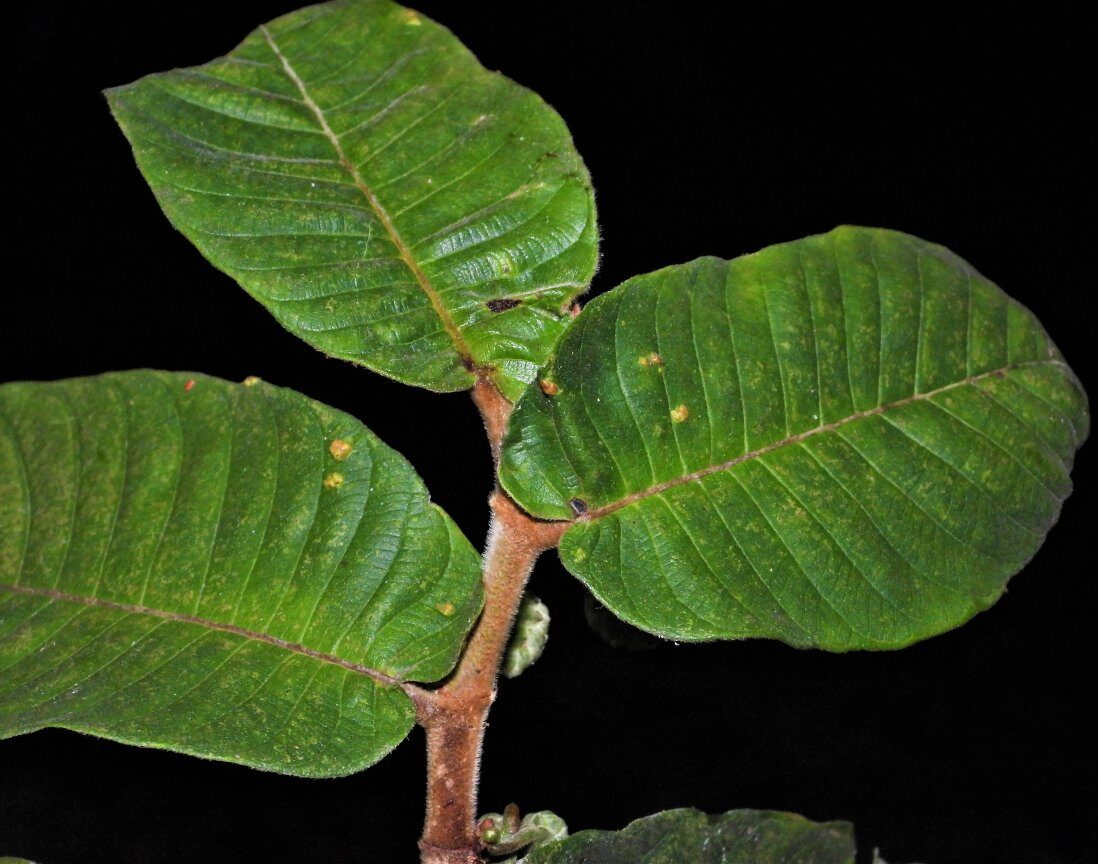
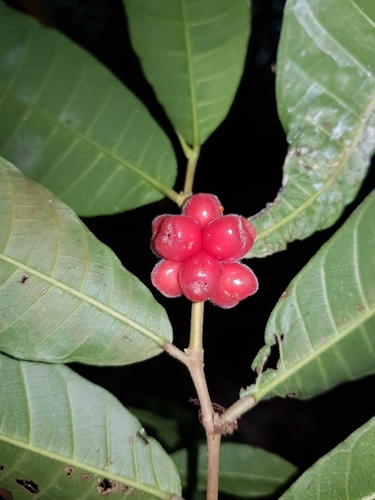
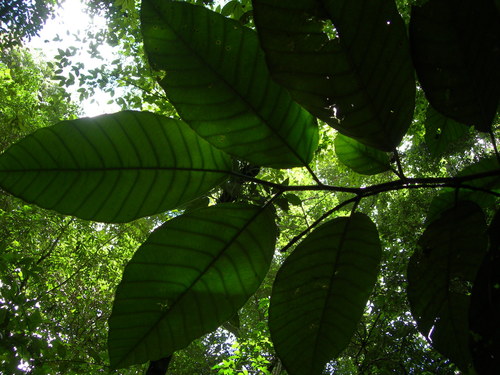
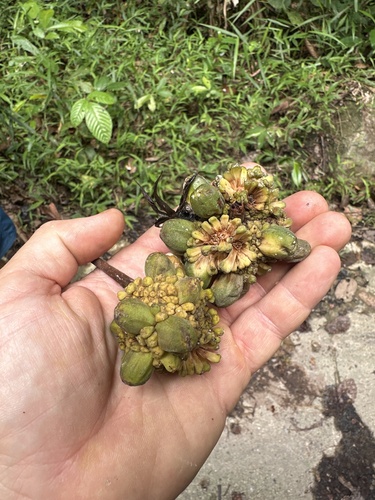
Helicostylis scabra
(J. F. Macbr.) C. C. Berg
iNaturalist· cc-by-nc
(c) esa_bt, some rights reserved (CC BY-NC)
Description
An evergreen tropical tree in the fig family (Moraceae) with simple leaves and edible fruit.
This description is brief — help expand it
Edible Uses
Fruit - raw. We have no specific details for this species, but the fruits of all members of this genus are edible.
Traditional Uses
Caution: The latex is toxic.
This uses section is brief — help expand it
Medicinal Uses
The latex is antifungal, bitter and vermifuge. Although believed to be toxic, it is taken internally in very small doses to alleviate cases of extreme intestinal parasitism. The latex is said to be bitter and is mixed with warm chicha (a kind of beer). The latex is repeatedly painted and dried on infected parts of the skin to treat fungal diseases. The latex is applied to abrasions of the skin in the belief that it prevents infection..
Known Hazards
The latex is toxic.
Distribution
A tropical plant.
Where It Grows
Amazon, Bolivia, Brazil, Central America, Colombia, Costa Rica, Ecuador, Panama, Peru, South America*, Venezuela,
Notes
Possibly fruit of all Helicostylis are edible.
Synonyms
Also Known As
Bijuka, Inhare, Chimicue, Chimiqua, Lengua de tigre, Misho chaqui, Palo de morrocoy, Sicoe, Yaji ni
References (10)
- Altschul, S.V.R., 1973, Drugs and Foods from Little-known Plants. Notes in Harvard University Herbaria. Harvard Univ. Press. Massachusetts. no. 699 (As Helicostylis asperifolia Ducke)
- Gilmore, M. P., et al, 2013, The socio-cultural importance of Mauritia flexuosa palm swamps (aguajales) and implications for multi-use management in two Maijuna communities of the Peruvian Amazon. Journal of Ethnobiology and Ethnomedicine 2013, 9:29
- Grandtner, M. M. & Chevrette, J., 2013, Dictionary of Trees, Volume 2: South America: Nomenclature, Taxonomy and Ecology. Academic Press p 295
- Kermath, B. M., et al, 2014, Food Plants in the Americas: A survey of the domesticated, cultivated and wild plants used for Human food in North, Central and South America and the Caribbean. On line draft. p 411
- Kew Plants of the World Online
Show all 10 references Hide references
- Lopez-Diago, D. & Garcia, N., 2021, Wild edible fruits of Colombia. Biota ColomBiana 22 (2) p 43
- Roa, J. A. G. & Boada, D. S. G., 2018, Fundación para el Fortalecimiento de la Fruticultura y Plantas Alimenticias no Convencionales en Colombia.
- Torre, de la, L., et al, 2008, Enciclopedia de las Plantas Útiles del Ecuador. Herbario QCA. Pontificia Universidad Católica del Ecuador. p 451
- van Roosmalen, M.G.M., 1985, Fruits of the Guianan Flora. Utrecht Univ. & Wageningen Univ. p 308 (Genus)
- Vasquez, R. and Gentry, A. H., 1989, Use and Misuse of Forest-harvested Fruits in the Iquitos Area. Conservation Biology 3(4): 350f