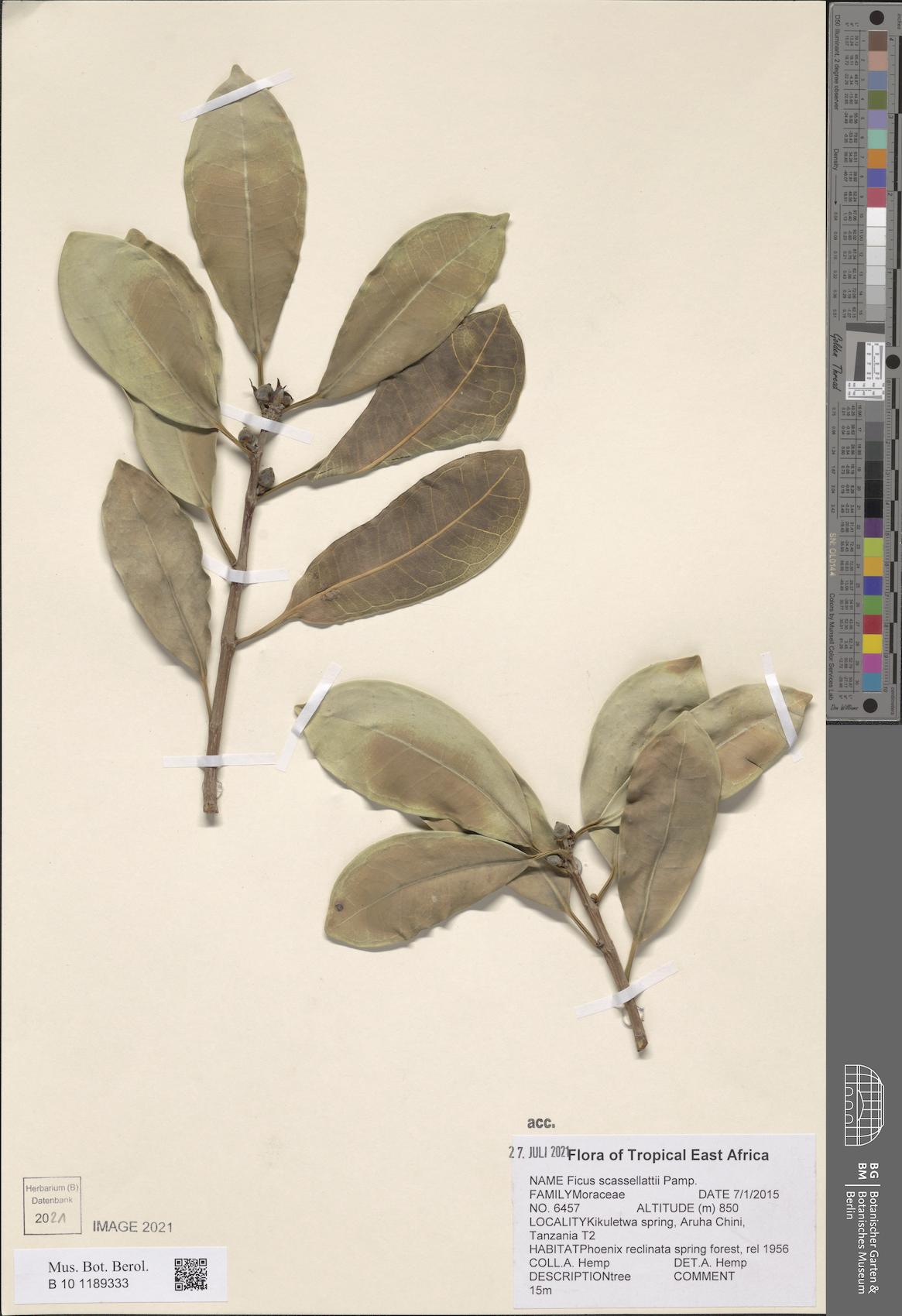
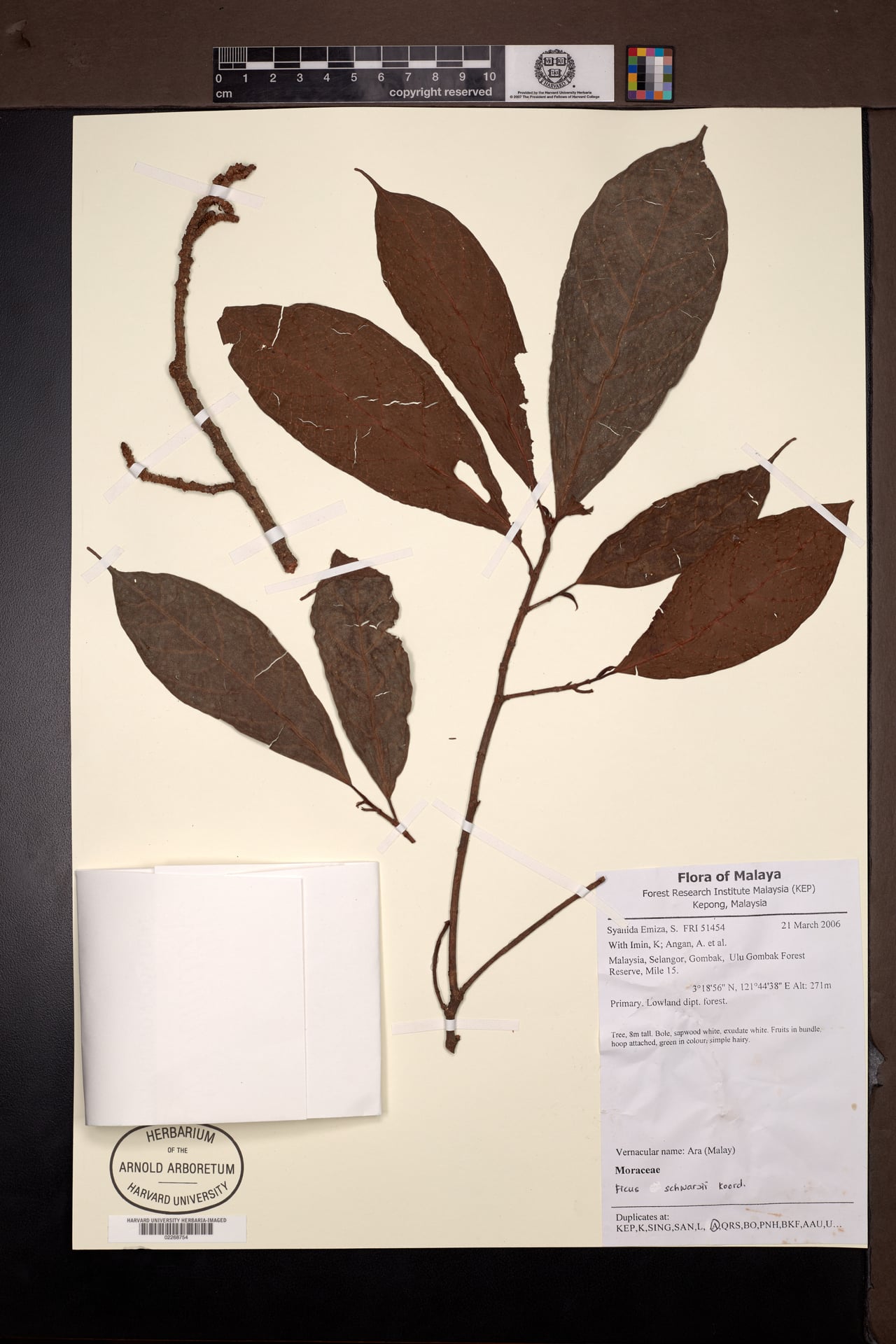
Ficus wakefieldii
Hutch.
gbif· cc-by
Meise Botanic Garden
gbif· cc-by-nc-sa
MBG
gbif· cc-by
Meise Botanic Garden
Description
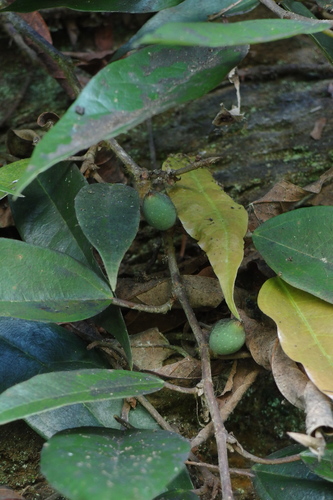
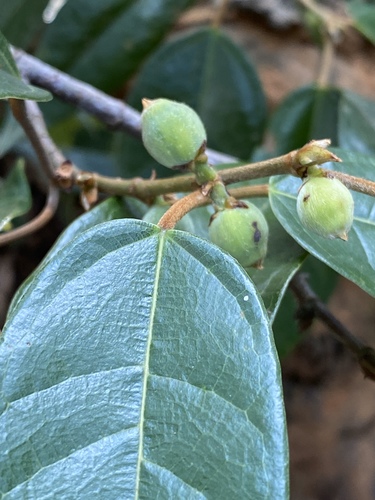
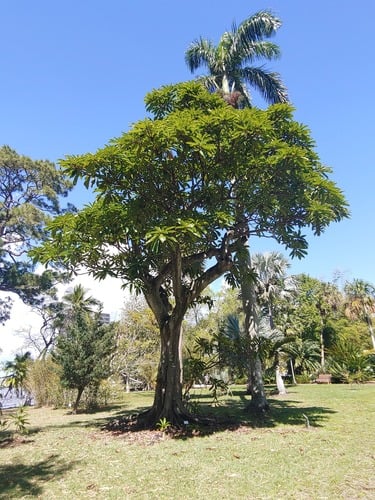
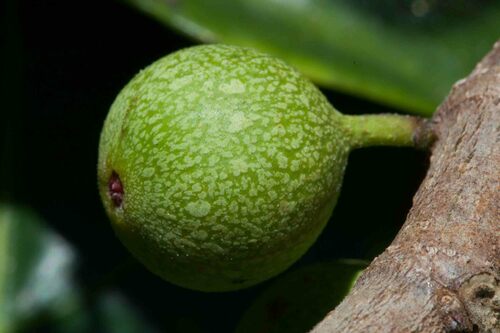
A fig. It is a tree. It grows 25 m tall. It grows attached to other plants then becomes established in the soil. The crown is wide. The leaf twigs are 5-12 mm thick. The leaves are arranged in spirals. They are 6-23 cm long by 5-23 cm wide. They are oval or heart shaped. The figs are in pairs in the axils of leaves. They are about 2 cm across. They have dense white or yellow hairs.
Edible Uses
The figs are eaten as fruit.
Distribution
It is a tropical plant. It grows along rivers and near lakes. It is often on termite mounds and rocky places. It grows between 700-2,000 m altitude.
Where It Grows
Africa, Central Africa, Congo, East Africa, Kenya, South Africa, Southern Africa, Tanzania, Uganda, Zambia,
Cultivation
The pollinating wasp is Elisabethiella socotrensis (Mayr).
Also Known As
Ituntu, Lenga, Mlera, Ndera
References (7)
- East African Herbarium records, 1981,
- Flora Zambesiaca. http://apps.kew.org/efloras
- Fowler, D. G., 2007, Zambian Plants: Their Vernacular Names and Uses. Kew. p 49
- Johns, T., Mhoro, E. B. and Sanaya, P., 1996, Food Plants and Masticants of the Batemi of Ngorongoro District, Tanzania. Economic Botany, Vol. 50, No. 1, pp. 115-121
- Kokwaro, J. O. and Johns. T., 1998, Luo Biological Dictionary. East African Educational Publishers. p 65
Show all 7 references Hide references
- Peters, C. R., O'Brien, E. M., and Drummond, R.B., 1992, Edible Wild plants of Sub-saharan Africa. Kew. p 152
- www.figweb.org