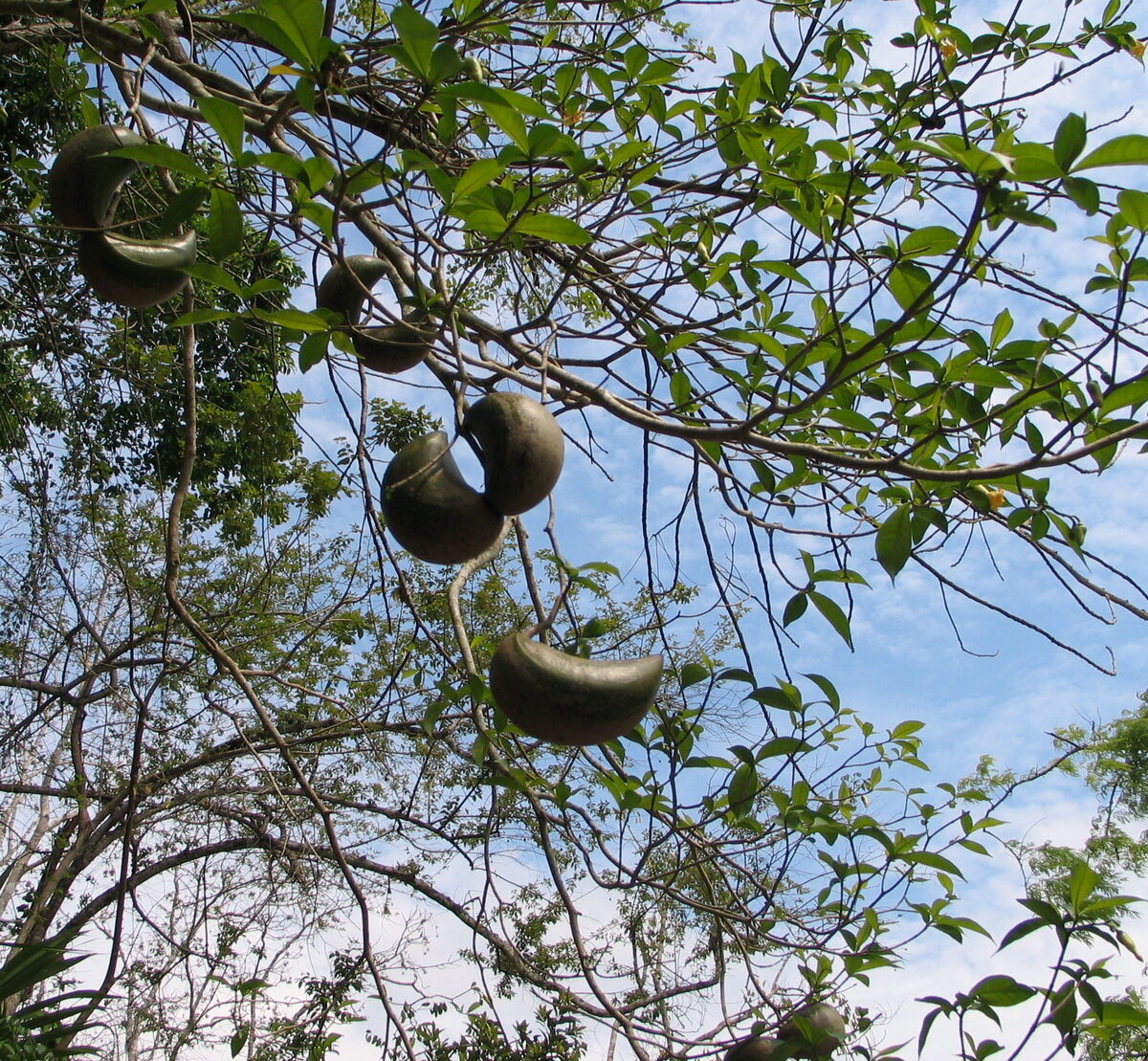
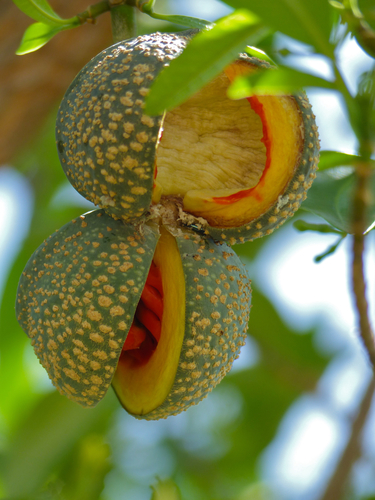
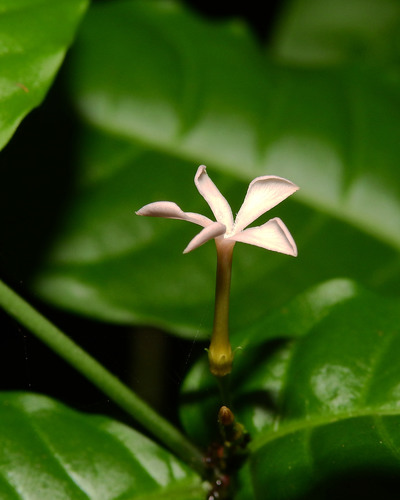
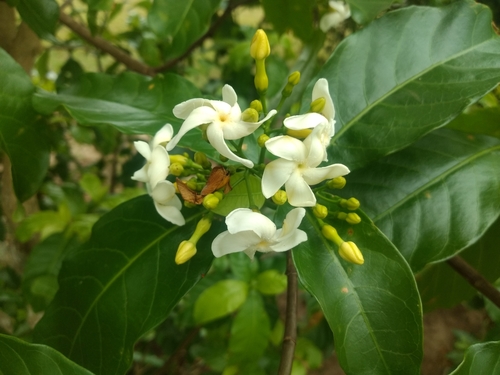
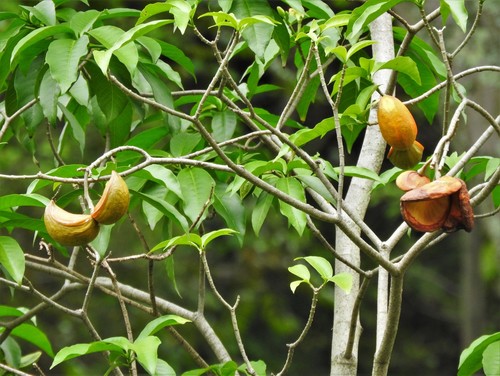
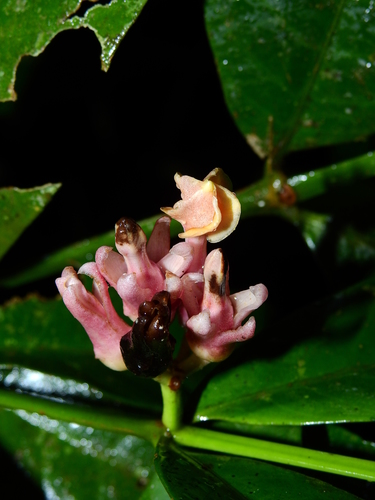
Alafia lucida
Stapf
wikimedia· cc-by
Gideon Pisanty (Gidip) גדעון פיזנטי (via Wikimedia Commons)
Summary
Source: WikipediaAlafia lucida is a plant in the family Apocynaceae.
Description
A tropical vine in the Apocynaceae family that can be propagated from seeds or cuttings.
This description is brief — help expand it
Edible Uses
The leaves are eaten as a vegetable.
Medicinal Uses
The aerial parts of the plant are used in the treatment of jaundice, swollen glands. Applied externally, it is used to treat eye-troubles and to heal sores. A decoction of the leaves is used to treat stomach complaints. Applied externally, the decoction is used to wash sores. A paste made from the bark and plant sap is applied as a dressing to promote the healing of wounds. Unnamed alkaloids have been reported in the seeds.
Known Hazards
Local traditional medicinal uses of Alafia lucida include as a treatment for jaundice, eye problems and stomach complaints. The plant has been used as arrow poison.
Distribution
It is a tropical plant.
Where It Grows
Africa, Central Africa, Congo,
Cultivation
Plants can be grown by seeds or cuttings.
Other Uses
A dirty yellow latex is obtained in abundance from the stems.
Synonyms
References (3)
- Jardin, C., 1970, List of Foods Used In Africa, FAO Nutrition Information Document Series No 2.p 51
- Martin, F.W. & Ruberte, R.M., 1979, Edible Leaves of the Tropics. Antillian College Press, Mayaguez, Puerto Rico. p 175
- Okigbo, B.N., Vegetables in Tropical Africa, in Opena, R.T. & Kyomo, M.L., 1990, Vegetable Research and development in SADCC countries. Asian Vegetable Research and development Centre. Taiwan. p 38