Ceropegia meyeri
Decne
iNaturalist· cc-by
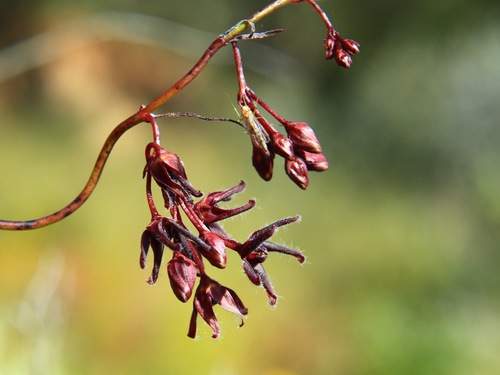
(c) Sunčana Bradley, some rights reserved (CC BY), uploaded by Sunčana Bradley
iNaturalist· cc-by
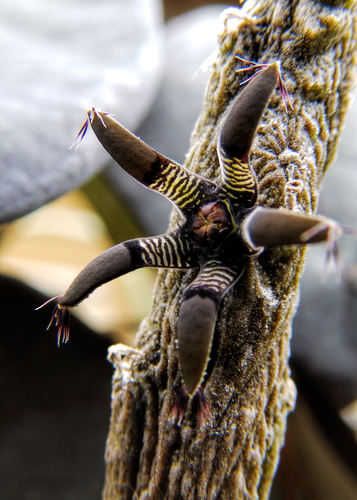
(c) Sunčana Bradley, some rights reserved (CC BY)
Description
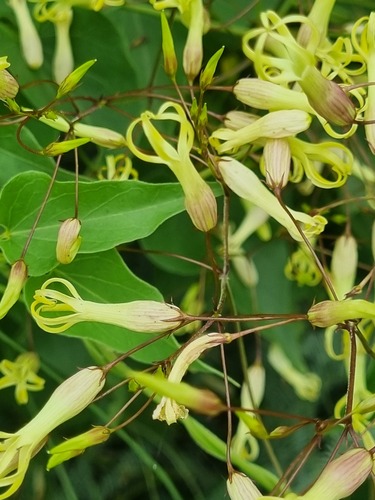
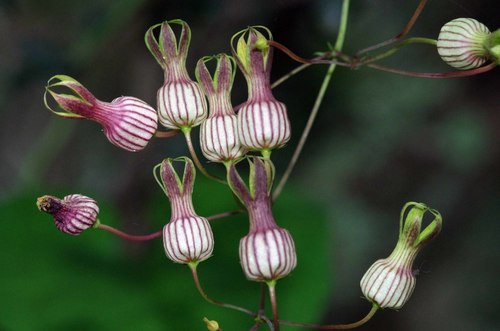
A climbing herb. It keeps growing from year to year. It puts up annual stems from a tuberous disc like rootstock. The leaves are opposite and oval. They have wavy edges. The flower are tube shaped and white. They have a structure that looks like a cage at the top. The fruit are in 2 erect follicles. They are narrow and 10 cm long.
Edible Uses
The leaves are cooked and eaten as spinach, while the roots are eaten raw or roasted.
Traditional Uses
The leaves are cooked and eaten as a spinach. The roots are eaten raw or roasted.
This uses section is brief — help expand it
Distribution
It is a tropical plant. It grows in damp, shady places.
Where It Grows
Africa, Botswana, East Africa, Eswatini, Mozambique, Southern Africa, Swaziland, Zambia, Zimbabwe,
Notes
Also put in the family Asclepiadaceae.
Synonyms
References (6)
- Fox, F. W. & Young, M. E. N., 1982, Food from the Veld. Delta Books. p 108
- Long, C., 2005, Swaziland's Flora - siSwati names and Uses http://www.sntc.org.sz/flora/
- Plowes, N. J. & Taylor, F. W., 1997, The Processing of Indigenous Fruits and other Wildfoods of Southern Africa. in Smartt, L. & Haq. (Eds) Domestication, Production and Utilization of New Crops. ICUC p 187
- Pickering, H., & Roe, E., 2009, Wild Flowers of the Victoria Falls Area. Helen Pickering, London. p 27
- Ruiters-Welcome, A. K., 2019, Food plants of southern Africa. Ph.D. thesis. Univ. of Johannesburg p 23
Show all 6 references Hide references
- Welcome, A. K. & Van Wyk, B.-E., 2019, An inventory and analysis of the food plants of southern Africa. South African Journal of Botany 122 (2019) 136–179