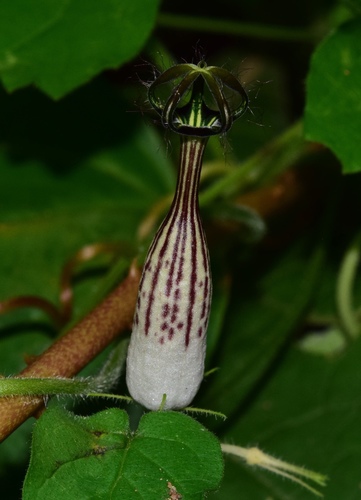
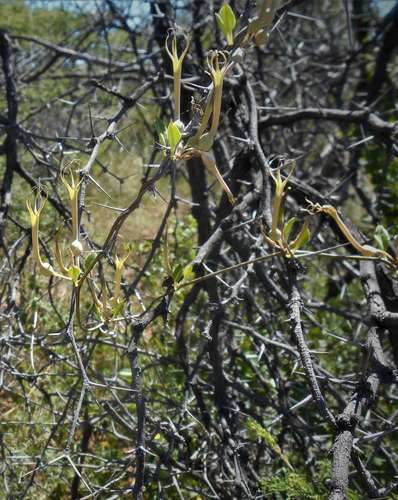
Ceropegia lugardae
N. E. Br.
Muroodza
iNaturalist· cc-by-nc
(c) Tony Benn, some rights reserved (CC BY-NC)
iNaturalist· cc-by-nc
(c) Tony Benn, some rights reserved (CC BY-NC)
iNaturalist· cc-by-nc
(c) Tony Benn, some rights reserved (CC BY-NC)
Description
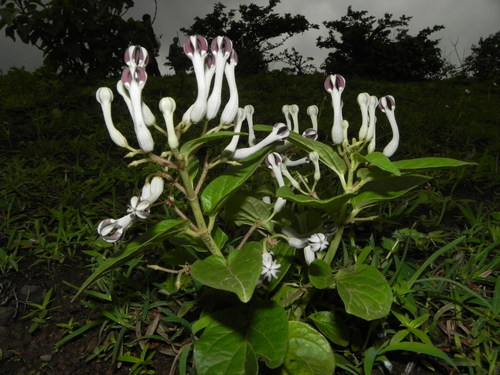
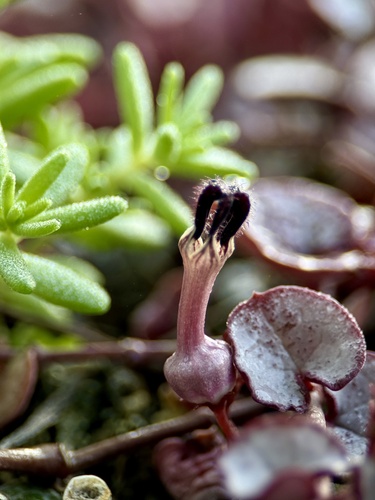
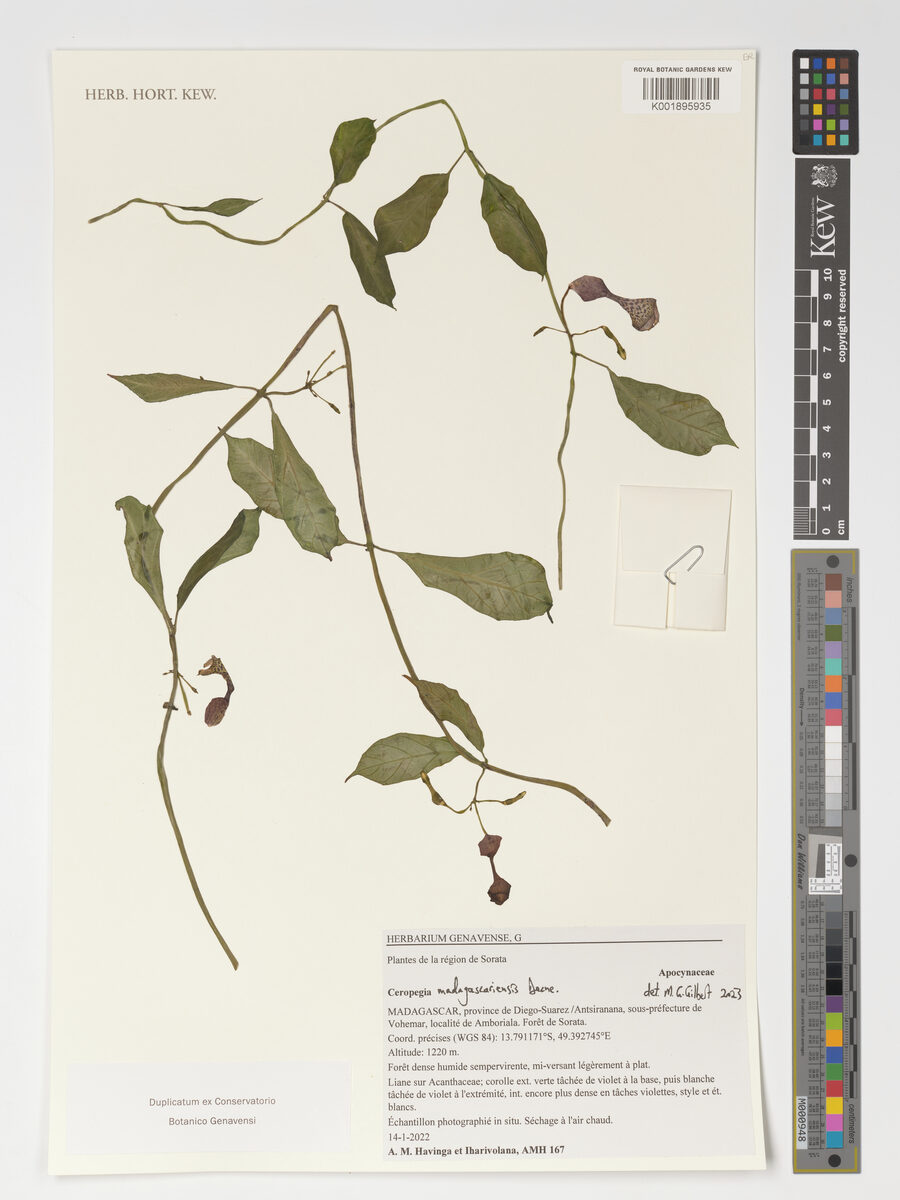
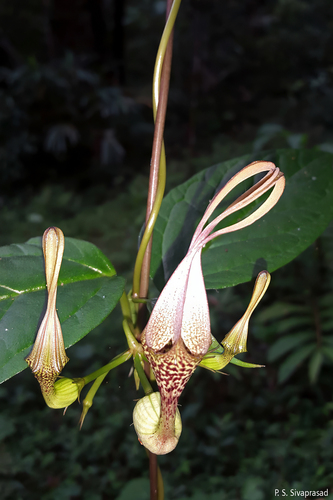
A climbing succulent herb. It has underground stem or rhizome. It can grow 10 m high. The leaves are heart shaped. They are opposite. They are 3 cm long by 2 cm wide. It has fleshy roots 40 cm long. There are 3-6 flowers at the nodes. The fruit is a double pod curved like a pair of horns.
Edible Uses
The tubers and roots are washed, scraped, and eaten raw, boiled, or roasted as a vegetable.
Traditional Uses
The tuber is washed, scraped and eaten raw or boiled or roasted as a vegetable.
This uses section is brief — help expand it
Medicinal Uses
The fresh roots are chewed and the mashed roots are applied to snakebites. The root sap is also swallowed for the same purpose. The stems and fruits are roasted, then ground into a powder which is applied to leg and back ailments.
Distribution
It is a tropical plant. It grows between 900-1,300 m above sea level. It grows in forest or woodland. It can grow in arid places.
Where It Grows
Africa, Botswana, East Africa, Namibia, Southern Africa, Zimbabwe,
Cultivation
Prefers a position with some shade. The plant has an acrid smell.
Other Uses
The leaves are rubbed on the strings of bows in order to make them smooth and pliant.
Notes
Also put in the family Asclepiadaceae.
Synonyms
References (5)
- Fox, F. W. & Young, M. E. N., 1982, Food from the Veld. Delta Books. p 108 (As Ceropegia distincta subsp. lugardae)
- Royal Botanic Gardens, Kew (1999). Survey of Economic Plants for Arid and Semi-Arid Lands (SEPASAL) database. Published on the Internet; http://www.rbgkew.org.uk/ceb/sepasal/internet [Accessed 28th March 2011]
- Ruiters-Welcome, A. K., 2019, Food plants of southern Africa. Ph.D. thesis. Univ. of Johannesburg p 23
- Welcome, A. K. & Van Wyk, B.-E., 2019, An inventory and analysis of the food plants of southern Africa. South African Journal of Botany 122 (2019) 136–179
- World Checklist of Useful Plant Species 2020. Royal Botanic Gardens, Kew