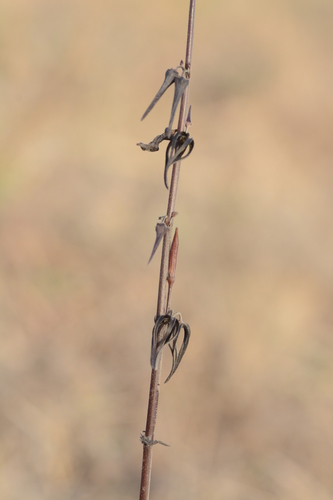
Ceropegia multiflora
Baker
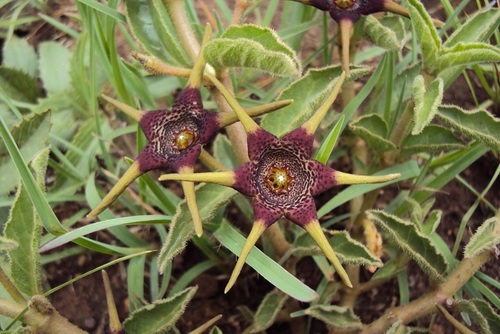
iNaturalist· cc-by-nc
(c) Alex Dreyer, some rights reserved (CC BY-NC), uploaded by Alex Dreyer
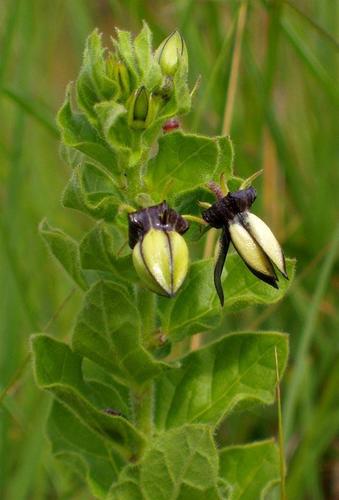
iNaturalist· cc-by-nc
(c) Alex Dreyer, some rights reserved (CC BY-NC)
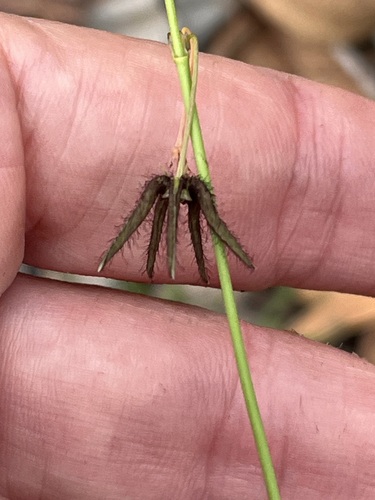
iNaturalist· cc-by-nc
(c) Alex Dreyer, some rights reserved (CC BY-NC)
Description
A herb. It has a large rootstock. This can be 8-12 cm across. The vines grow 1.5 m tall. They are slender and twining. The leaves are 2-5 cm long and 1-2 cm wide. They are fleshy. They taper towards the base. There can be one to many flowers in a group. The flowers are light brown.
Edible Uses
The roots are eaten as a snack fresh for their moisture content, and can also be cooked as a vegetable.
Traditional Uses
The roots are eaten as a snack and for moisture and also cooked as a vegetable.
This uses section is brief — help expand it
Distribution
It is a subtropical plant. It can grow in light shade.
Where It Grows
Africa, Namibia, South Africa, Southern Africa,
Cultivation
Plants can be grown by seeds or cuttings. It can be grown from tubers or offsets of the bulb.
Propagation
Seed - Cuttings
Notes
It had been put in the family Asclepiadaceae.
Nutrition
| Part | Moisture | kJ | kcal | Protein | Vit A | Vit C | Iron | Zinc |
|---|---|---|---|---|---|---|---|---|
| Tubers | 91.2 | 120 | 29 | 1 | — | 4.8 | 1 | 0.3 |
| Tubers | 95 | 65 | 15 | 0.8 | — | — | — | — |
| Leaves | — | — | — | — | — | — | — | — |
Synonyms
References (3)
- Ruiters-Welcome, A. K., 2019, Food plants of southern Africa. Ph.D. thesis. Univ. of Johannesburg p 23
- Wehmeyer, A. S, 1986, Edible Wild Plants of Southern Africa. Data on the Nutrient Contents of over 300 species.
- Welcome, A. K. & Van Wyk, B.-E., 2019, An inventory and analysis of the food plants of southern Africa. South African Journal of Botany 122 (2019) 136–179