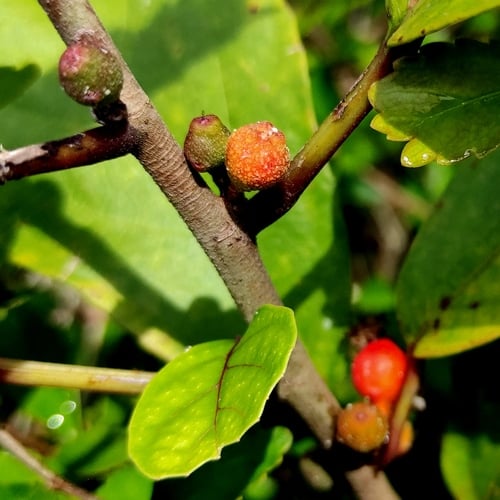
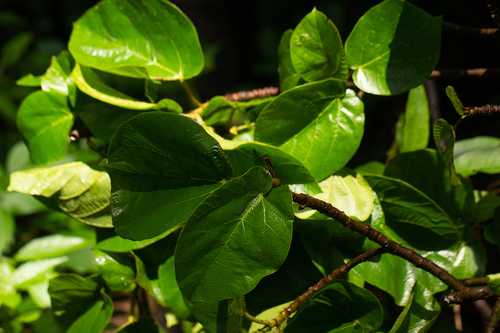
Ficus tinctoria subsp. gibbosa
Blume
White flesh banyan
iNaturalist· cc0
no rights reserved, uploaded by 葉子
iNaturalist· cc-by-nc
(c) tavita_togia2016, some rights reserved (CC BY-NC), uploaded by tavita_togia2016
iNaturalist· cc0
no rights reserved, uploaded by 葉子
Summary
Source: WikipediaFicus tinctoria, also known as dye fig, or humped fig is a hemiepiphytic tree in the genus Ficus. It is also one of the species known as a strangler fig. It is found in Asia, Malesia, northern Australia, and the South Pacific islands. It grows in moist valleys. Palms are favorable host species. Root systems of dye fig can come together to be self-sustaining, but the epiphyte usually falls if the host tree dies or rots away. In Australia it is recorded as a medium-sized tree with smooth, oval green leaves. It is found often growing in rocky areas or over boulders. The leaves are asymmetrical. The small rust-brown fruit of the dye fig are the source of a red dye used in traditional fabric making in parts of Oceania and Indonesia. The fruit is also edible and constitute as a major food source in the low-lying atolls of Micronesia and Polynesia.
Description
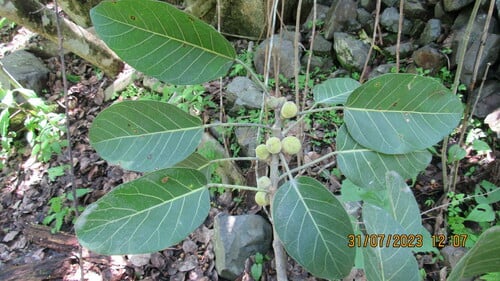
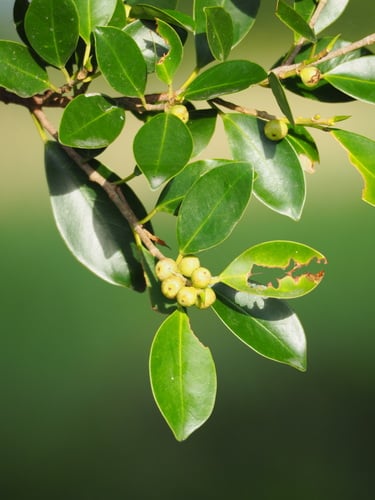
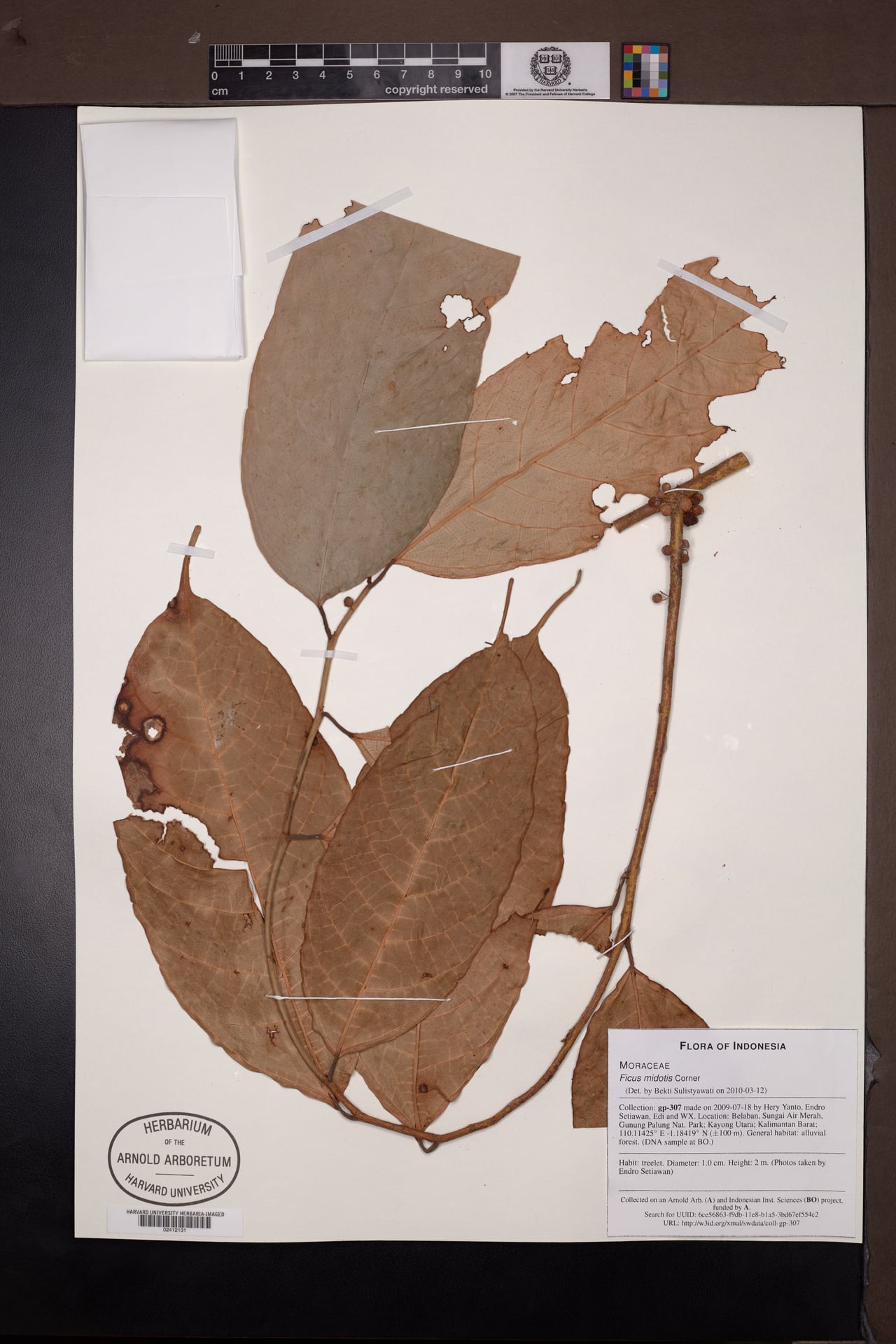
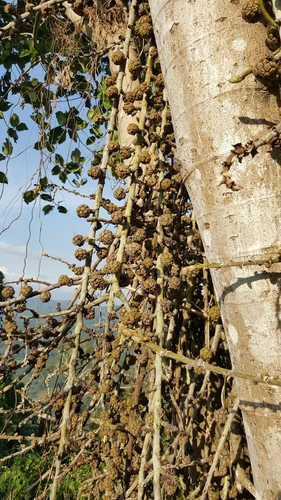
A fig. It is a medium sized tree. It can grow on other trees. It can be 15-20 m high. The trunk is 20-40 cm across. The leaves are oblong and 6-10 cm long by 3-4 cm wide. They are greyish. The figs are fleshy and small. They are round, yellow and 1 cm across.
Edible Uses
The figs are eaten fresh.
Traditional Uses
The fruit are eaten.
This uses section is brief — help expand it
Distribution
A tropical plant. In grows in mountains near the edge of secondary forest. It is light demanding. In XTBG Yunnan.
Where It Grows
Asia, Bhutan, China, Himalayas, India, Indochina, Indonesia, Laos, Malaysia, Myanmar, Nepal, SE Asia, Sri Lanka, Taiwan, Thailand, Vietnam,
Production
It is fast growing and quickly kills the tree it is growing on.
Notes
There are about 800-1000 Ficus species. They are mostly in the tropics. There are 120 Ficus species in tropical America.
Synonyms
Also Known As
Ara bereteh, Chanchari, Da da lech, Datir, Iradagam, Korotosani, Sai krang, Tella-barinika, Udumber
References (6)
- Ambasta, S.P. (Ed.), 2000, The Useful Plants of India. CSIR India. p 222 (As Ficus gibbosa)
- Bijdr. 466. 1825 (As Ficus gibbosa)
- Burkill, I.H., 1966, A Dictionary of the Economic Products of the Malay Peninsula. Ministry of Agriculture and Cooperatives, Kuala Lumpur, Malaysia. Vol 1 (A-H) p 1026 (As Ficus gibbosa)
- Flora of China @ efloras.org Volume 5
- Forest Inventory and Planning Institute, 1996, Vietnam Forest Trees. Agriculture Publishing House p 544 (As Ficus gibbosa)
Show all 6 references Hide references
- Hu, Shiu-ying, 2005, Food Plants of China. The Chinese University Press. p 359 (As Ficus gibbosa)