Artocarpus elasticus
Reinw. ex Blume
iNaturalist· cc-by-nc-sa
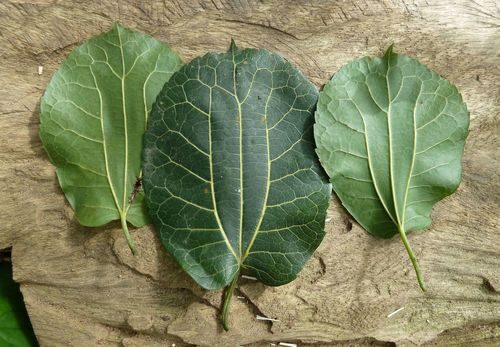
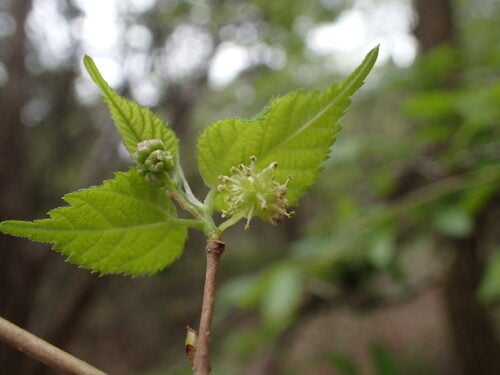
(c) 106611639464075912591, some rights reserved (CC BY-NC-SA), uploaded by 106611639464075912591
iNaturalist· cc-by-nc
(c) tansh91, some rights reserved (CC BY-NC), uploaded by tansh91
iNaturalist· cc-by-sa
(c) Ong Jyh Seng, some rights reserved (CC BY-SA), uploaded by Ong Jyh Seng
Summary
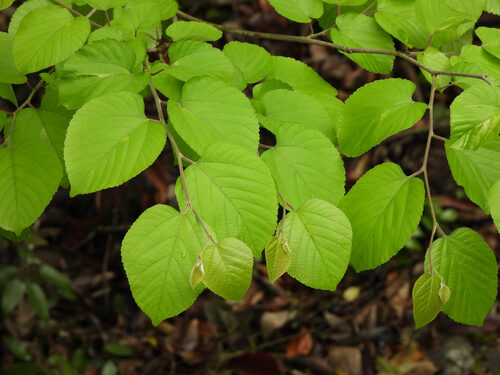
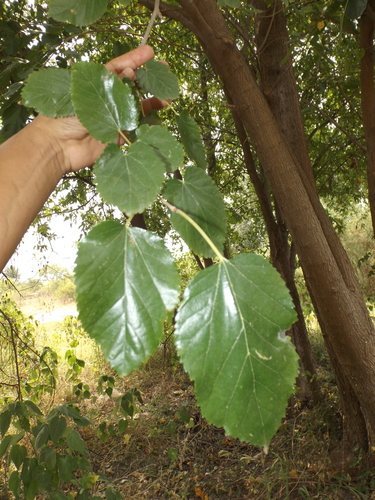
Source: WikipediaArtocarpus elasticus of the Mulberry Family (Moraceae) and commonly called terap nasi or terap, is a rainforest tree of maritime and mainland Southeast Asia, growing up to 45 metres (150 ft) (occasionally as much as 214 feet (65 meters)) in height with a diameter at breast height of about 1 metre (3 ft). The juvenile trees are noteworthy for producing a rosette of enormous deeply lobed leaves similar in shape to those of the white oak (Quercus alba), but up to 2 metres (6 ft) long by about 1.2 metres (4 ft) in width. The stipules are up to eight inches (twenty centimeters) long, among the largest known. These leaves emerge from leaf buds as long as 18 centimetres (7 in). The trees are dioecious (male and female flowers on separate trees). It produces a fruit like a small breadfruit. The male capitulae produce clouds of pollen, and pollenisation is apparently by wind.
Description
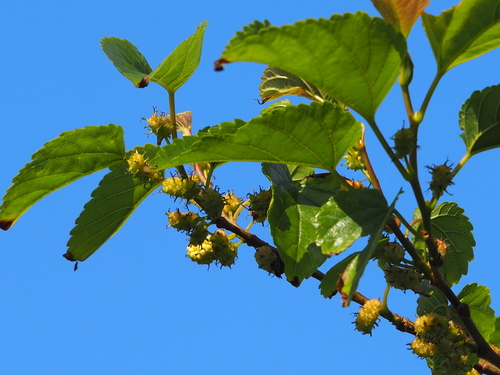
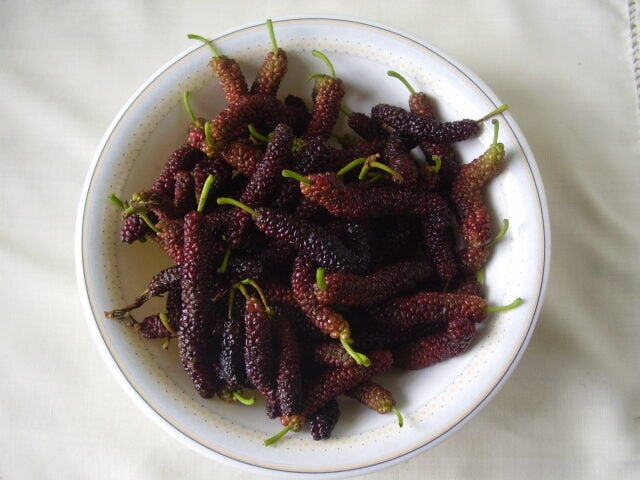
A large tree. It grows to 45 m high. The trunk can be 210 cm across. There are buttresses 3 m high. The bark is grey-brown and slightly scaly. The twigs are 8-20 mm thick. They have dense golden hairs. There are ring like scars. The leaves are alternate and crowded. They are stiffly leathery. They have a blunt form at both ends and are entire or lobed towards the tip. Leaves are 12.5-60 cm long by 10-35 cm wide. There are 12-14 pairs of secondary veins. The male flower parts are yellowish and finger like. They are 6-20 cm long by 2.5-3.8 cm wide. They are grooved. The flower stalk is 40-75 mm long. Female flowers are in rounded heads. The fruit are heavy. They are yellow-brown. They are 11.5 cm long by 5.5 cm wide. They have a bad smell when ripe. The seeds or nuts are short and oval and in a white gummy flesh. The seeds are 10 mm long by 6 mm wide. They are covered with a white coat. The ripe fruit pulp and seeds are edible.
Edible Uses
The sweet white pulp of the fruit is eaten. The ripe fruit has a nauseatingly rancid smell. The fruits are of an unpleasant smell, but are sweet with a savoury taste. Ripe seeds - roasted and eaten. Source of a latex that is used as a chewing gum base.
Traditional Uses
The fleshy portion of the fruit is eaten raw. The ripe seeds are roasted and eaten.
This uses section is brief — help expand it
Distribution
A tropical plant. They occur along the Pacific coast from Quezon to Samar growing at low and medium altitudes in the Philippines. In Indonesia they are mostly below 300 m altitude but can occur up to 1500 m. It grows in the drier eastern region in Malaysia.
Where It Grows
Asia, Australia, Brunei, Indochina, Indonesia, Malaysia, Myanmar, Pacific, Philippines, Sarawak, SE Asia, Thailand,
Cultivation
Plants are grown by seeds.
Propagation
Seed - best sown as soon as it is ripe. The seed germinates best at a temperature of 24 - 27c. Root cuttings. Air layering.
Other Uses
The fibrous bark is tough and strips readily into big sheets. It is used for making clothing, lining baskets and bins, for house walls and for string. The bark is sometimes used to make tapa cloth - strips of the prepared bark are beaten with wooden mallets on a smooth, wooden surface - as they are beaten, they gradually spread out and become thinner until a good quality cloth is formed. The large leaves are used as thatch, to make partitions in long houses, and for temporary field huts. The oil obtained from the seeds is used to make a hair oil. The light-yellow to brown wood is soft, durable, coarse-grained and of variable quality. It is attacked by termites. It is used for boards, posts of houses, boats and general carpentry. The wood belongs to a group of timbers known as terap. The general description of this wood is:- The heartwood is yellow to pale brown; it is usually not differentiated from the sapwood. The texture is moderately coarse to coarse and even; the grain is interlocked. The wood is non-durable under tropical conditions. It seasons fairly slowly, with high shrinkage and slight bowing, cupping and checking. It is generally easy to work; saws well; planes easily but leaves a rough finish on radial surfaces; bores and turns easily, but leaves a rough finish;nailing property is good; can be peeled satisfactorily and is suitable for plywood production. Locally, the wood is used for light construction, for making boxes, crates, wooden pallets and veneer. The wood is sometimes nicely figured and therefore is suitable for decorative purposes like furniture, joinery and panelling.
Other Information
It is cultivated as a fruit tree. The fruit are especially eaten by children.
Notes
There are about 50 Artocarpus species. They are in the tropics and subtropics of Asia and the Pacific.
Synonyms
Also Known As
Bakil, Benda kebo, Benda, Danging, Ho, Kapua, Kumut, Malagumihan, Pekalong, Pilang, Pohon nangka benda, Talun, Tap, Tarap, Tarok, Tarop, Tekalong, Terap munyit, Terap nasi, Terap
References (27)
- Argent, G et al, nd, Manual of the Larger and More important non Dipterocarp Trees of Central Kalimantan Indonesia. Volume 2 Forest Research Institute, Samarinda, Indonesia. p 433
- Barwick, M., 2004, Tropical and Subtropical Trees. A Worldwide Encyclopedic Guide. Thames and Hudson p 36
- Bircher, A. G. & Bircher, W. H., 2000, Encyclopedia of Fruit Trees and Edible Flowering Plants in Egypt and the Subtropics. AUC Press. p 43
- Bijdr. 481. 1825
- Brown, W.H., 1920, Wild Food Plants of the Philippines. Bureau of Forestry Bulletin No. 21 Manila. p 40
Show all 27 references Hide references
- Burkill, I.H., 1966, A Dictionary of the Economic Products of the Malay Peninsula. Ministry of Agriculture and Cooperatives, Kuala Lumpur, Malaysia. Vol 1 (A-H) p 253
- Chai, P. P. K. (Ed), et al, 2000, A checklist of Flora, Fauna, Food and Medicinal Plants. Lanjak Entimau Wildlife Sanctuary, Sarawak. Forestry Malaysia & ITTO. p 168
- Coronel, R.E., 1982, Fruit Collections in the Philippines. IBPGR Newsletter p 6
- Hariyadi, B., 2008, The Entwined Tree: Traditional Natural Resource Management of Serampas, Jambi, Indonesia. Ph. D thesis. Univ. or Hawaii. p 401
- Hanum, F. I., 1999, Plant Diversity and Conservation Value of Ayer Hitam Forest, Selangor, Peninsula Malaysia. Pertanika J. Trop. Agric. Sci. 22(2):73-83
- Menninger, E.A., 1977, Edible Nuts of the World. Horticultural Books. Florida p 73
- Milow, P., et al, 2013, Malaysian species of plants with edible fruits or seeds and their evaluation. International Journal of Fruit Science. 14:1, 1-27
- Monsalud, M.R., Tongacan, A.L., Lopez, F.R., & Lagrimas, M.Q., 1966, Edible Wild Plants in Philippine Forests. Philippine Journal of Science. p 500
- Ong, H., et al, 2012, Traditional knowledge and usage of edible plants among the Semai community of Kampung Batu 16, Tapah, Perak, Malaysia. Scientific Research and Essays Vol. 7(4), pp. 441-445, 30 January, 2012
- Pawera, L., et al, 2020, Wild Food Plants and Trends in Their Use: From Knowledge and Perceptions to Drivers of Change in West Sumatra, Indonesia, Foods. 2020, 9, 1240
- Saw, L.G., LaFrankie, J. V. Kochummen, K. M., Yap S. K., 1991, Fruit Trees in a Malaysian Rain Forest. Economic Botany, Vol. 45, No. 1, pp. 120-136
- Septiani, Y. & Sidabutar, H., (Eds.) 2015, Biodiversity Survey. In the Sub Watershed Embaloh, Betung Kerihun National Park. ITTO p 81
- Siong, K. H., 2003, Indigenous Fruits of Sarawak. Forest Department Sarawak. p 96
- Slik, F., www.asianplant.net
- Soepadmo, E. and Saw, L. G., 2000, Tree Flora of Sabah and Sarawak. Forestry Malaysia. Volume Three. p 196
- Sukarya, D. G., (Ed.) 2013, 3,500 Plant Species of the Botanic Gardens of Indonesia. LIPI p 136
- Suwardi, A. B., et al, 2020, Ethnobotany and conservation of indigenous edible fruit plants in South Aceh, Indonesia. Biodiversitas Vol. 21, No. 5, pp 1850-1860
- Tankard, G., 1990, Tropical fruit. An Australian Guide to Growing and using exotic fruit. Viking p 122
- USDA, ARS, National Genetic Resources Program. Germplasm Resources Information Network - (GRIN). [Online Database] National Germplasm Resources Laboratory, Beltsville, Maryland. Available: www.ars-grin.gov/cgi-bin/npgs/html/econ.pl (10 April 2000)
- Wickens, G.E., 1995, Edible Nuts. FAO Non-wood forest products. FAO, Rome. p 144
- Wiersema, J. H. & Leon, B., 2013, World Economic Plants. A Standard Reference CRC Press. 2nd Ed. p 73
- World Checklist of Useful Plant Species 2020. Royal Botanic Gardens, Kew