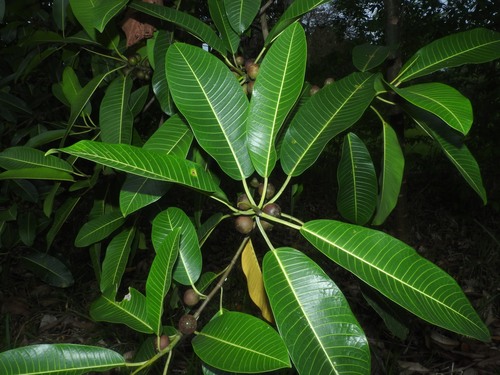
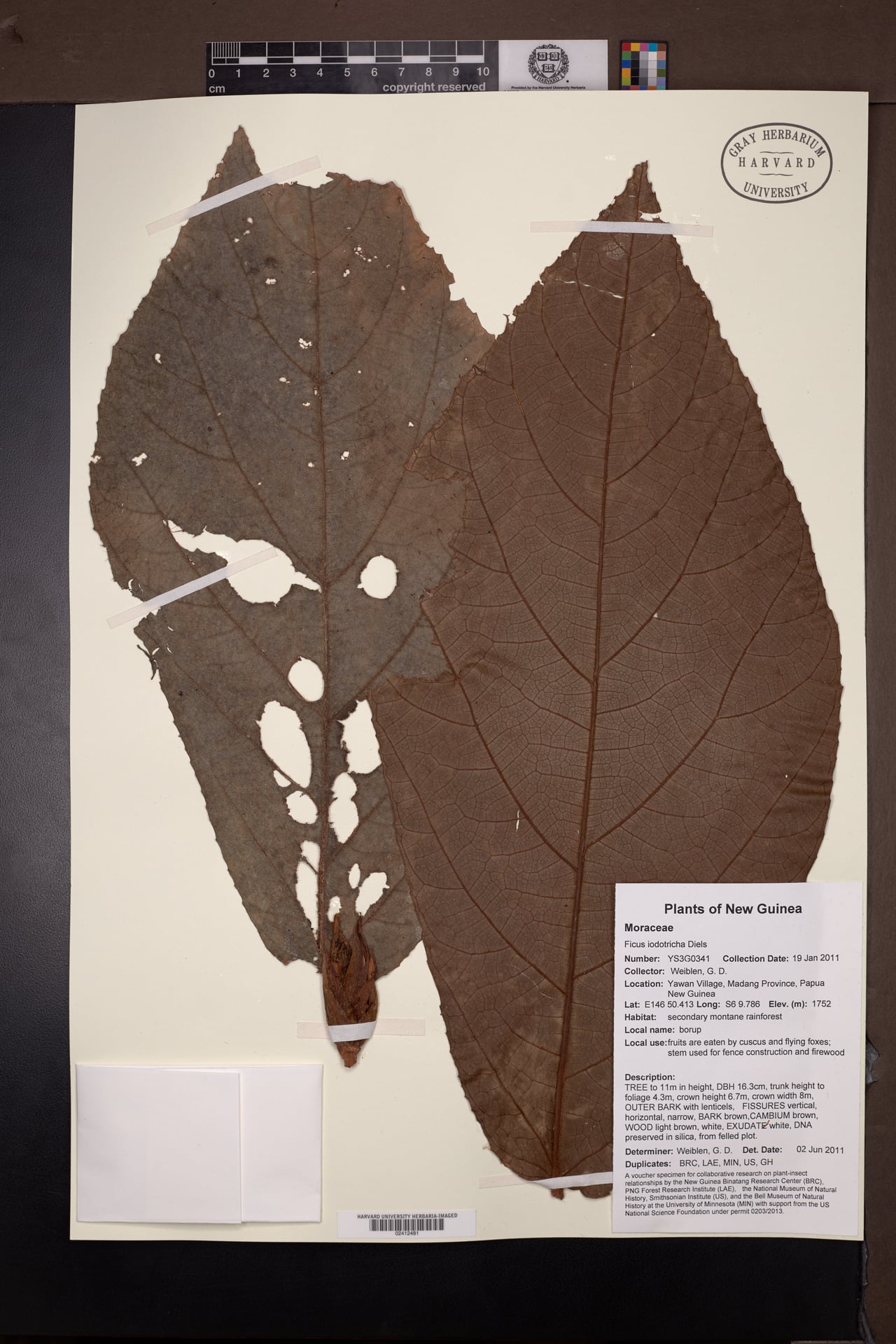
Artocarpus gomezianus
Wall. ex Trecul.
Rounded jackfruit tree
iNaturalist· cc-by-sa
(c) Vinayaraj, some rights reserved (CC BY-SA)
iNaturalist· cc-by-sa
(c) Vinayaraj, some rights reserved (CC BY-SA)
iNaturalist· cc-by-sa
(c) Vinayaraj, some rights reserved (CC BY-SA)
Summary
Source: WikipediaArtocarpus gomezianus is a tree in the family Moraceae and a wild species of the breadfruit or jackfruit genus (Artocarpus); it may be referred to as the 'sampang' and its Vietnamese name is mít chay. Distribution records are from: Assam, through Indo-China to west Malesia.
Description
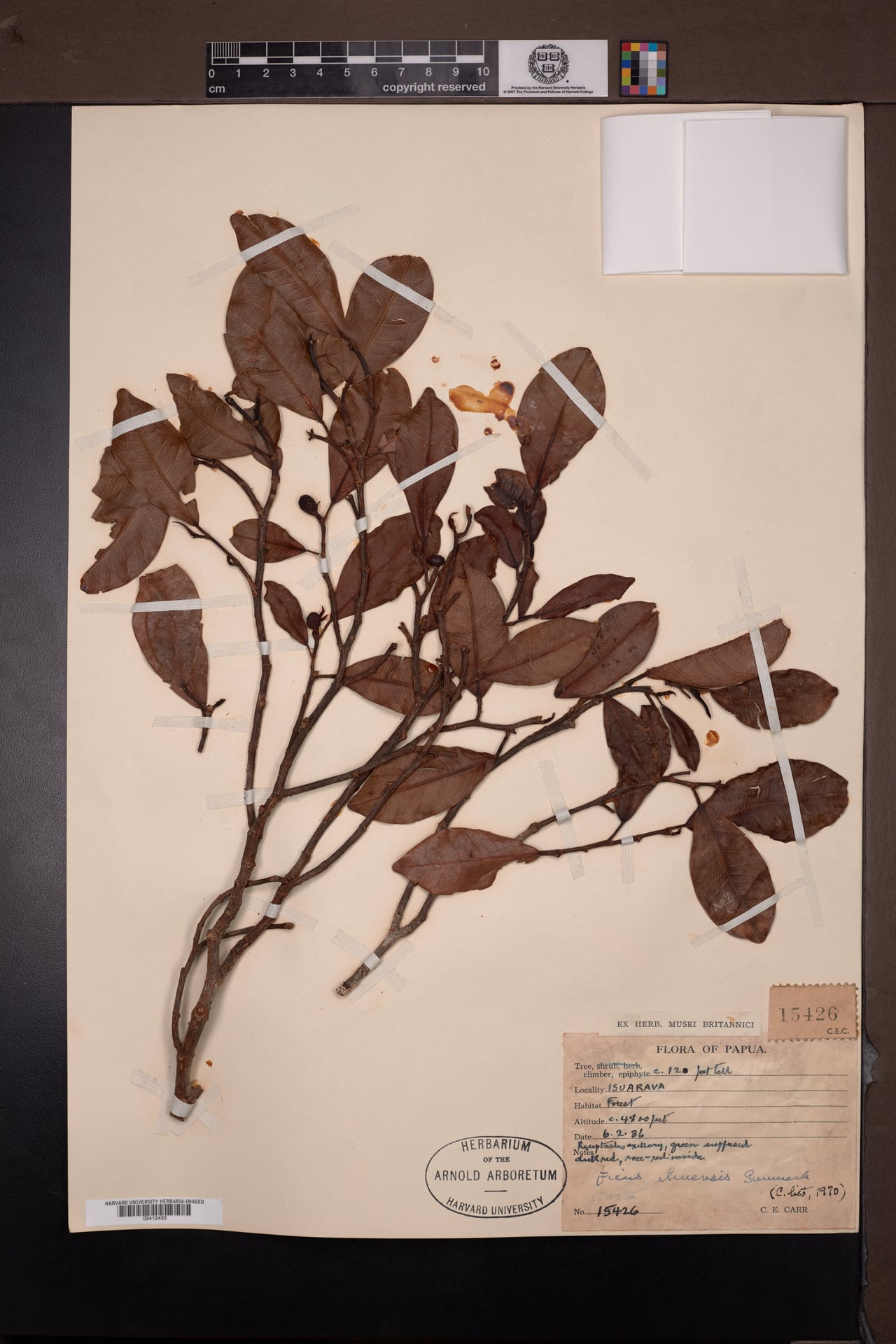
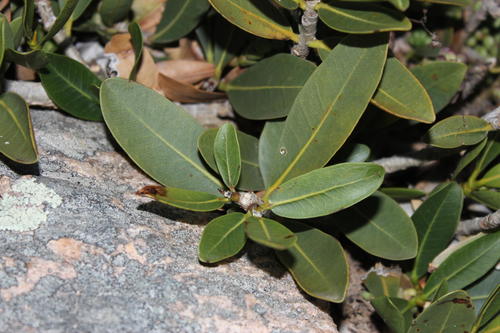
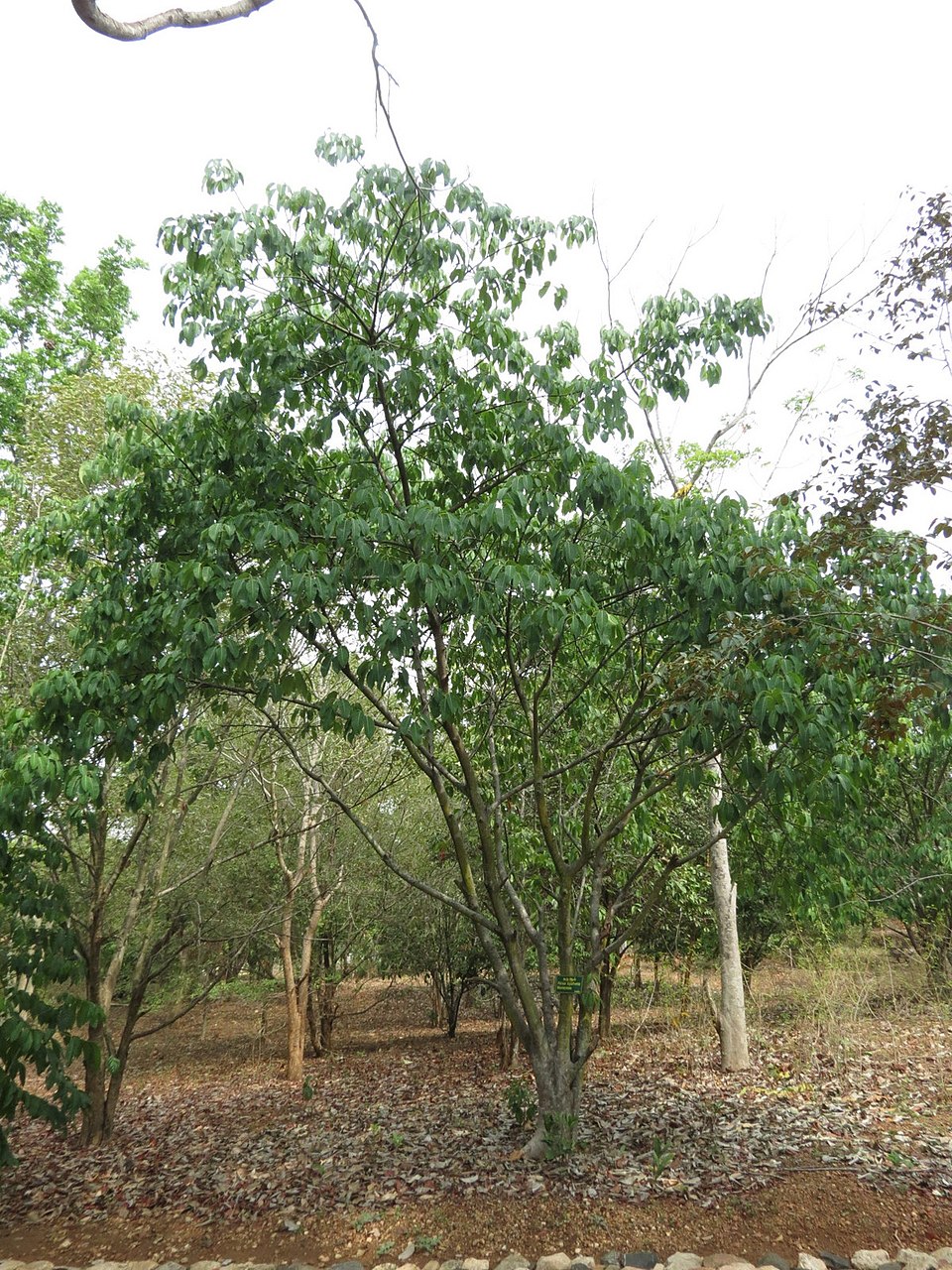
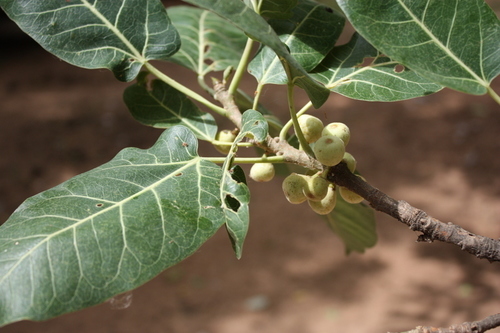
An evergreen tree. It grows 10-40 m high. The bark is dark grey. The small branches are 2-4 mm thick. They are slightly wrinkled and covered with fine hairs. The leaf stalk is 1.5-3 cm long. The leaf blade is oblong and 11-15 cm long by 7-16 cm wide. There is an irregular edge to the leaf and the base is rounded. The male flowers are in a round head 1-1.5 cm across. The fruit is yellow to pale red. It is 8 cm across. It is smooth and fleshy. The fruit stalk is 1.5-4.5 cm long.
Edible Uses
The fruit are cooked and eaten or made into jelly. Young fruit are salted as a pickle. The seeds are boiled and eaten.
Traditional Uses
The fruit are cooked and eaten. They are also used for making jelly. Young fruit are salted as a pickle. The seeds are boiled and eaten.
This uses section is brief — help expand it
Distribution
A tropical plant. It grows in broad-leaved and semi evergreen forests in Taiwan. In Timor it grows in the tropical mountain cloud forest above 1,500 m above sea level.
Where It Grows
Andamans, Asia, China, East Timor, India, Indochina, Indonesia, Laos, Malaysia, Myanmar, Pacific, Philippines, SE Asia, Sri Lanka, Taiwan, Thailand, Timor-Leste, Vietnam,
Cultivation
Plants can be grown from seed.
Production
In India plants flower and fruit July to September.
Notes
There are about 50 Artocarpus species. They are in the tropics and subtropics of Asia and the Pacific.
Nutrition
| Part | Moisture | kJ | kcal | Protein | Vit A | Vit C | Iron | Zinc |
|---|---|---|---|---|---|---|---|---|
| Fruit | 75.6 | — | 418 | — | 19.5 | — | 0.07 | 0.2 |
Synonyms
Also Known As
Chang ye bo luo mi, Kala lakuch, Kanagonna, Koeto, Myauklu, Pohon nangka bulat, Soh-ram, Sungkup sali, Tampang burong, Tampang nangka, Tampang nasi, Tampang pelandok, Tampang telur, Tampang tulong, Tampang, Tapang, Thitti plavu
References (14)
- Awasthi, A.K., 1991, Ethnobotanical studies of the Negrito Islanders of Andaman Islands, India - The Great Andamanese. Economic Botany 45(2) pp 274-280.
- Bircher, A. G. & Bircher, W. H., 2000, Encyclopedia of Fruit Trees and Edible Flowering Plants in Egypt and the Subtropics. AUC Press. p 43
- Burkill, I.H., 1966, A Dictionary of the Economic Products of the Malay Peninsula. Ministry of Agriculture and Cooperatives, Kuala Lumpur, Malaysia. Vol 1 (A-H) p 255
- Chandrashekara, U. M., 2009, Tree species yielding edible fruit in the coffee-based homegardens of Kerala, India: their diversity, uses and management. Food Sec. 1:361-370
- Dobriyal, M. J. R. & Dobriyal, R., 2014, Non Wood Forest Produce an Option for Ethnic Food and Nutritional Security in India. Int. J. of Usuf. Mngt. 15(1):17-37
Show all 14 references Hide references
- http://iscmumbai.maharashtra.gov.in/floristic%20survey.html
- Jeeva, S., 2009, Horticultural potential of wild edible fruits used by the Khasi tribes of Meghalaya. Journal or Horticulture and Forestry Vol. 1(9) pp. 182-192
- Menninger, E.A., 1977, Edible Nuts of the World. Horticultural Books. Florida p 74
- Milow, P., et al, 2013, Malaysian species of plants with edible fruits or seeds and their evaluation. International Journal of Fruit Science. 14:1, 1-27
- Mozhui, R., et al, 2011, Wild edible fruits used by the tribals of Dimapur district of Nagaland, India. Pleione 5(1): 56 - 64.
- Ravikrishna, S., 2011, Ethno-medico-botanical survey on Wild Edible fruits of Udupi Taluq, Udupi p 55 (subsp. zeylanicus)
- Seal, T., et al, 2014, Nutritional potential of wild edible fruits traditionally used by the local people of Meghalaya state in India. Indian Journal of Natural Products and Resources. Vol. 5(4) December 2014 pp. 359-364
- Sukarya, D. G., (Ed.) 2013, 3,500 Plant Species of the Botanic Gardens of Indonesia. LIPI p 137
- World Checklist of Useful Plant Species 2020. Royal Botanic Gardens, Kew