Ficus carica
L.
Fig
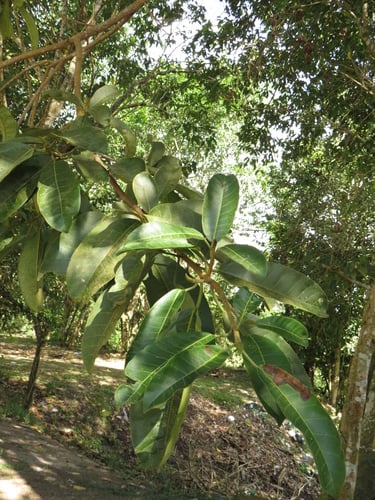
iNaturalist· cc-by-nc-sa
(c) Gary Griffith, some rights reserved (CC BY-NC-SA), uploaded by Gary Griffith
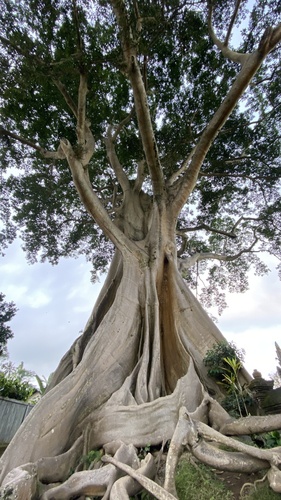
iNaturalist· cc-by
(c) Drepanostoma, some rights reserved (CC BY), uploaded by Drepanostoma
iNaturalist· cc-by-nc
(c) Claudia Fernández Bagan, some rights reserved (CC BY-NC), uploaded by Claudia Fernández Bagan
Summary
Source: WikipediaA deciduous tree reaching 6m tall and wide at a medium growth rate, hardy to UK zone 7 and not frost tender. Flowers appear June to September with seeds ripening August to September. The plant is monoecious and self-fertile, attracting wildlife. It thrives in light sandy, medium loamy, or heavy clay soils with good drainage, tolerating poor nutrition and drought. Cannot grow in shade but adapts to mildly acid, neutral, or basic soil pH.
Description
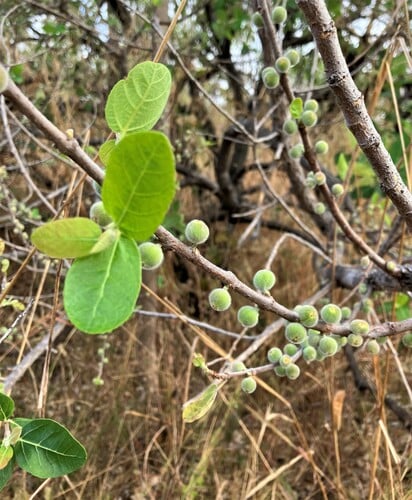
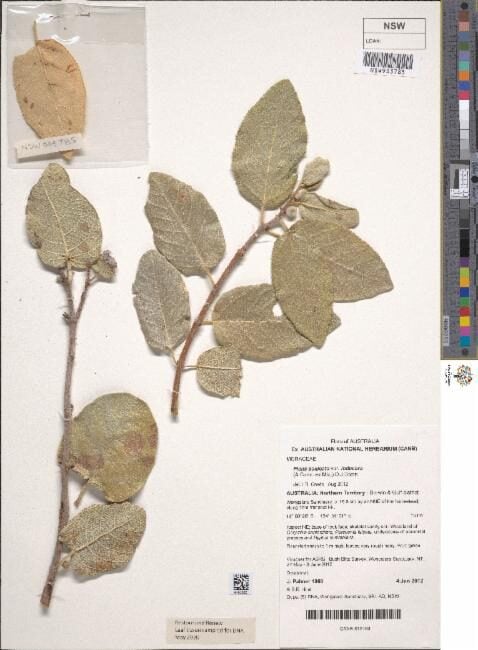
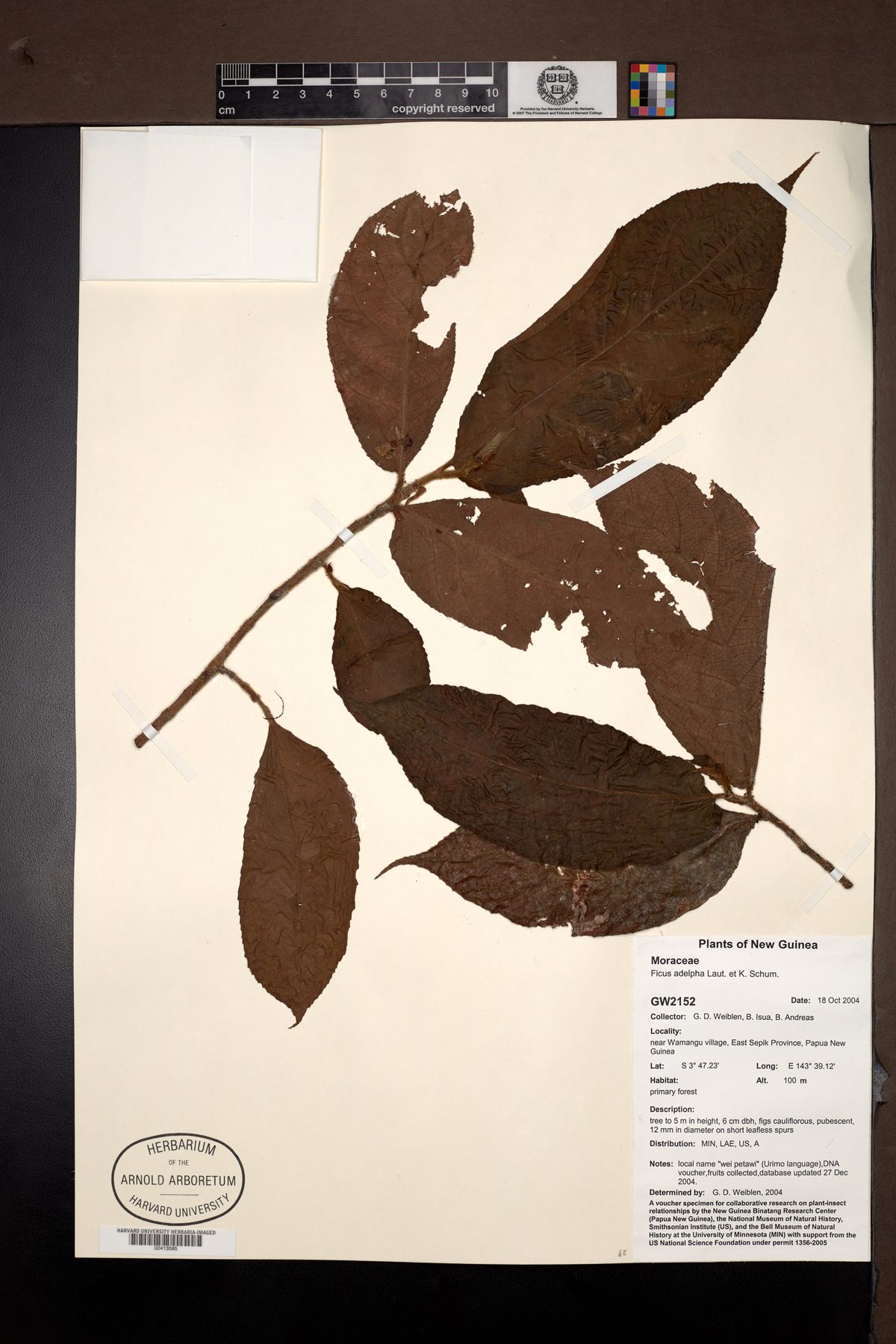
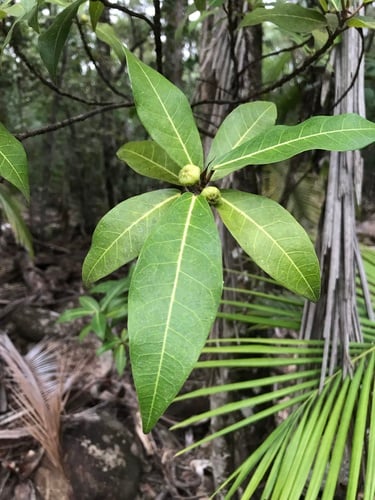
A fig. It is a low spreading deciduous tree with large leaves. It can grow to 10 m high. Trees are widely spreading with many branches. It has milky sap. The small branches are straight and strong. The leaves spread out like fingers on a hand with 3 or 5 lobes. The leaves are rough textured on the upper surface and downy underneath. The flowers are of one sex only. There are two sex forms - the caprifig and the fig. The caprifigs are dry and hard and develop 3 times a year. They harbour the fig wasp which itself goes through 3 different stages of its life cycle in these 3 fruit seasons. The "fruit" is a hollow receptacle with an opening at the tip. Inside this the flowers grow and mature. The true fruit develop inside this large receptacle. They are produced either singly or in pairs in the axils of leaves. Fruit colour can vary from black, brown, green and yellow. Wild figs have both male and female flower parts but cultivated figs have no male flower parts and the fruit develop without fertilisation for Adriatic figs but need a fig wasp for Smyrna figs. There are several hundred cultivated kinds of fig.
Edible Uses
The fruit is eaten raw or cooked. Fully ripe figs are sweet and succulent, and the dried fruit is a major item of commerce. Figs are usually pear-shaped and up to 5 cm in diameter. Nutritional composition per 100 g dry weight (352 calories; water 0%): protein 6 g, fat 1.2 g, carbohydrate 89 g, fibre 7 g, ash 3.8 g; calcium 220 mg, phosphorus 133 mg, iron 2.7 mg, sodium 9 mg, potassium 862 mg; vitamin A 347 mg, thiamine (B1) 0.25 mg, riboflavin (B2) 0.25 mg, niacin 2 mg, vitamin C 9.22 mg. The latex from the sap can also be used as a curdling agent to coagulate plant milks.
Traditional Uses
Fruit are eaten raw or cooked. They can be dried, preserved or used in jam. They are used in syrups, bread, pastries, and pies. The fruit are made into brandy and wine. Food is wrapped in the leaves while cooking to impart flavour. This is used with fish. The latex is used to coagulate milk for cheese and junket.
Medicinal Uses
A decoction of the leaves is stomachic, and the leaves are also added to boiling water and used as a steam bath for painful or swollen piles. Latex from the stems treats corns, warts, and piles, and has an analgesic effect against insect stings and bites. The fruit is mildly laxative, demulcent, digestive, and pectoral. Unripe green fruits are cooked with other foods as a galactogogue and tonic. Roasted fruit is emollient and used as a poultice for gumboils and dental abscesses. Syrup of figs, made from the fruit, is a well-known gentle laxative suitable for the young and very old. A decoction of young branches is an excellent pectoral. The plant also has anticancer properties.
Known Hazards
Figs contain diverse phytochemicals under basic research for their potential biological properties, including polyphenols, such as gallic acid, chlorogenic acid, syringic acid, (+)-catechin, (−)-epicatechin and rutin. Fig color may vary between cultivars due to various concentrations of anthocyanins, with cyanidin-3-O-rutinoside having particularly high content. Like other plant species in the family Moraceae, contact with the milky sap of Ficus carica followed by exposure to ultraviolet light can cause phytophotodermatitis, a potentially serious skin inflammation. Although the plant is not poisonous per se, F. carica is listed in the FDA Database of Poisonous Plants. Furanocoumarins cause phytophotodermatitis in humans. The common fig contains significant quantities of two furanocoumarins, psoralen and bergapten. The essential oil of fig leaves contains more than 10% psoralen, the highest concentration of any organic compound isolated from fig leaves. Psoralen and bergapten are found in the milky sap of the leaves and shoots of F. carica but not the fruits. Neither psoralen nor bergapten was detected in the essential oil of fig fruits.
Distribution
It suits tropical, subtropical and warm temperate regions. It is native to S.W. Asia. It can stand light frosts once hardened. Of the very large number of figs in PNG, this one is introduced. It suits highland areas in the tropics with a lower rainfall. It produces better if rain is less at flowering. Good summer heat is necessary for sugar-rich fruit. Plants do best in heavy soil in well prepared sites. It needs a neutral pH. It has some salt tolerance. In Brisbane Botanical Gardens. In Nepal it grows to about 1200 m altitude. In some places it can grow up to 2,300 m above sea level. It suits hardiness zones 10-12. In Sichuan. In Yunnan. National Arboretum Canberra.
Where It Grows
Afghanistan, Africa, Albania, Algeria, Andes, Andorra, Armenia, Australia, Azerbaijan, Bahrain, Balkans, Bangladesh, Brazil, Britain, Bulgaria, Burkina Faso, Canada, Cape Verde, Caucasus, Central America, Central Asia, China, Colombia, Cook Islands, Costa Rica, Crete, Cuba, Cyprus, Dominican Republic, East Africa, Easter Island, Ecuador, Egypt, Ethiopia, Europe, Fiji, France, Georgia, Germany, Gibraltar, Greece, Guam, Haiti, Hawaii, Himalayas, India, Indochina, Indonesia, Iran, Iraq, Israel, Italy, Jamaica, Jordan, Kiribati, Korea, Lebanon, Macedonia, Madagascar, Malawi, Malta, Mauritania, Mediterranean*, Mexico, Micronesia, Middle East, Montenegro, Morocco, Myanmar, Nepal, New Zealand, Niger, Niue, North Africa, North America, Northeastern India, Pacific, Pakistan, Palau, Palestine, Papua New Guinea, PNG, Philippines, Portugal, Puerto Rico, Qatar, Russia, Sahel, Sao Tome and Principe, Saudi Arabia, SE Asia, Serbia, Sinai, Slovenia, South Africa, Southern Africa, South America, Spain, St Helena, Syria, Tajikistan, Tasmania, Thailand, Tonga, Tunisia, Turkey, Türkiye, Turkmenistan, Tuvalu, United Arab Emirates, UAE, Uruguay, USA, Uzbekistan, West Africa, West Indies, Zimbabwe,
Cultivation
Figs are plants of temperate and subtropical climates. They do not generally grow well in the wet tropics, but can be grown at higher elevations in the drier to moist tropics. The fruits develop best when plants are grown in relatively dry climates where a cool-season alternates with a hot season. They grow best in areas where annual daytime temperatures are within the range of 16 - 26°c, but can tolerate 4 - 38°c. Dormant plants are hardy to about -15°c. The top growth is susceptible to frost damage and can be killed back to the base in severe winters, though plants usually recover well. They prefer a mean annual rainfall in the range 700 - 1,500mm, but tolerate 300 - 2,700mm. Prefers a very sunny position but tolerates part-day shade when grown on a warm wall. Requires a well-drained medium to light loam and some lime rubble incorporated into the soil. Succeeds in dry soils. A heavy wet soil tends to encourage excessive plant growth at the expense of fruit production. Prefers a pH in the range 6 - 7, but tolerates 4.3 - 8.6. Seedling trees can commence cropping when only 3 - 4 years old, whilst cuttings can start fruiting in only 1 - 2 years. Up to three crops of fruit a year can be obtained in some countries. Trees have been known to live for as long as 200 years. There are many named varieties. There are two primary types of fig:- the Adriatic fig which produces fruit without pollination; and the Symrna fig that require the presents of a fig wasp for pollination. It is a good idea to restrict the roots of fig trees on most soil types in order to discourage excessive vegetative growth at the expense of fruit production. This can be done by root pruning, but it is easier to place some kind of permanent restriction around the roots - planting into a large tub that is then buried into the ground is one method. It is important to make sure that the tree still gets ample moisture, especially when the fruits are ripening. Fig trees have a unique form of fertilization, each species relying on a single, highly specialized species of wasp that is itself totally dependant upon that fig species in order to breed. The trees produce three types of flowers; a male, a long-styled female and a short-styled female flower, often called the gall flower. All three types of flowers are contained within the structure we usually think of as the fruit. The female fig wasp enters a fig and lays its eggs on the short styled female flowers while pollinating the long-styled female flowers. Wingless male fig wasps emerge first, inseminate the emerging females and then bore exit tunnels out of the fig for the winged females. Females emerge, collect pollen from the male flowers and fly off in search of figs whose female flowers are receptive. In order to support a population of its pollinator, individuals of a Ficus spp. must flower asynchronously. A population must exceed a critical minimum size to ensure that at any time of the year at least some plants have an overlap of emission and reception of fig wasps. Without this temporal overlap, the short-lived pollinator wasps will go locally extinct. When grown outdoors in Britain only one crop is usually obtained, though in exceptionally hot years two crops are sometimes produced. The fruit usually takes about 12 months to mature in Britain, baby fruits no larger than about 15mm long in the autumn usually overwinter to form the following year's crop of fruit. If plants are grown in pots in a conservatory or cold greenhouse, two crops of fruit can be obtained, one in early summer and one in late summer to autumn. Pinch back the new shoots to about six leaves in order to encourage the second crop. In garden design, as well as the above-ground architecture of a plant, root structure considerations help choose plants that work together for their optimal soil requirements, including nutrients and water. Figs are typically harvested in Summer to early Autumn. Figs produce their flowers in Spring, though they are often hidden inside the fruit structure. Figs grow moderately fast, often reaching maturity and starting to bear fruit in 3-5 years.
Propagation
Sow seed in spring in a warm greenhouse. Prick out seedlings as soon as they are large enough to handle and overwinter young plants under glass for at least their first year. Plant out in late spring after the last expected frosts, with some protection during the first winter outdoors. Cuttings of mature wood, 10–12 cm with a heel, can be taken in winter and rooted in a frame; they must be kept frost free and are best placed in individual pots. Layering is also possible.
Other Uses
Figs can be used in agroforestry as shade trees and for erosion control, with leaves providing ground cover. The wood is pliable but porous and of little practical value, though it is used for hoops, garlands, and ornaments; when saturated with oil and covered with emery it serves as a substitute for a hone. The dense foliage provides shelter, nesting, and roosting sites for birds and small animals, and the fruit is a valuable food source for birds, mammals, and insects. Rough bark, dense foliage, and leaf litter offer shelter and overwintering sites for beneficial invertebrates. Leaf litter also supports insect life.
Production
Figs start to bear after about 5-7 years and can continue for decades but they become unprofitable after 50 years. Fruit ripen in their second year. Normally figs have 2 harvests per year. The first crop is from old wood and the second from newer wood.
Other Information
It is sold in local markets. It is cultivated. They have been introduced to Papua New Guinea, and tried but are not common.
Notes
There are about 800-1000 Ficus species. They are mostly in the tropics. There are 120 Ficus species in tropical America. It has anticancer properties.
Nutrition
| Part | Moisture | kJ | kcal | Protein | Vit A | Vit C | Iron | Zinc |
|---|---|---|---|---|---|---|---|---|
| Fruit dried raw | 16.8 | 908 | 217 | 3.6 | 50 | 0 | 4.2 | 0.9 |
| Fruit dried stewed | 50.7 | 504 | 121 | 2 | 30 | 0 | 2.3 | 0.5 |
| Fruit green raw | 84.6 | 174 | 42 | 1.3 | 500 | 2 | 0.4 | 0.3 |
Synonyms
Also Known As
Adriatic fig, Anjeer, Anjir, Anjira, Anjura, Anjuru, Aviavimbazaha, Baghi inzar, Black Mission fig, Breva, Brown Turkey fig, Buah tin, Calimyrna fig, Diva smokva, Dumur, Enzar, Evos, Fico, Figo-roxo, Figo, Figueira, Fique, Flowerless fruit, Goolar, Hejir, Hejira bej, Higo, Higuera comun, Higuera, Hoja de higo, Ichijiku, Incir, Inzar, Inzer, Leghvi, Manjimedi, Mati, Muhwagwanamu, Nibhro, Paka, Phagwar, Phogwara, Sico, Simaiyatti, Simayatti, Sitube pakar, Smokinya, Smyrna fig, Tawska, Te biku, Teen, Tenatti, Thinbaw-thapan, Tin, Tine, Wu hua guo, Yabani incir, Yemis
References (137)
- Abbasi, A. M., Khan, M & Zafar, M., 2013, Ethno-medicinal assessment of some selected wild edible fruits and vegetables of Lesser-Himalayas, Pakistan. Pak. J. Bot. 45 (SI):215-222
- Achtak, H., et al, 2010, Traditional agroecosystems as conservatories and incubators of cultivated plant varietal diversity: the case of fig (Ficus carica L.) in Morocco. BMC Plant Biology, 10:28
- Ahmad, S. A. & Askari, A. A., 2015, Ethnobotany of the Hawraman Region of Kurdistan Iraq. Harvard Papers in Botany, Vol. 20, No. 1, 2015, pp. 85–89
- Al-Sodany, Y. M., et al, 2013, Medicinal Plants in Saudi Arabia: I. Sarrwat Mountains at Taif, KSA. Academic Journal of Plant Sciences 6 (4): 134-145
- Ambasta, S.P. (Ed.), 2000, The Useful Plants of India. CSIR India. p 221
Show all 137 references Hide references
- Anderson, E. F., 1993, Plants and people of the Golden Triangle. Dioscorides Press. p 211
- Arora, R. K., 2014, Diversity in Underutilized Plant Species - An Asia-Pacific Perspective. Bioversity International. p 71
- Awan, M. R., et al, 2011, Studies on traditional knowledge of economically important plants of Kaghan Valley, Mansehra District, Pakistan. Journal of Medicinal Plants Research Vol. 5(16), pp. 3958-3967
- Bajpai, O., et al, 2015, Tree species of the Himalayan Terai region of Uttar Pradesh, India: a checklist. Check List 11(4): 1718
- Barkatullah, et al, 2009, Ethnobotanical studies of plants of Charkotli Hills, Batkhela District, Malakand, Pakistan. Front. Biol. China 2009, 4(4): 539–548
- Barkatullah and Ibrar, M., 2011, Plants profile of Malakand Pass Hills, District Malakand, Pakistan. African Journal of Biotechnology Vol. 10 (73) pp. 16521-16535
- Blamey, M and Grey-Wilson, C., 2005, Wild flowers of the Mediterranean. A & C Black London. p 34
- Bekele-Tesemma A., Birnie, A., & Tengnas, B., 1993, Useful Trees and Shrubs for Ethiopia. Regional Soil Conservation Unit. Technical Handbook No 5. p 244
- Bernal, R., et al, (Eds), 2016, Catalogo de Plantas y Liquenes de Colombia, Volumen 2, Magnoliaceae a Zygophyllaceae. Universidad Nacional de Colombia. p 2539
- Bernholt, H. et al, 2009, Plant species richness and diversity in urban and peri-urban gardens of Niamey, Niger. Agroforestry Systems 77:159-179
- Bodkin, F., 1991, Encyclopedia Botanica. Cornstalk publishing, p 472
- Bonet, M. A. & Valles, J., 2002, Use of non-crop food vascular plants in Montseny biosphere reserve (Catalonia, Iberian Peninsula). International Journal of Food Sciences and Nutrition (2002) 53, 225–248
- Bremness, L., 1994, Herbs. Collins Eyewitness Handbooks. Harper Collins. p 57
- Brickell, C. (Ed.), 1999, The Royal Horticultural Society A-Z Encyclopedia of Garden Plants. Convent Garden Books. p 438
- Brouk, B., 1975, Plants Consumed by Man. Academic Press, London. p 173
- Brown, D., 2002, The Royal Horticultural Society encyclopedia of Herbs and their uses. DK Books. p 213
- Burkill, H. M., 1985, The useful plants of west tropical Africa, Vol. 4. Kew.
- Burkill, I.H., 1966, A Dictionary of the Economic Products of the Malay Peninsula. Ministry of Agriculture and Cooperatives, Kuala Lumpur, Malaysia. Vol 1 (A-H) p 1022
- Bussman, R. W., et al, 2016, A comparative ethnobotany of Khevsureti, Samtskhe-Javakheti, Tusheti, Svaneti, and Racha-Lechkhumi, Republic of Georgia (Sakartvelo), Caucasus. Journal of Ethnobiology and Ethnomedicine (2016) 12:4
- Bussman, R. W. et al, 2017, Ethnobotany of Samtskhe-Javakheti, Sakartvelo (Republic of Georgia), Caucasus. Indian Journal of Traditional Knowledge Vol. 16(1) pp 7-24
- Bussman, R. W., et al, 2021, Unity in diversity—food plants and fungi of Sakartvelo (Republic of Georgia), Caucasus. Journal of Ethnobiology and Ethnomedicine (2021) 17:72 p 9
- Chakraborty, S. & Chaturbedi, H. P., 2014, Some Wild Edible Fruits of Tripura- A Survey. Indian Journal of Applied research. (4) 9
- Caballero-Serrano, V., et al, 2019, Traditional ecological knowledge and medicinal plant diversity in Ecuadorian Amazon home gardens. Global Ecology and Conservation 17 (2019) e00524 p 11
- Chandrashekara, U. M., 2009, Tree species yielding edible fruit in the coffee-based homegardens of Kerala, India: their diversity, uses and management. Food Sec. 1:361-370
- Cheifetz, A., (ed), 1999, 500 popular vegetables, herbs, fruits and nuts for Australian Gardeners. Random House p 193
- Ciftcioglu, C. G., 2015, Sustainable wild-collection of medicinal and edible plants in Lefke region of North Cyprus. Agroforest Syst. Springer
- Coombes, A.J., 2000, Trees. Dorling Kindersley Handbooks. p 219
- Coronel, R.E., 1982, Fruit Collections in the Philippines. IBPGR Newsletter p 10
- Cruz, I. M., et al, 2015, Edible fruits and seeds in the State of Mexico. Revista Mexicana de Ciencias Agricolas. Vol. 6. Num. 2 pp 331-346
- Cull, B.W., 1995, Fruit Growing in Warm Climates. Reed. p 159
- Cundall, P., (ed.), 2004, Gardening Australia: flora: the gardener's bible. ABC Books. p 602
- Della, A., et al, 2006, An ethnobotanical survey of wild edible plants of Paphos and Larnaca countryside of Cyprus. J. Ethnobiol. Ethnomed. 2:34
- Demir, I. & Ayaz, N., 2022, Wild edible plants contributing to the traditional foods of Mardin (Turkey) Province. Indian Journal of Traditional Knowledge Vol 21(3), July 2022, pp 569-582
- Duarte, M. C., et al, 2022, Diversity of Useful Plants in Cabo Verde Islands: A Biogeographic and Conservation Perspective. Plants 2022, 11, 1313 p 14
- Ertug, F., 2004, Wild Edible Plants of the Bodrum Area. (Mugla, Turkey). Turk. J. Bot. 28 (2004): 161-174
- Ertug, F, Yenen Bitkiler. Resimli Türkiye Florası -I- Flora of Turkey - Ethnobotany supplement
- Etherington, K., & Imwold, D., (Eds), 2001, Botanica's Trees & Shrubs. The illustrated A-Z of over 8500 trees and shrubs. Random House, Australia. p 326
- Facciola, S., 1998, Cornucopia 2: a Source Book of Edible Plants. Kampong Publications, p 155
- FAO, 2012, Forest Genetic Resources Situation in Mexico. Final Report of Project TCP/ 3301 p 287
- Farooq, S., et al, 2012, Ethnobotanical Studies of the Flora of Tehsil Birmal in South Waziristan Agency, Pakistan. Pak. J. Weed Sci. Res. 18(3): 277-291
- Flora of China.
- Flora of Pakistan. www.eFloras.org
- Flowerdew, B., 2000, Complete Fruit Book. Kyle Cathie Ltd., London. p 54
- French, B.R., 1986, Food Plants of Papua New Guinea, A Compendium. Asia Pacific Science Foundation p 287
- Galalaey, A. M. K., et al, 2021, Ethnobotanical study of some wild edible plants in Hujran Bason, Kurdistan Region of Iraq. ZANCO Journal of Pure and Applied Sciences. Salahaddin University-Erbil p 27
- Gautam, R. S., et al, 2020, Wild Edible Fruits of Nepal. Int. J. Appl. Sci. Biotechnol. Vol 8(3): 289-304
- Gunes, S. et al, 2018, Survey of wild food plants for human consumption in Karaisali (Adana-Turkey). Indian Journal of Traditional Knowledge. Vol. 17(2), April 2018, pp 290-298
- Gurdal, B. & Kultur, S., 2014, The edible and miscellaneous useful plants in Marmaris (Southwest Turkey). İstanbul Ecz. Fak. Derg. / J. Fac. Pharm. Istanbul 44(1) 2014 pp.69-78
- Hadjichambis, A. C., et al, 2007, Wild and semi-domesticated food plant consumption in seven circum-Mediterranean areas. International Journal of Food Sciences and Nutrition. 2007, 1-32.
- Haj, F., et al, 2012, Species Diversity and Ethno Botanical Classes of the Flora of Allai Valley District Battagram Pakistan. International Journal of Plant Research 2012, 2(4): 111-123
- Hamayun, M., Ethnobotanical Studies of some Useful Shrubs and Trees of District Buner, NWFP, Pakistan
- Harris, E & J., 1983, Field Guide to the Trees and Shrubs of Britain. Reader's Digest. p 140
- Hedrick, U.P., 1919, (Ed.), Sturtevant's edible plants of the world. p 308
- Heywood, V. H. & Zohary, D.,1995, A Catalogue of the Wild Relatives of Cultivated Plants Native to Europe. Flora Mediterranea 5 - 1995, p 384
- Heywood, V.H., Brummitt, R.K., Culham, A., and Seberg, O. 2007, Flowering Plant Families of the World. Royal Botanical Gardens, Kew. p 218
- Hussey, B.M.J., Keighery, G.J., Cousens, R.D., Dodd, J., Lloyd, S.G., 1997, Western Weeds. A guide to the weeds of Western Australia. Plant Protection Society of Western Australia. p 182
- Hu, Shiu-ying, 2005, Food Plants of China. The Chinese University Press. p 358
- INFOODS:FAO/INFOODS Databases
- Jardin, C., 1970, List of Foods Used In Africa, FAO Nutrition Information Document Series No 2.p 136
- John, L., & Stevenson, V., 1979, The Complete Book of Fruit. Angus & Robertson p 132
- Kapelle, M., et al, 2000, Useful plants within a Campesino Community in a Costa Rican Montane Cloud Forest. Mountain Research and Development, 20(2): 162-171
- Kayabasi, N. P., et al, 2018, Wild edible plants and their traditional use in the human nutrition in Manyas (Turkey). Indian Journal of Traditional Knowledge. Vol. 17(2), April 2018, pp 299-306
- Khan, D. & Shaukat, S.S., 2006, The Fruits of Pakistan: Diversity, Distribution, Trends of Production and Use. Int. J. Biol. Biotech., 3(3):463-499
- Khan, M. T., et al, 2016, Ethnobotanical Study of Wild Flora in the Remote Areas of Northern Pakistan. Wulfenia Journal Vol. 23, No 10 p 153
- Khan, W., et al, Ethnomedicinal plants of Kakul Hills, District Abbottabad, KPK, Pakistan.
- Kintzios, S. E., 2006, Terrestrial Plant-Derived Anticancer Agents and Plant Species Used in Anticancer research. Critical Reviews in Plant Sciences. 25: pp 79-113
- Kiple, K.F. & Ornelas, K.C., (eds), 2000, The Cambridge World History of Food. CUP p 1774
- Kizilarslan, C. & Ozhatay, N., 2012, An ethnobotanical study of the useful and edible plants of İzmit. Marmara Pharmaceutical Journal 16: 134-140, 2012.
- Lazarides, M. & Hince, B., 1993, Handbook of Economic Plants of Australia, CSIRO. p 114
- Leal, M. L. et al, 2018, Knowledge, use, and disuse of unconventional food plants. Journal of Ethnobiology and Ethnomedicine (2018) 14:6
- Liu, Yi-tao, & Long, Chun-Lin, 2002, Studies on Edible Flowers Consumed by Ethnic Groups in Yunnan. Acta Botanica Yunnanica. 24(1):41-56
- Llamas, K.A., 2003, Tropical Flowering Plants. Timber Press. p 278
- Lorenzi, H., Bacher, L., Lacerda, M. & Sartori, S., 2006, Brazilian Fruits & Cultivated Exotics. Sao Paulo, Instituto Plantarum de Estuados da Flora Ltda. p 439
- Lyle, S., 2006, Discovering fruit and nuts. Land Links. p 204
- Macmillan, H.F. (Revised Barlow, H.S., et al) 1991, Tropical Planting and Gardening. Sixth edition. Malayan Nature Society. Kuala Lumpur. p 315
- Martin, F. W., et al, 1987, Perennial Edible Fruits of the Tropics. USDA Handbook 642 p 37
- Miguel, E., et al, 1989, A checklist of the cultivated plants of Cuba. Kulturpflanze 37. 1989, 211-357
- Miskoska-Milevska, E. et al, 2020, Traditional uses of wild edible plants in the Republic of North Macedonia. PHYTOLOGIA BALCANICA 26(1): 155–162, Sofia, 2020 p 159
- Morley, B.D., & Toelken, H.R., (Eds), 1983, Flowering Plants in Australia. Rigby. p 63
- Morton, J. F., 1987, Fruits of Warm Climates. Wipf & Stock Publishers p 47
- Nanagulyan, S., et al, 2020, Wild plants and fungi sold in the markets of Yerevan (Armenia). Journal of Ethnobiology and Ethnomedicine 16:26
- Nebel, S., Pieroni, A. & Heinrich, M., 2006, Ta cho`rta: Wild edible greens used in the Graecanic area in Calabria, Southern Italy. Appetite 47 (2006) 333–342
- Nedelcheva A., 2013, An ethnobotanical study of wild edible plants in Bulgaria. EurAsian Journal of BioSciences 7, 77-94
- Norrington, L., & Campbell, C., 2001, Tropical Food Gardens. Bloomings Books. p 101
- Özdemir, E. and Kültür, S., 2017, Wild Edible Plants of Savaştepe District (Balıkesir, Turkey), Marmara Pharm J 21/3: 578-589
- Paczkowska, G . & Chapman, A.R., 2000, The Western Australian Flora. A Descriptive Calatogue. Western Australian Herbarium. p 331
- Pieroni, A., 1999, Gathered wild food plants in the Upper Valley of the Serchio River (Garfagnana), Central Italy. Economic Botany 53(3) pp 327-341
- Pieroni, A., et al, 2005, Food for two seasons: Culinary uses of non-cultivated local vegetables and mushrooms in a south Italian village. International Journal of Food Sciences and Nutrition, 56(4): 245-272
- Pieroni, A., 2008, Local plant resources in the ethnobotany of Theth, a village in the Northern Albanian Alps. Genet Resour Crop Evol (2008) 55:1197–1214
- Plants for a Future database, The Field, Penpol, Lostwithiel, Cornwall, PL22 0NG, UK. http://www.scs.leeds.ac.uk/pfaf/
- Plants of Haiti Smithsonian Institute http://botany.si.edu/antilles/West Indies
- Polat, R., et al, 2015, Survey of wild food plants for human consumption in Elazig (Turkey). Indian Journal of Traditional Knowledge. Vol. 1(1): 69-75
- Polat, R., et al, 2017, Survey of wild food plants for human consumption in Bingol, (Turkey). Indian Journal of Traditional Knowledge. Vol. 16(3) July 2017, pp. 378-384
- Postman, J. D., et al, 2012, Recent NPGS Coordinated Expeditions in the Trans-Caucasus Region to Collect Wild Relatives of Temperate Fruit and Nut Crops. In Acta Horticulturae Number 948 p 191-198
- Purseglove, J.W., 1968, Tropical Crops Dicotyledons, Longmans. p 388
- Rexhepi, B., et al, 2018, Ethnobotanical Study of Wild Edible Plants in Pelagonia Region (Southwestern Macedonia) International Journal of Advances in Science Engineering and Technology, Vol. 6 (1) p 57
- Roa, J. A. G. & Boada, D. S. G., 2018, Fundación para el Fortalecimiento de la Fruticultura y Plantas Alimenticias no Convencionales en Colombia.
- Ruiters-Welcome, A. K., 2019, Food plants of southern Africa. Ph.D. thesis. Univ. of Johannesburg p 79
- Sansanelli, S., et al, 2014, Wild food plants traditionall consumed in the area of Bologna (Emilia Romagna region, Italy). Journal of Ethnobiology and Ethnomedicine 10:69
- Sansanelli, S., et al, 2017, Ethnobotanical survey of wild food plants traditionally collected and consumed in the Middle Agri Valley (Basilicata region, southern Italy). Journal of Ethnobiology and Ethnomedicine (2017) 13:50
- Segura, S., et al, 2018, The edible fruit species in Mexico. Genet Resour Crop Evol (2018) 65:1767–1793
- Sharma, B.B., 2005, Growing fruits and vegetables. Publications Division. Ministry of Information and broadcasting. India. p 60
- Sher, H. et al, 2011, Ethnobotanical and Economic Observations of Some Plant Resources from the Northern Parts of Pakistan. Ethnobotany research & Applications 9:027-041
- Sher, Z., Hussain, F., & Ibrar, M., 2014, Traditional knowledge on plant resources of Ashezai and Salarzai Valleys, District Buner, Pakistan. African Journal of Plant Science. Vol. 8(1), pp. 42-53, January 2014
- Sinclair, V., 1992, The Floral Charm of Cyprus. Interworld Publications. p 156
- Small, E., 2009, Top 100 Food Plants. The world's most important culinary crops. NRC Research Press. p 259
- Smith, A.C., 1981, Flora Vitiensis Nova, Lawaii, Kuai, Hawaii, Volume 2 p 179
- Smith, K., 1998. Growing Uncommon Fruits and Vegetables. New Holland. p 136
- Song, M., et al, 2013, Traditional knowledge of wild edible plants in Jeju Island, Korea. Indian Journal of Traditional Knowledge. 12(2) pp 177-194
- Sp. pl. 2:1059. 1753
- Staples, G.W. and Herbst, D.R., 2005, A tropical Garden Flora. Bishop Museum Press, Honolulu, Hawaii. p 409
- Storey, W.B., 1979, Fig, in Simmonds, N.W., (ed), Crop Plant Evolution. Longmans. London. p 205
- Sukarya, D. G., (Ed.) 2013, 3,500 Plant Species of the Botanic Gardens of Indonesia. LIPI p 630
- Swaminathan, M.S., and Kochnar, S.L., 2007, An Atlas of major Flowering Trees in India. Macmillan. p 260
- Thaman, R.R., 1976, The Tongan Agricultural System, University of the South Pacific, Suva, Fiji. p 399
- Thaman, R. R., 1987, Plants of Kiribati: A listing and analysis of vernacular names. Atoll Research Bulletin No. 296
- Thaman, R. R, 2016, The flora of Tuvalu. Atoll Research Bulletin No. 611. Smithsonian Institute p 101
- Toppo, P. et al, 2016, Wild edible plants of Dhamtari district of Chhattisgarh, India. Van Sangyan Vol. 3, No. 4
- Torre, de la, L., et al, 2008, Enciclopedia de las Plantas Útiles del Ecuador. Herbario QCA. Pontificia Universidad Católica del Ecuador. p 448
- USDA, ARS, National Genetic Resources Program. Germplasm Resources Information Network - (GRIN). [Online Database] National Germplasm Resources Laboratory, Beltsville, Maryland. Available: www.ars-grin.gov/cgi-bin/npgs/html/econ.pl (10 April 2000)
- Valder, P., 1999, The Garden Plants of China. Florilegium. p 285
- van Wyk, Be., & Gericke, N., 2007, People's plants. A Guide to Useful Plants of Southern Africa. Briza. p 42
- Wang, J. et al, 2013, A Study on the Utilization of Wild Plants for Food in Liangshan Yi Autonomous Prefecture. Plant Diversity and Resources. 35(4): 416-471
- Welcome, A. K. & Van Wyk, B.-E., 2019, An inventory and analysis of the food plants of southern Africa. South African Journal of Botany 122 (2019) 136–179
- Wiersema, J. H. & Leon, B., 2013, World Economic Plants. A Standard Reference CRC Press. 2nd Ed. p 304
- Wild Edible Plants in Lebanon. Promoting dietary diversity in poor communities in Lebanon. http://www.wildedibleplants.org/
- World Checklist of Useful Plant Species 2020. Royal Botanic Gardens, Kew
- Young, J., (Ed.), 2001, Botanica's Pocket Trees and Shrubs. Random House. p 384
- Yesil, Y., et al, 2019, Wild edible plants in Yeşilli (Mardin-Turkey), a multicultural area. Journal of Ethnobiology and Ethnomedicine (2019) 15:52
- Yesil, Y., et al, 2019, Traditional knowledge of wild edible plants in Hasankeyf (Batman Province, Turkey). Acta Societatis Botanicorum Poloniae. 88(3):3633
- Zeven, A. C. & de West, J. M. J., 1982, Dictionary of cultivated plants and their regions of diversity. Wageningen. p 99
- Zizka, G., 1991, Flowering Plants of Easter Island. Palmarum Hortus Francofurtensis