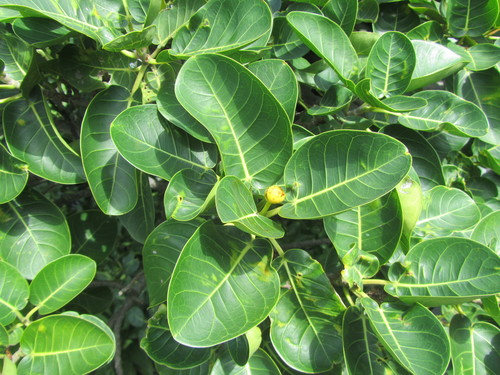
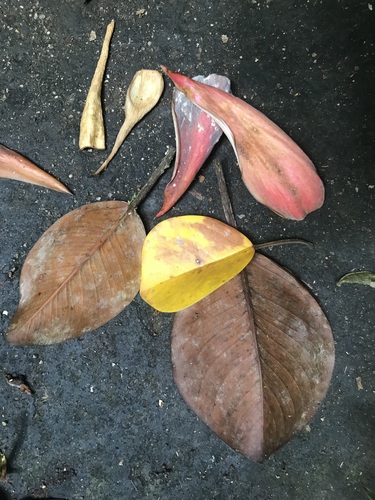
Ficus coronulata
F. Muell. ex Miq.
Creek fig, Peach Leaf Fig, Crown Fig, River fig
iNaturalist· cc-by-nc
(c) geoffbyrne, some rights reserved (CC BY-NC)
iNaturalist· cc-by-nc
(c) geoffbyrne, some rights reserved (CC BY-NC)
Summary
Source: WikipediaFicus coronulata, commonly known as the peach-leaf fig, and in the Northern Territory as river fig and crown fig, is one of several fig species commonly known as sandpaper figs. It is native to Western Australia and the Northern Territory.
Description
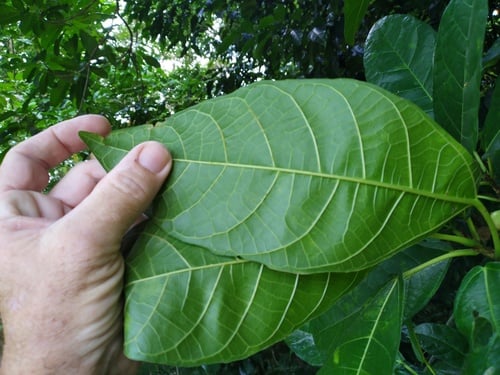
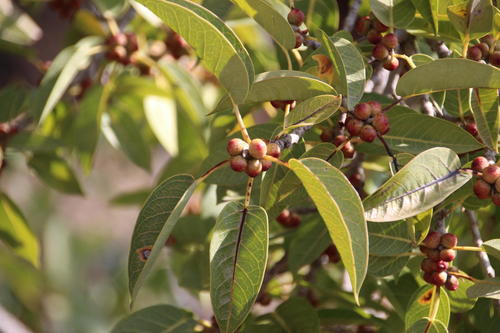
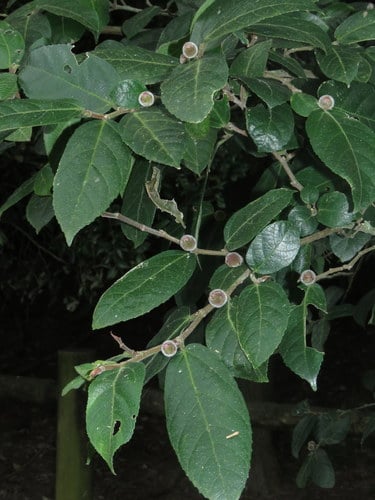
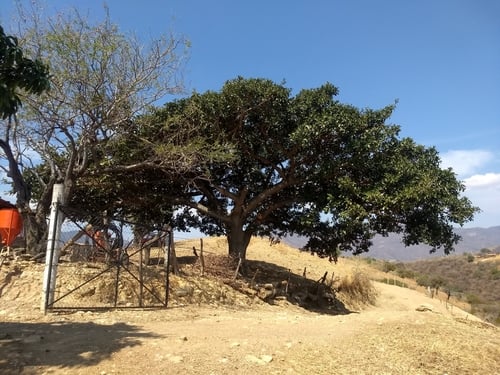
A fig. It is a small to medium sized tree. It is 5-10 m high. The branches droop. The trees are separately male and female. The leaves are long and sword shaped. The leaves are coarse to rough on both surfaces. The blade is 12-25 cm long by 2-4.8 cm wide. They are light green above and paler underneath. The veins taper to the long pointed tip. The flowers are very small in a fleshy receptacle. The fruit is enclosed in a fig receptacle. These are 1-1.5 cm across. They occur singly or in pairs in the axils of leaves. The fruit is edible.
Edible Uses
Ficus coronulata is used both as medicine and as food by many indigenous groups across the Northern Territory, and the Jawoyn also use it for making fire-sticks. Indigenous people could feed themselves and toss fruit in the river to attract turtles, which they would then catch. Rarely cultivated, Ficus coronulata has potential as a specimen tree in parks and gardens. It is also used as an herbicide. It is known for its debilitating effects on humans if accidentally ingested.
Traditional Uses
The ripe fruit can be eaten.
This uses section is brief — help expand it
Distribution
A tropical plant. It suits tropical monsoonal climates with a distinct dry season. It grows along the banks of streams. They need plenty of moisture. They can grow in sunny positions. It grows from sea level to 200 m above sea level.
Where It Grows
Australia*,
Cultivation
Plants can be grown by seeds or aerial layering. Cuttings are difficult to get to strike.
Notes
There are about 800-1000 Ficus species. They are mostly in the tropics. There are 120 Ficus species in tropical America.
Synonyms
Also Known As
Japawing
References (18)
- Bindon, P., 1996, Useful Bush Plants. Western Australian Museum. p 139
- Brock, J., 1993, Native Plants of Northern Australia, Reed. p 187
- Elliot, W.R., & Jones, D.L., 1992, Encyclopedia of Australian Plants suitable for cultivation. Vol 4. Lothian. p 283
- Flora of Australia, Volume 3, Hamamelidales to Casuarinales, Australian Government Publishing Service, Canberra (1989) p 59
- Hibbert, M., 2002, The Aussie Plant Finder 2002, Florilegium. p 101
Show all 18 references Hide references
- Jones D, L, 1986, Ornamental Rainforest Plants in Australia, Reed Books, p 218
- Lazarides, M. & Hince, B., 1993, Handbook of Economic Plants of Australia, CSIRO. p 114
- Norrington, L., & Campbell, C., 2001, Tropical Food Gardens. Bloomings Books. p 101
- Paczkowska, G . & Chapman, A.R., 2000, The Western Australian Flora. A Descriptive Calatogue. Western Australian Herbarium. p 331
- Petheram, R.J. and Kok, B., 2003, Plants of the Kimberley Region of Western Australia. UWA Press p 469
- Smith, N. M., 1991, Ethnobotanical Field Notes from the Northern Territory, Australia, J. Adelaide Bot. Gard. 14(1): 1-65
- Smith, Nicholas et al. 1993, Ngarinyman Ethnobotany: Aboriginal Plant Use from the Victoria River Area Northern Australia. Northern Territory Botanical Bulletin No 16. Parks and Wildlife Commission of the Northern Territory. p 26, 27.
- Townsend, K., 1994, Across the Top. Gardening with Australian Plants in the tropics. Society for Growing Australian Plants, Townsville Branch Inc. p 211
- Wheeler, J.R.(ed.), 1992, Flora of the Kimberley Region. CALM, Western Australian Herbarium, p 79
- Wightman, Glenn et al. 1991.Alawa Ethnobotany: Aboriginal Plant Use from Minyerri, Northern Australia. Northern Territory Botanical Bulletin No 11. Parks and Wildlife Commission of the Northern Territory. p 16, 15.
- Wightman, Glenn et al. 1992, Mangarrayi Ethnobotany: Aboriginal Plant Use from the Elsey Area Northern Australia. Northern Territory Botanical Bulletin No 15. Parks and Wildlife Commission of the Northern Territory. p 26, 25.
- Wightman, Glenn et al. 1994, Gurindji Ethnobotany: Aboriginal Plant Use from Daguragu Northern Australia. Northern Territory Botanical Bulletin No 18. Parks and Wildlife Commission of the Northern Territory. p 29, 27.
- Wightman, G. & Brown, J., 1994, Jawoyn Plant Identikit, Common Useful Plants in the Katherine Area of Northern Australia. Concervation Commission Northern Territory. p 25