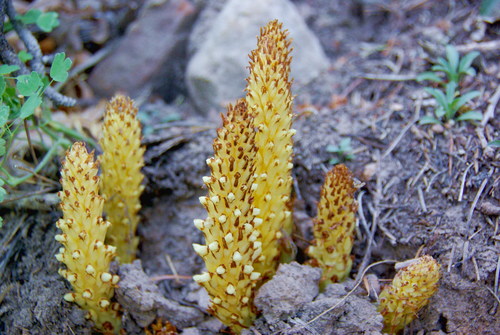
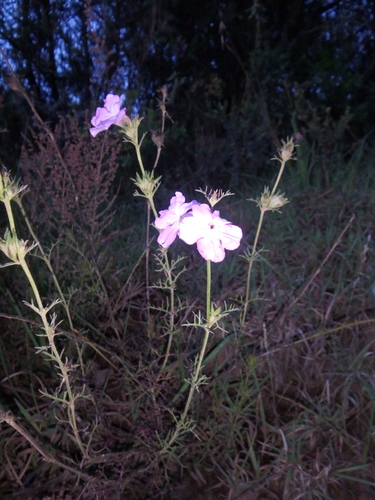
Orobanche grayana
Beck.
gbif· cc-by-nc
Arizona State University Vascular Plant Herbarium (ASU-Plants)
gbif· cc-by-nc
FSC - Fresno State Herbarium (FSC-)
gbif· cc-by-nc
FSC - Fresno State Herbarium (FSC-)
Description
Orobanche grayana is a PERENNIAL. The species is hermaphrodite (has both male and female organs). Suitable for: light (sandy), medium (loamy) and heavy (clay) soils. Suitable pH: mildly acid, neutral and basic (mildly alkaline) soils. It can grow in semi-shade (light woodland) or no shade. It prefers moist soil.
Edible Uses
The whole plant is edible, raw or cooked.
Medicinal Uses
Laxative Sedative. The plant is laxative and sedative.
Distribution
Western N. America - British Columbia to California.
Where It Grows
Coming Soon
Cultivation
We have very little information on this species and do not know if it will be hardy in Britain, though judging by its native range it should succeed outdoors in most parts of this country. It requires a well-drained soil and should succeed in sun or shade. A fully parasitic plant lacking in chlorophyll, it is entirely dependant upon its host plant for obtaining nutrient. It is mainly parasitic on the family Compositae in the wild.
Propagation
Seed - we have no information on this species but suggest sowing the seed in a greenhouse in a pot containing a host plant. The seed is probably best sown as soon as it is ripe if this is possible. It might also be possible to sow the seed in situ around a host plant.