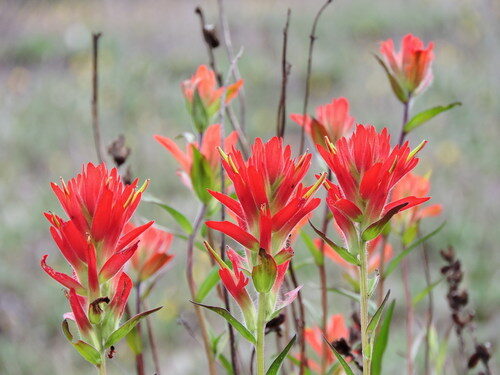
Cistanche phelypaea
(L.) P. Cout.
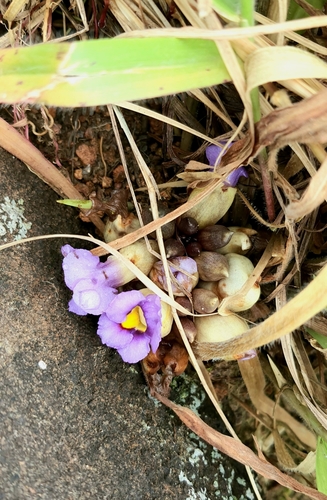
iNaturalist· cc-by-nc
(c) Osvaldo Negra, some rights reserved (CC BY-NC), uploaded by Osvaldo Negra
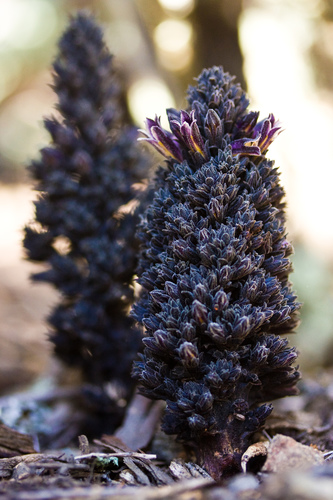
iNaturalist· cc-by-nc
(c) Margarida Curto, some rights reserved (CC BY-NC), uploaded by Margarida Curto
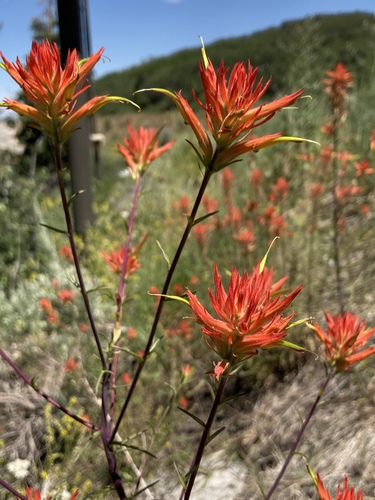
iNaturalist· cc-by-nc
(c) Morgan Cantrell, some rights reserved (CC BY-NC), uploaded by Morgan Cantrell
Summary
Source: WikipediaCistanche phelypaea, also spelled Cistanche phelipaea, is a species of plant in the family Orobanchaceae. It has a wide range of distribution from the Arabian Peninsula and the Syrian Desert in the east, through the Sahara, Cyprus, Crete and the southwest of the Iberian Peninsula, to Macaronesia in the west.
Description
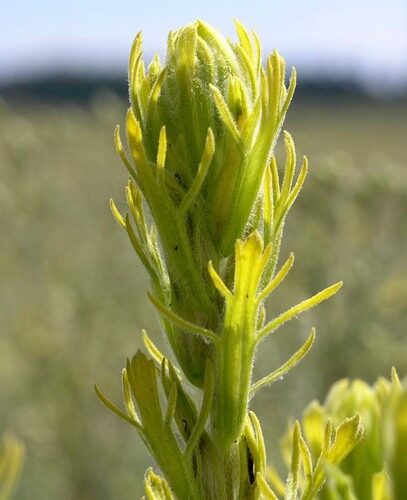
It grows attached to other plants. A stout erect plant. It is hairless and keeps growing from year to year. The stems are thick and often fattened near the base. The leaves are like scales and oval to sword shaped. They are thin and have teeth. The flowers are bright, shiny yellow. They are 30-40 mm long and in dense cone like spikes. The calyx has 5 lobes. The corolla has 5 or more lobes.
Edible Uses
The plant is used in soups, and the root tubers are eaten baked over coals.
Traditional Uses
The plant is used in soups. The root tubers are also eaten by baking over coals.
This uses section is brief — help expand it
Distribution
It is a Mediterranean climate plant. It grows on woody members of the Chenopodiaceae family. It grows in dry sandy coastal and inland sites in the Sahel in West Africa. It cannot tolerate frost. It can grow in salty soils. It grows between sea level and 1,500 m above sea level. It can grow in arid places.
Where It Grows
Africa, Benin, Cape Verde, East Africa, Egypt, Ethiopia, Europe, Italy, Kenya, Kuwait, Mali, Mauritania, Mediterranean, Middle East, Morocco, Mozambique, Niger, North Africa, Portugal, Sahara, Sahel, Saudi Arabia, Senegal, Socotra, Somalia, Spain, Sudan, Tanzania, Turkey, Türkiye, West Africa,
Cultivation
A plant of the drier, lowland tropics to warm temperate zones.
Production
The young plants can be stored by burying in the sand beneath a layer of Aristida pungens grass until they blacken and become dry. It is then ground.
Synonyms
Also Known As
Cistanche, Danun, Halouk, Orobanche d'Africa, Tartous
References (11)
- Blamey, M and Grey-Wilson, C., 2005, Wild flowers of the Mediterranean. A & C Black London. p 415
- Burkill, H. M., 1985, The useful plants of west tropical Africa, Vol. 5. Kew.
- Dalziel, J. M., 1937, The Useful plants of west tropical Africa. Crown Agents for the Colonies London.
- Grubben, G. J. H. and Denton, O. A. (eds), 2004, Plant Resources of Tropical Africa 2. Vegetables. PROTA, Wageningen, Netherlands. p 560
- Jardin, C., 1970, List of Foods Used In Africa, FAO Nutrition Information Document Series No 2.p 12, 67
Show all 11 references Hide references
- Martin, F.W. & Ruberte, R.M., 1979, Edible Leaves of the Tropics. Antillian College Press, Mayaguez, Puerto Rico. p 209
- Monod, T., (On wild edible plants of Mauritania)
- Nassif, F., & Tanji, A., 2013, Gathered food plants in Morocco: The long forgotten species in Ethnobotanical Research. Life Science Leaflets 3:17-54
- Peters, C. R., O'Brien, E. M., and Drummond, R.B., 1992, Edible Wild plants of Sub-saharan Africa. Kew. p 185
- Royal Botanic Gardens, Kew (1999). Survey of Economic Plants for Arid and Semi-Arid Lands (SEPASAL) database. Published on the Internet; http://www.rbgkew.org.uk/ceb/sepasal/internet [Accessed 11th June 2011]
- World Checklist of Useful Plant Species 2020. Royal Botanic Gardens, Kew