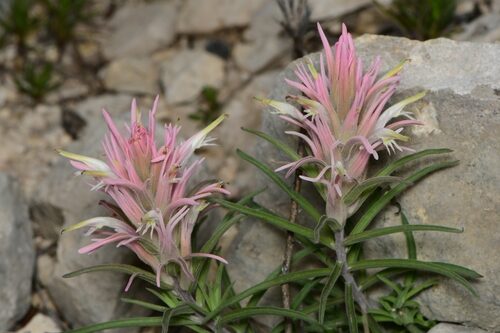
Castilleja miniata
Douglas ex Benth.
Giant Red Paintbrush
iNaturalist· cc-by-nd
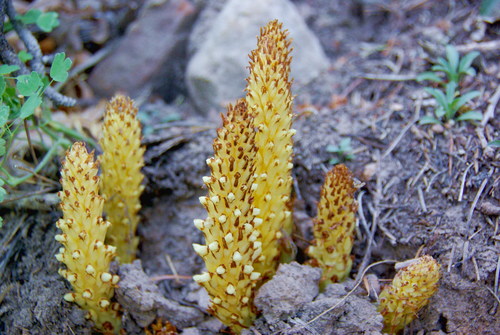
(c) BioBlitz, some rights reserved (CC BY-ND), uploaded by BioBlitz
iNaturalist· cc-by-nc
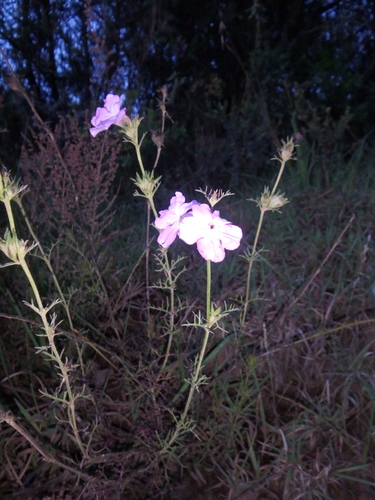
(c) smeierotto, some rights reserved (CC BY-NC), uploaded by smeierotto
iNaturalist· cc-by-nc
(c) Michael Kielb, some rights reserved (CC BY-NC), uploaded by Michael Kielb
Description
Castilleja miniata is a PERENNIAL growing to 0.8 m (2ft 7in) by 0.5 m (1ft 8in) at a medium rate. See above for USDA hardiness. It is hardy to UK zone 4. The flowers are pollinated by Hummingbirds, bees, . It is noted for attracting wildlife. Suitable for: light (sandy), medium (loamy) and heavy (clay) soils and prefers well-drained soil. Suitable pH: mildly acid, neutral and basic (mildly alkaline) soils. It cannot grow in the shade. It prefers moist soil.
Edible Uses
Edible Uses & Rating: Edible corollas may contain sweet nectar. Best rating among the four species, but still low-to-moderate due to selenium risk. Taste, Processing & Kitchen Notes: Corollas have pleasant sweetness; bracts are resinous and bitter. Corollas can be used fresh as garnish. Nectar is best extracted by immersing corollas in water and reducing into a sweet infusion. Seasonality (Phenology):Blooms June–August (earlier at low elevations, later at high). Harvest during open bloom.
Known Hazards
Potential selenium accumulation; corollas only in very small quantities.
Distribution
Widespread across western North America: Alaska to New Mexico, especially the Cascades, Rockies, Sierra Nevada, and coastal mountains.
Where It Grows
US. USA. Alaska, Alberta, Arizona, British Columbia, California, Colorado, Idaho, Manitoba, Mexico Northwest, Montana, Nevada, New Mexico, Ontario, Oregon, Saskatchewan, Utah, Washington, Wyoming, Yukon
Cultivation
Growing Conditions: Found in moist mountain meadows, forest edges, riparian areas, and subalpine slopes. USDA Zone 3–8. Habitat & Range: Widespread across western North America: Alaska to New Mexico, especially the Cascades, Rockies, Sierra Nevada, and coastal mountains. Size & Landscape Performance: Generally 30–80 cm tall, spreading 20–40 cm. In gardens, thrives when paired with compatible hosts (e.g., penstemon, grasses, asters). Cultivation (Horticulture): More easily grown than many paintbrushes but still host-dependent. Requires well-drained soils with consistent moisture. Identification & Habit: A perennial herb 30–80 cm tall, with broad, lanceolate leaves that may be slightly lobed and a dense spike of bright red to orange-red bracts. Stems are upright and often numerous. Flowers bloom from early to mid-summer.
Propagation
Seed propagation with cold stratification. Germinates best in contact with roots of host plants.
Other Uses
Ornamental - In gardens, thrives when paired with compatible hosts (e.g., penstemon, grasses, asters). Ecology & Wildlife: Highly attractive to hummingbirds, especially due to bright scarlet bracts. Also visited by bumblebees and long-tongued bees.
Synonyms
Also Known As
Scarlet Paintbrush, Giant Red Paintbrush, Giant Paintbrush (Castilleja miniata)