Euphorbia hirta
L.
Asthma plant
iNaturalist· cc-by-nc
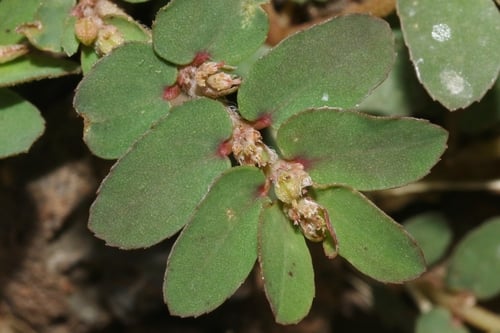
(c) Chirdesen Rung, some rights reserved (CC BY-NC), uploaded by Chirdesen Rung
iNaturalist· cc-by-sa
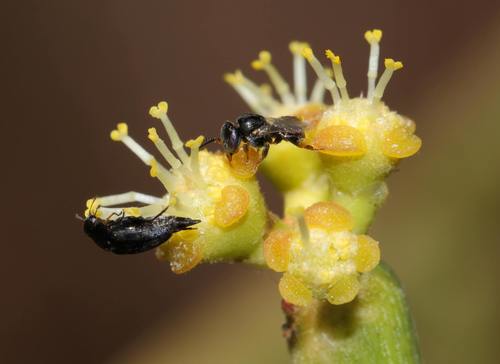
(c) Douglas Goldman, some rights reserved (CC BY-SA), uploaded by Douglas Goldman
iNaturalist· cc-by-sa
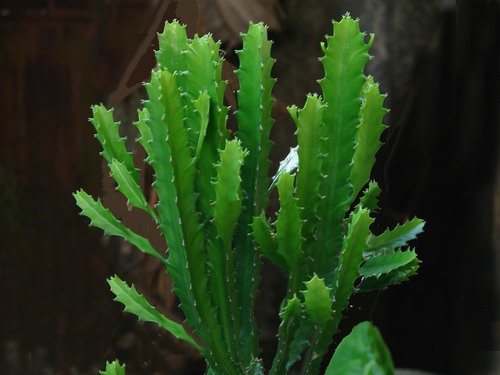
(c) Douglas Goldman, some rights reserved (CC BY-SA), uploaded by Douglas Goldman
Summary
Source: WikipediaEuphorbia hirta (sometimes called asthma-plant) is a pantropical weed, originating from the tropical regions of the Americas. It is a hairy herb that grows in open grasslands, roadsides and pathways. It is widely used in traditional herbal medicine across many cultures, particularly for asthma, skin ailments, and hypertension. It is also consumed in herbal tea form as folk medicine for fevers in the Philippines (where it is known as tawa-tawa), particularly for dengue fever and malaria.
Description
A herb. It can grow as an annual or keep growing from year to year. It grows to 15-60 cm high and spreads to 15 cm wide. The stems lie over and are dull reddish green and hairy. The leaves occur opposite one another and are 5 cm long. The are broadly oblong and with fine teeth long the edge. The flowers are small and occur in the axils of leaves. They are separately male and female and gathered into groups. The fruit are hairy and 3-celled. They are about 1.2 mm across. They are an irregular shaped with ridges across them.
Edible Uses
Tender young leaves and shoots can be cooked as a vegetable, though this is considered a famine food used only as a last resort.
Traditional Uses
Caution: All Euphorbias or spurges have irritating sap and many have chemicals that can cause cancer. The tender leaves and shoots are cooked as a vegetable. They should only be eaten in small quantities. They are also used to make a drink. The fruit are eaten raw. The flowers are eaten raw as a sweet. The young leaves can be stored for 3-4 days after harvesting.
Medicinal Uses
Asthma weed has traditionally been used in Asia to treat bronchitic asthma and laryngeal spasm. In modern herbalism it is more commonly used for intestinal amoebic dysentery, though it should not be used without expert guidance, as large doses cause gastrointestinal irritation, nausea and vomiting. The plant is anodyne, antipruritic, carminative, depurative, diuretic, febrifuge, galactogogue, purgative and vermifuge. Aerial parts are harvested in flower during summer and can be dried for later use. The stem, taken internally, is used for asthma, bronchitis and other lung complaints — it relaxes the bronchioles but apparently depresses the heart and general respiration, and is usually combined with herbs such as Grindelia camporum and Lobelia inflata. A whole-plant decoction treats athlete's foot, dysentery, enteritis and skin conditions. It has also been used to treat syphilis. The sap is applied to warts to destroy them, with treatment repeated 2–3 times a day over several weeks for full effect.
Known Hazards
The sap contains a latex which is toxic on ingestion and highly irritant externally, causing photosensitive skin reactions and severe inflammation, especially on contact with eyes or open cuts. The toxicity can remain high even in dried plant material. Prolonged and regular contact with the sap is inadvisable because of its carcinogenic nature. Adverse effects include: nausea, vomiting, allergic reactions.
Distribution
It is a tropical plant. It will grow on most soils. It prefers an open sunny position. It is damaged by drought and frost. In Papua New Guinea it grows from near sea level to about 2,000 m altitude. In Argentina it grows below 800 m above sea level. In Northeastern India it grows between 1,200-1,600 m above sea level. It grows in wetlands. It can grow in arid places. In Sichuan and Yunnan.
Where It Grows
Africa, Argentina, Asia, Australia, Bahamas, Bangladesh, Barbados, Benin, Bermuda, Bolivia, Botswana, Brazil, British Indian Ocean Terr., BIOT, Burkina Faso, Cameroon, Cape Verde, Central Africa, Central America, Chile, China, Christmas Island, Chuuk, Colombia, Comoros, Congo DR, Costa Rica, Côte d'Ivoire, Cuba, Dominican Republic, East Africa, East Timor, Egypt, El Salvador, Equatorial-Guinea, Eswatini, Ethiopia, Fiji, FSM, Gabon, Gambia, Ghana, Guam, Guatemala, Guiana, Guianas, Guinea, Guinée, Guinea-Bissau, Guyana, Haiti, Hawaii, Himalayas, Honduras, India, Indochina, Indonesia, Iraq, Ivory Coast, Jamaica, Japan, Kiribati, Liberia, Madagascar, Malawi, Malaysia, Maldives, Mali, Marquesas, Mauritius, Middle East, Mozambique, Myanmar, Namibia, Nepal, New Caledonia, Nicaragua, Niger, Nigeria, Niue, North Africa, Northeastern India, Oman, Pacific, Pakistan, Panama, Papua New Guinea, PNG, Paraguay, Peru Philippines, Puerto Rico, Qatar, Reunion, Rwanda, Sahel, Samoa, Saudi Arabia, SE Asia, Senegal, Seychelles, Sierra Leone, Socotra, Solomon Islands, Somalia, South Africa, South America, Southern Africa, Sri Lanka, Sudan, Suriname, Swaziland, Taiwan, Tanzania, Thailand, Timor-Leste, Tokelau, Tonga, Trinidad-Tobago, Tuvalu, United Arab Emirates, UAE, Pan tropical, USA, Vanuatu, Venezuela, Vietnam, West Africa, West Indies, West Timor, Yemen, Zambia, Zimbabwe,
Cultivation
Prefers a light well-drained moderately rich loam in an open sunny position. The plant is not very tolerant of frost, though it can probably be grown successfully in this country as a spring-sown annual. Hybridizes with other members of this genus. The ripe seed is released explosively from the seed capsules. Members of this genus are rarely if ever troubled by browsing deer or rabbits. This genus has been singled out as a potential source of latex (for making rubber) for the temperate zone, although no individual species has been singled out.
Propagation
Sow seed mid to late spring in situ. Germination usually takes place within 2–3 weeks at 20°C. Alternatively, sow in a cool greenhouse in early March, prick seedlings into individual pots when large enough to handle, and plant out in late May to give plants a longer growing season.
Other Uses
None known.
Other Information
They are sold in markets.
Notes
Plants have been used to treat bronchitis and asthma. The tips have also been eaten to treat diarrhoea. Plants often are self sown in cultivated land. There are about 2000 Euphorbia species. Most Euphorbias have sap which irritates the skin. It is high in proVitamin A.
Nutrition
| Part | Moisture | kJ | kcal | Protein | Vit A | Vit C | Iron | Zinc |
|---|---|---|---|---|---|---|---|---|
| Leaves | 78 | — | — | 4.7 | 62 | — | — | — |
Synonyms
Also Known As
Aankle jhar, Aidinono, Amampatchaiarisi, Ammanpacharisi, Barokheruie, Bidarie, Choti dudhli, Co sua, Da ru cao, Dhudia, Dudhe ghans, Dudejhar, Dudali, Dudeleka, Dudeli, Dudhe jhar, Dudhi, Dudhia, Gakhiroti bon, Karisilanganni, Kiawa-ame, Kikula ntedi, Kiruthona, Kula ntese, Mothidudhi, Midum-an, Namaito, Nashrai khoro, Nasraikoro, Nayeti, Nelapalai, Ngotoindika, Nyama-toka, Pakhangba leiton, Palcheera, Reddinanabrolu, Reddivaari nanabaalu, Tamu ao, Taquelpolhe, Toto taane, Washah, Yowan
References (70)
- Ajain, M., Ali, T., & Siddiqui, M.F., 2015, A Survey of Ethnobotanically Important Herbaceous Plants of Tehsil Jatoi,District Muzaffar Garh, Punjab, Pakistan. Int. J. Biol. Res., 3(2): 87-92, 2015.
- Ambasta, S.P. (Ed.), 2000, The Useful Plants of India. CSIR India. p 213
- Angami, A., et al, 2006, Status and potential of wild edible plants of Arunachal Pradesh. Indian Journal of Traditional Knowledge 5(4) October 2006, pp 541-550
- Baro, D., Baruah, S. and Borthukar, S. K. 2015, Documentation on wild vegetables of Baksa district, BTAD (Assam). Scholars Research Library. Archives of Applied Science Research, 2015, 7 (9):19-27
- Bodkin, F., 1991, Encyclopedia Botanica. Cornstalk publishing, p 463
Show all 70 references Hide references
- Borrell, O.W., 1989, An Annotated Checklist of the Flora of Kairiru Island, New Guinea. Marcellin College, Victoria Australia. p 75
- Brown, D., 2002, The Royal Horticultural Society encyclopedia of Herbs and their uses. DK Books. p 210
- Burkill, H. M., 1985, The useful plants of west tropical Africa, Vol. 2. Kew.
- Burkill, I.H., 1966, A Dictionary of the Economic Products of the Malay Peninsula. Ministry of Agriculture and Cooperatives, Kuala Lumpur, Malaysia. Vol 1 (A-H) p 994
- Cowie, I, 2006, A Survey of Flora and vegetation of the proposed Jaco-Tutuala-Lore National Park. Timor-Lests (East Timor) www.territorystories.nt/gov.au p 47
- Cribb, A.B. & J.W., 1976, Wild Food in Australia, Fontana. p 178
- Dangol, D. R. et al, 2017, Wild Edible Plants in Nepal. Proceedings of 2nd National Workshop on CUAOGR, 2017.
- Dansi, A., et al, 2008, Traditional leafy vegetables and their use in the Benin Republic. Genet Resour Crop Evol (2008) 55:1239–1256
- Dobriyal, M. J. R. & Dobriyal, R., 2014, Non Wood Forest Produce an Option for Ethnic Food and Nutritional Security in India. Int. J. of Usuf. Mngt. 15(1):17-37
- Dutta, U., 2012, Wild Vegetables collected by the local communities from the Churang reserve of BTD, Assam. International Journal of Science and Advanced Technology. Vol. 2(4) p 121
- Flora of Pakistan. www.eFloras.org
- Fowler, D. G., 2007, Zambian Plants: Their Vernacular Names and Uses. Kew. p 26
- Grubben, G. J. H. and Denton, O. A. (eds), 2004, Plant Resources of Tropical Africa 2. Vegetables. PROTA, Wageningen, Netherlands. p 561
- Henty, E.E., & Pritchard, G.S., 1973, Weeds of New Guinea and their control. Botany Bulletin No 7, Division of Botany, Lae, PNG. p 103
- Henty, E.E., 1980, Harmful Plants in Papua New Guinea. Botany Bulletin No 12. Division Botany, Lae, Papua New Guinea. p 52, 54
- Hossain, U. & Rahman, A., 2018, Study and quantitative analysis of wild vegetable floral diversity available in Barisal district, Bangladesh. Asian J. Med. Biol. Res. 2018, 4 (4), 362-371
- Hussey, B.M.J., Keighery, G.J., Cousens, R.D., Dodd, J., Lloyd, S.G., 1997, Western Weeds. A guide to the weeds of Western Australia. Plant Protection Society of Western Australia. p 144
- Hu, Shiu-ying, 2005, Food Plants of China. The Chinese University Press. p 510
- Joshi, N., et al, 2007, Traditional neglected vegetables of Nepal: Their sustainable utilization for meeting human needs. Tropentag 2007. Conference on International Agricultural Research for Development.
- Joshi, N. & Siwakoti, M., 2012, Wild Vegetables Used by Local Community of Makawanpur District and Their Contribution to Food Security and Income Generation. Nepal Journal of Science and Technology Vol. 13, No. 1 (2012) 59-66
- Kar, A., et al, 2013, Wild Edible Plant Resources used by the Mizos of Mizoram, India. Kathmandu University Journal of Science, Engineering and Technology. Vol. 9, No. 1, July, 2013, 106-126
- Karthi, Sathya, & Salome, 2014, Uncultivated Edible Greens from Small Millet Farms Tamil Nadu India. IDRC
- Kumar, R. & Saikia, P., 2020, Wild edible plants of Jharkhand and their utilitarian perspectives. Indian Journal of Traditional Knowledge Vol 19 (2), April 2020, pp 237-250
- Latham, P., 2004, Useful Plants of Bas-Congo province. Salvation Army & DFID p 128
- Lazarides, M. & Hince, B., 1993, Handbook of Economic Plants of Australia, CSIRO. p 111
- Li, D. et al, 2017, Ethnobotanical survey of herbal tea plants from the traditional markets in Chaoshan, China. Journal of Ethnopharmacology. 205 (2017) 195-206
- Low, T., 1991, Wild Herbs of Australia and New Zealand. Angus & Robertson. p 89
- Manandhar, N.P., 2002, Plants and People of Nepal. Timber Press. Portland, Oregon. p 228
- Martin, F.W. & Ruberte, R.M., 1979, Edible Leaves of the Tropics. Antillian College Press, Mayaguez, Puerto Rico. p 192
- Masoodi, H. U. R. & Sundriyal, R. C., 2020, Richness of non-timber forest products in Himalayan communities—diversity, distribution, use pattern and conservation status. Journal of Ethnobiology and Ethnomedicine 16:56
- Meitei, L. R., et al, 2022, An ethnobotanical study on the wild edible plants used by forest dwellers in Yangoupokpi Lokchao Wildlife Sanctuary, Manipur, India. Ethnobotany Research and Application 23:15
- Molla, A., Ethiopian Plant Names. http://www.ethiopic.com/aplants.htm
- Murtem, G. & Chaudhrey, P., 2016, An ethnobotanical note on wild edible plants of Upper Eastern Himalaya, India. Brazilian Journal of Biological Sciences, 2016, v. 3, no. 5, p. 63-81
- Narayanan Ratheesh, M. K. et al, 2011, Wild edible plants used by the Kattunaikka, Paniya and Kuruma tribes of Wayanad District, Kerala, India. Journal of Medicinal Plants Research Vol. 5(15), pp. 3520-3529
- Narzary, H., et al, 2013, Wild Edible Vegetables Consumed by Bodo tribe of Kokrajhar District (Assam), North-East India. Archives of Applied Science Research, 5(5): 182-190
- Paczkowska, G. & Chapman, A.R., 2000, The Western Australian Flora. A Descriptive Catalogue. Western Australian Herbarium. p 246
- Pagag, K. & Borthakur, S.K., 2012, Wild edible wetland plants from Lakhimpur district of Assam, India. Pleione 6(2): 322 - 327
- Parham, B. E. V., 1971, The Vegetation of the Tokelau Islands with special reference to the Plants of Nukunonu Atoll. New Zealand Journal of Botany. 9:4, 576-609
- Parham, B. E. V., 1972, Plants of Samoa. New Zealand Department of Scientific and Industrial Research. Information Series. No. 85 p 47
- Patiri, B. & Borah, A., 2007, Wild Edible Plants of Assam. Geethaki Publishers. p 128
- Peekel, P.G., 1984, (Translation E.E.Henty), Flora of the Bismarck Archipelago for Naturalists, Division of Botany, Lae, PNG. p 320, 319
- Plants for a Future database, The Field, Penpol, Lostwithiel, Cornwall, PL22 0NG, UK. http://www.scs.leeds.ac.uk/pfaf/
- Ramachandran, V. S., 2007, Wild edible plants of the Anamalais, Coimbatore district, western Ghats, Tamil Nadu. Indian Journal or Traditional Knowledge. 6(1) pp 173-176
- Royal Botanic Gardens, Kew (1999). Survey of Economic Plants for Arid and Semi-Arid Lands (SEPASAL) database. Published on the Internet; http://www.rbgkew.org.uk/ceb/sepasal/internet [Accessed 16th April 2011]
- Sakar, A. & Das, A. P., 2018, The traditional knowledge on edible wild leafy vegetables of Rabha Tribe in Duars of North Bengal: a potential reinforcement to food security. Pleione 12(2): 275 - 281. 2018.
- Sarma, H., et al, 2010, Updated Estimates of Wild Edible and Threatened Plants of Assam: A Meta-analysis. International Journal of Botany 6(4): 414-423
- Sasi, R. et al, 2011, Wild edible plant Diversity of Kotagiri Hills - a Part of Nilgiri Biosphere Reserve, Southern India. Journal of Research in Biology. Vol. 1 No. 2, pp 80-87
- Sasi, R. & Rajendran, A., 2012, Diversity of Wild Fruits in Nilgiri Hills of the Southern Western Ghats - Ethnobotanical Aspects. IJABPT, 3(1) p 82-87
- Seidemann J., 2005, World Spice Plants. Economic Usage, Botany, Taxonomy. Springer. p 152
- Singh, H.B., Arora R.K.,1978, Wild edible Plants of India. Indian Council of Agricultural Research, New Delhi. p 39
- Singh, P.K., Singh, N.I., and Singh, L.J., 1988, Ethnobotanical Studies on Wild Edible Plants in the Markets of Manipur - 2. J. Econ. Tax. Bot. Vol. 12 No. 1 pp 113-119
- Sp. pl. 1:454. 1753
- Sujanapal, P., & Sankaran, K. V., 2016, Common Plants of Maldives. FAO & Kerala FRI, p 124
- Termote, C., et al, 2011, Eating from the wild: Turumbu, Mbole and Bali traditional knowledge of non-cultivated edible plants, District Tshopo, DRCongo, Gen Resourc Crop Evol. 58:585-618
- Terra, G.J.A., 1973, Tropical Vegetables. Communication 54e Royal Tropical Institute, Amsterdam, p 46
- Topp, J. M. W., 1988, An Annotated Check List of the Flora of Diego Garcia, British Ocean Territory. Atoll Research Bulletin No. 313
- Tsering, J., et al, 2017, Ethnobotanical appraisal on wild edible plants used by the Monpa community of Arunchal Pradesh. Indian Journal of Traditional Knowledge. Vol 16(4), October 2017, pp 626-637
- Vernon, R., 1983, Field Guide to Important Arable Weeds of Zambia. Dept of Agriculture, Chilanga, Zambia. p 44
- von Katja Rembold, 2011, Conservation status of the vascular plants in East African rain forests. Dissertation Universitat Koblenz-Landau p 167
- Wallace, P. A., Marfo, E. K., and Plahar, W. A., 1998, Nutritional quality and antinutritional composition of four non-conventional leafy vegetables. Food Chemistry 61(3) 287-291
- Westerway, J., et al, 2018, Preliminary checklist of the naturalised and pest plants of Timor-Leste. Blumea 63:157-163
- Wheeler, J.R.(ed.), 1992, Flora of the Kimberley Region. CALM, Western Australian Herbarium, p 605
- Wild edible plants of Himachal Pradesh
- World Checklist of Useful Plant Species 2020. Royal Botanic Gardens, Kew
- Yuncker, T.G., 1959, Plants of Tonga, Bernice P. Bishop Museum, Hawaii, Bulletin 220. p 168