Euphorbia humifusa
Willdenow
Spurge
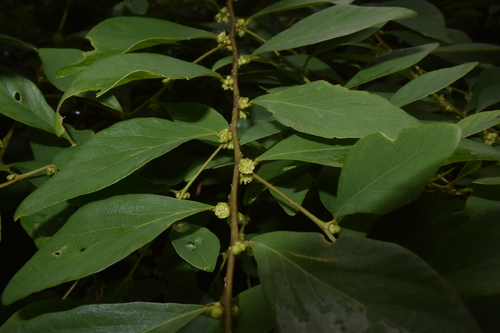
iNaturalist· cc-by-nc
(c) 小铖/Smalltown, some rights reserved (CC BY-NC), uploaded by 小铖/Smalltown
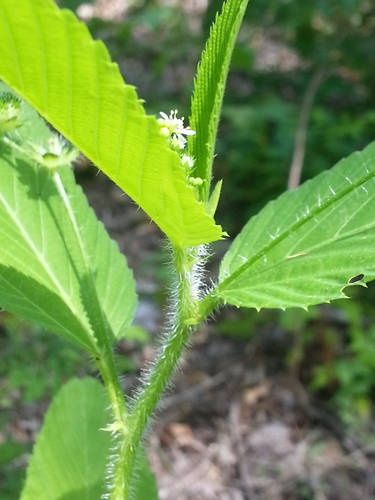
iNaturalist· cc-by-nc
(c) 红梅, some rights reserved (CC BY-NC), uploaded by 红梅
iNaturalist· cc-by-nc
(c) Alenka Mihoric, some rights reserved (CC BY-NC), uploaded by Alenka Mihoric
Summary
A low-spreading annual reaching just 0.2 meters high. Produces monoecious flowers pollinated by insects. Thrives in light sandy or medium loamy well-drained soils with mildly acidic to mildly alkaline pH. Demands full sun and cannot grow in shade. Accommodates both dry and moist soil moisture levels.
Description
A low herb. It spreads over the ground and is 15-20 cm across. The small branches are slender. The leaves are opposite and small. They do not have leaf stalks. They are 5-10 mm long by 4-6 mm wide. The base is oblique. There are teeth along the edge. The leaves are green and tinged purplish-red. The flowers are small and red. The fruit capsules are almost round and the seeds are 3 sided.
Edible Uses
Young shoots can be eaten cooked. This is an emergency food used only as a last resort.
Traditional Uses
Caution: All Euphorbias or spurges have irritating sap and many have chemicals that can cause cancer. The shoots and leaves are eaten.
This uses section is brief — help expand it
Medicinal Uses
The plant is anthelmintic and vulnerary. The whole plant is depurative, diuretic and styptic. A decoction is used in the treatment of jaundice, dysentery, enteritis, poisonous snake bites and traumatic bleeding.
Known Hazards
The sap contains a latex which is toxic on ingestion and highly irritant externally, causing photosensitive skin reactions and severe inflammation, especially on contact with eyes or open cuts. The toxicity can remain high even in dried plant material. Prolonged and regular contact with the sap is inadvisable because of its carcinogenic nature.
Distribution
It is a temperate plant. In China it grows from sea level to 3,000 m above sea level. It can be on sandy hills and sea shores.
Where It Grows
Africa, Asia, Central Asia, China, Europe, Korea, Taiwan, Tajikistan,
Cultivation
We have very little information on this species and do not know if it will be hardy in Britain but since it is naturalized in C. Europe it is very likely that it can be grown here. Other members of this genus prefer a light well-drained moderately rich loam in an open position. Hybridizes with other members of this genus. The ripe seed is released explosively from the seed capsules. Members of this genus are rarely if ever troubled by browsing deer or rabbits. This genus has been singled out as a potential source of latex (for making rubber) for the temperate zone, although no individual species has been singled out.
Propagation
Sow seed in spring in situ. Germination usually takes place within 2–3 weeks at 20°C.
Other Uses
None known.
Other Information
It is sold in local markets in China.
Notes
There are about 2000 Euphorbia species. Most Euphorbias have sap which irritates the skin.
Also Known As
Ru zai cao, Ttangbindae
References (7)
- Enum. pl. suppl. 27. 1814 ("1813")
- Hu, Shiu-ying, 2005, Food Plants of China. The Chinese University Press. p 510
- Kim, H. & Song, M., 2013, Ethnobotanical analysis for traditional knowledge of wild edible plants in North Jeolla Province (Korea). Genetic. Resour. Crop Evol. (2013) 60:1571-1585
- Li, D. et al, 2017, Ethnobotanical survey of herbal tea plants from the traditional markets in Chaoshan, China. Journal of Ethnopharmacology. 205 (2017) 195-206
- Plants for a Future database, The Field, Penpol, Lostwithiel, Cornwall, PL22 0NG, UK. http://www.scs.leeds.ac.uk/pfaf/
Show all 7 references Hide references
- READ,
- Song, M., et al, 2013, Traditional knowledge of wild edible plants in Jeju Island, Korea. Indian Journal of Traditional Knowledge. 12(2) pp 177-194