Euphorbia helioscopia
L.
Sun Spurge
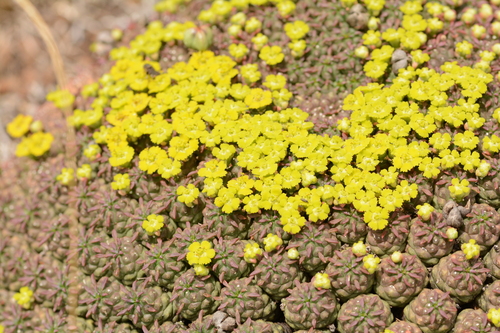
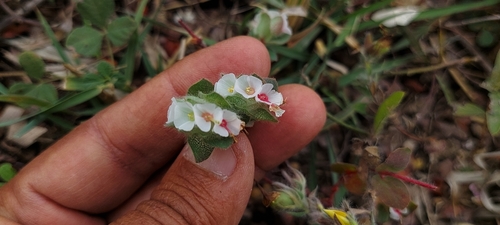
iNaturalist· cc-by
(c) portioid, some rights reserved (CC BY), uploaded by portioid
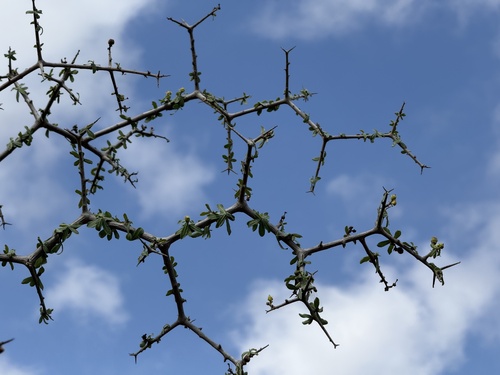
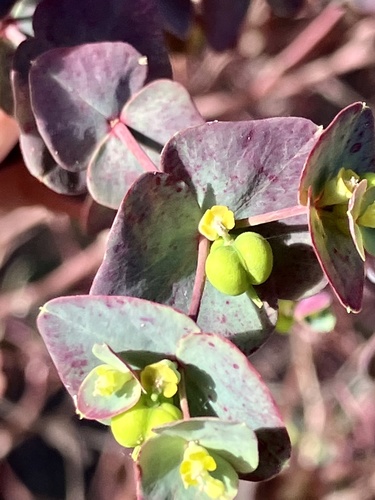
iNaturalist· cc-by
(c) Roland Godon, some rights reserved (CC BY), uploaded by Roland Godon
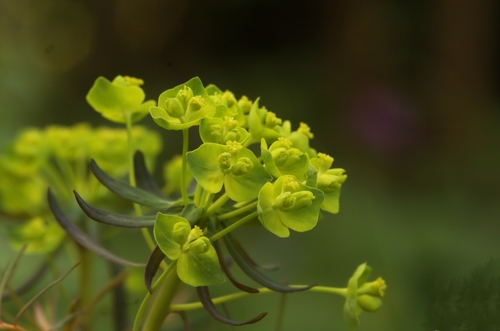
iNaturalist· cc-by-nc
(c) Eddi Bisulli, some rights reserved (CC BY-NC), uploaded by Eddi Bisulli
Summary
Source: WikipediaEuphorbia helioscopia, the sun spurge or madwoman's milk, is a species of flowering plant in the spurge family Euphorbiaceae. It is a herbaceous annual plant, native to most of Europe, northern Africa, and eastward through most of Asia. Additional folk names include wart spurge, summer spurge, umbrella milkweed, and wolf's-milk.
Description
A short annual herb. The stems are usually single and hairy. The leaves are oval and broadest above the middle. There are fine teeth on the top half. The flower is an umbel with 5 rays. The bracts are yellow. The fruit is a capsule 2.5-3.5 mm long. It is smooth and does not have wings. The seeds are brown and netted.
Edible Uses
Young stems can be eaten cooked, though caution is advised given the plant's toxicity. Young leaves are used as a tea substitute.
Traditional Uses
Caution: All Euphorbias or spurges have irritating sap and many have chemicals that can cause cancer. The leaves are eaten cooked with oil and salt. They are used in soup. The young leaves are used as a tea substitute. The latex is used to curdle milk.
Medicinal Uses
The leaves and stems are febrifuge and vermifuge. The root is anthelmintic. The plant is cathartic and has anticancer properties. The milky sap is applied externally to skin eruptions. Seeds mixed with roasted pepper have been used to treat cholera. The oil from the seeds has purgative properties.
Known Hazards
The sap contains a latex which is toxic on ingestion and highly irritant externally, causing photosensitive skin reactions and severe inflammation, especially on contact with eyes or open cuts. The toxicity can remain high even in dried plant material. Prolonged and regular contact with the sap is inadvisable because of its carcinogenic nature.
Distribution
It is a temperate plant. It grows in waste places and along roadside and sometimes on seashores. In Pakistan it grows up to 2,000 m altitude. In Argentina it grows below 500 m above sea level.
Where It Grows
Africa, Argentina, Asia, Australia, Chile, China, Europe, France, India, Italy, Korea, Lithuania, Luxembourg, Mediterranean, North Africa, North America, Pakistan, Portugal, Slovenia, South America, Spain, St Helena, Tasmania, Turkey, Türkiye,
Cultivation
Prefers a light well-drained moderately rich loam in an open position. Succeeds in dry soils. Hybridizes with other members of this genus. The ripe seed is released explosively from the seed capsules. Members of this genus are rarely if ever troubled by browsing deer or rabbits. This genus has been singled out as a potential source of latex (for making rubber) for the temperate zone, although no individual species has been singled out.
Propagation
Sow seed in spring or late summer in situ. Germination usually takes place within 2–3 weeks at 20°C.
Other Uses
None known.
Notes
There are about 2000 Euphorbia species. Most Euphorbias have sap which irritates the skin. It has anticancer properties.