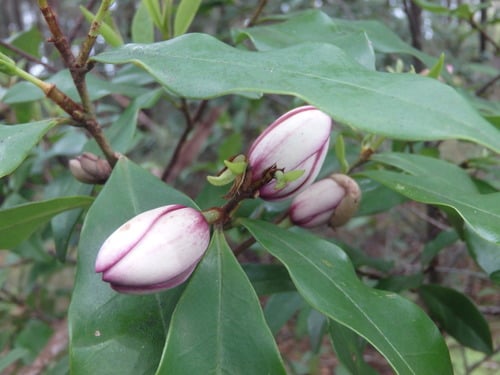
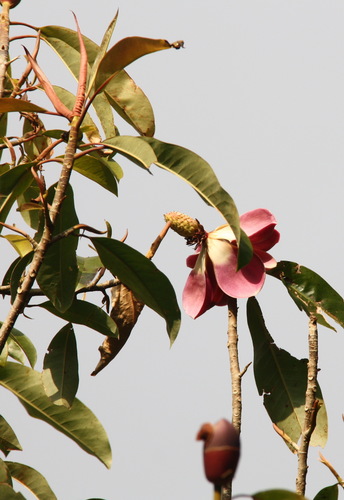
Liriodendron tulipifera
L.
Tulip Tree, Tulip Poplar, Yellow Poplar, Canary Whitewood
iNaturalist· cc-by-nc-sa
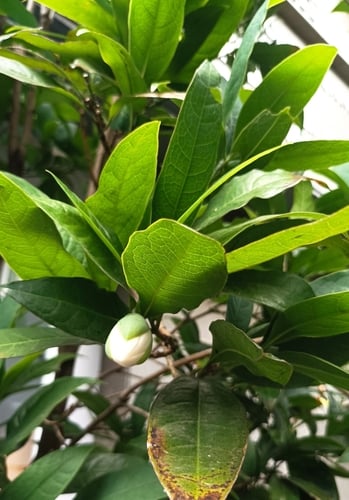
(c) Kew on Flickr, some rights reserved (CC BY-NC-SA)
iNaturalist· cc-by
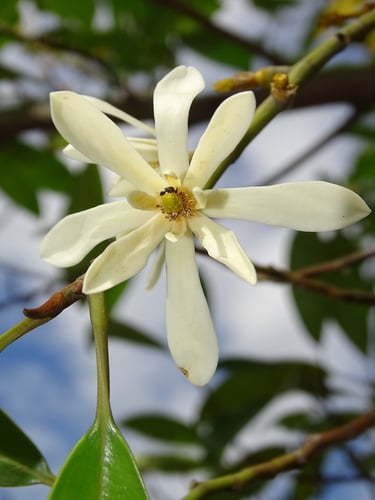
(c) Nicholas A. Tonelli, some rights reserved (CC BY)
iNaturalist· cc-by-sa
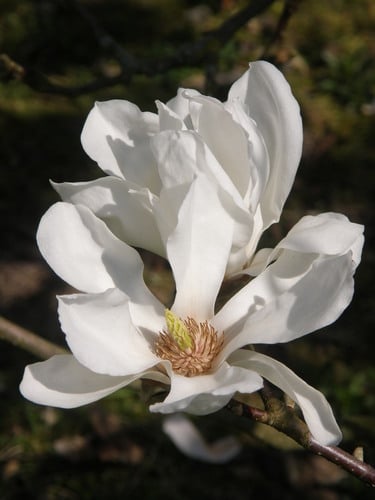
(c) Douglas Goldman, some rights reserved (CC BY-SA), uploaded by Douglas Goldman
Description
Liriodendron tulipifera is a deciduous Tree growing to 30 m (98ft) by 12 m (39ft) at a medium rate. See above for USDA hardiness. It is hardy to UK zone 4. It is in flower from June to July, and the seeds ripen in October. The species is hermaphrodite (has both male and female organs) and is pollinated by Beetles. It is noted for attracting wildlife. Suitable for: light (sandy), medium (loamy) and heavy (clay) soils. Suitable pH: mildly acid, neutral and basic (mildly alkaline) soils. It cannot grow in the shade. It prefers moist soil.
Edible Uses
Condiment. The root is used as a lemon-like flavouring in spruce beer, where it also serves to correct the bitterness of the beer. The bark of the root and branches have a pleasant rather pungent scent.
Medicinal Uses
Anthelmintic Aphrodisiac Cardiac Diuretic Dysentery Nervine Poultice Tonic. The intensely acrid bitter inner bark, especially of the roots, is used domestically as a diuretic, tonic and stimulant. The raw green bark is also chewed as an aphrodisiac. The bark contains 'tulipiferine', which is said to exert powerful effects on the heart and nervous system. A tea is used in the treatment of indigestion, dysentery, rheumatism, coughs, fevers etc. Externally, the tea is used as a wash and a poultice on wounds and boils. The root bark and the seeds have both been used to expel worms from the body.
Distribution
Eastern N. America - Nova Scotia to Florida.
Where It Grows
NORTHERN AMERICA: Canada (Ontario (southeast)), United States (Connecticut, Indiana, Massachusetts, Michigan (south), New Jersey, New York, Ohio, Pennsylvania, Rhode Island, Vermont, West Virginia, Missouri (southeast), Illinois, Alabama, Arkansas, Delaware, District of Columbia, Florida, Georgia, Kentucky, Louisiana, Maryland, Mississippi, North Carolina, South Carolina, Tennessee, Virginia)
Cultivation
Requires a deep rich soil and a sheltered but not overshadowed position. Prefers a slightly acid soil. Succeeds in sun or semi-shade. A very ornamental plant, it is fast-growing and moderately long-lived in its native range. Flowers are first produced when the tree is about 15 - 20 years old. Liriodendron tulipifera is the state tree of both Indiana and Tennessee. Intolerant of root disturbance, plants are best grown in pots and placed into their final positions as soon as possible. Any transplanting is best done in May. Trees flower best in regions with long hot summers. Plants are particularly susceptible to attacks by rabbits and hares.
Propagation
Seed - best sown as soon as it is ripe in a shady place in a cold frame. Stored seed requires 3 weeks warm then 12 weeks cold stratification. Germination is usually poor, only about 1% of the seed is viable. When they are large enough to handle, prick the seedlings out into individual pots and grow them on in the greenhouse for at least their first winter. Plant them out into their permanent positions in late spring or early summer, after the last expected frosts. Layering in spring. Do not sever from the parent plant for 2 years.
Other Uses
Dye Wood. Landscape Uses - Pest tolerant, Aggressive surface roots possible, Pollard, Specimen. A gold-coloured dye is obtained from the bark. Wood - fine-grained, soft, light, easily worked, durable, brittle, not strong but does not split. A valuable timber, it weighs 26lb per cubic foot and is much used for interior finishes, furniture, construction and plywood[11, 46, 61, 171, 229, 235]. Native North Americans used the tree for making canoes. The flowers produce considerable nectar, making this a good bee plant. Cultivated for its wood in Europe50].