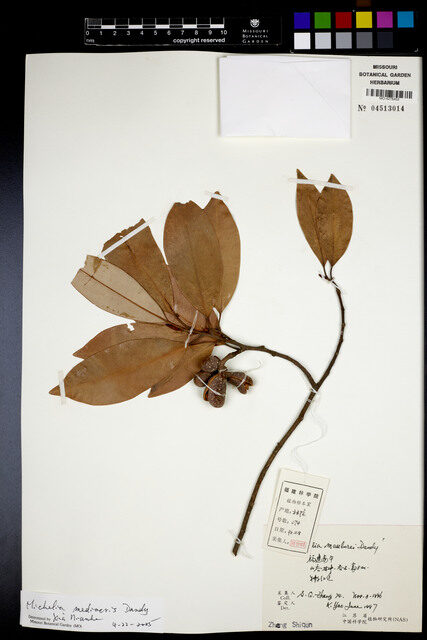
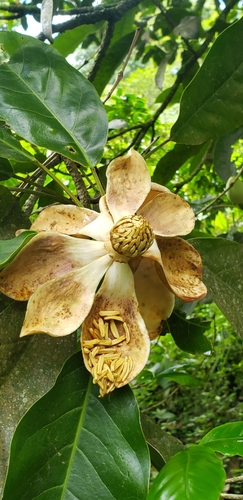
Magnolia officinalis
Rehder & E. H. Wilson
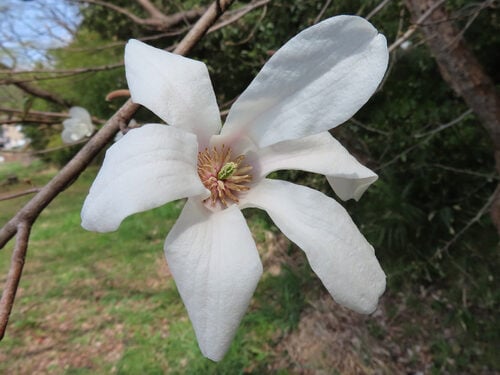
iNaturalist· cc-by-nc
(c) ed_shaw, some rights reserved (CC BY-NC)
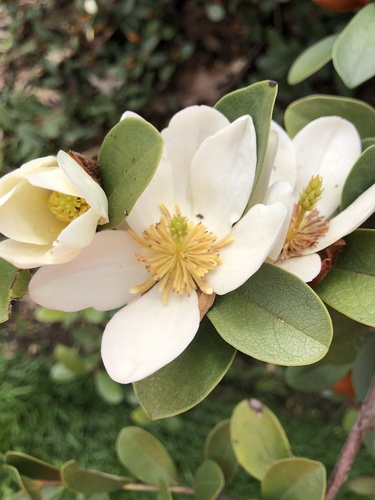
iNaturalist· cc-by-nc
(c) ChuSR, some rights reserved (CC BY-NC)
Summary
Source: WikipediaMagnolia officinalis (commonly called houpu magnolia or magnolia bark) is a species of Magnolia native to the mountains and valleys of China at altitudes of 300–1500 m. It is a deciduous tree up to 20 m tall with broad, fragrant white flowers and two varieties distinguished by leaf shape, differing slightly from Magnolia obovata primarily in fruit base shape. Its aromatic bark, traditionally used in Chinese medicine as "hou po," is now primarily sourced from cultivated plants.
Description
Deciduous tree reaching 20m tall and 12m wide. Hardy to UK zone 8. Flowers May to June with seeds ripening August to October. Hermaphroditic and beetle-pollinated. Tolerates light sandy, medium loamy, and heavy clay soils with good drainage preference. Grows in mildly acid, neutral, and basic alkaline pH. Can grow in semi-shade to full sun, prefers moist soil, and tolerates atmospheric pollution.
Edible Uses
None known
Medicinal Uses
Hou Po has been used in Chinese herbal medicine for at least 2,000 years. The aromatic, pungent, and warming bark is used to treat various disorders of the digestive system. The flowers are an aromatic digestive tonic. A decoction of the flower buds is an esteemed emmenagogue in China and is therefore contraindicated for pregnant women. The flowers are used to treat abdominal distension and shortness of breath, among other conditions; they are harvested in summer and can be used fresh or dried. The stem bark is antiseptic, antispasmodic, aphrodisiac, appetizing, diuretic, expectorant, hypotensive, stomachic, and tonic. Internally, it is used to treat abdominal distension, loss of appetite, gastro-enteritis, vomiting, diarrhoea, asthma, and coughs with acute phlegm. The bark is harvested in autumn and dried for later use; it does not store well and stocks should be renewed annually. Extracts of the plant contain bactericidal compounds and an essential oil that are effective against salmonella.
Distribution
It is a subtropical plant. In Yunnan.
Where It Grows
Asia, China,
Cultivation
Best grown in a warm position in a moderately rich free soil of an open texture. The branches are brittle so a sheltered position is required. Very tolerant of atmospheric pollution. Hardy to about -10°c. The fleshy roots are easily damaged and any transplanting is best done during a spell of mild moist weather in late spring.
Propagation
Sow seed as soon as it is ripe in a cold frame. Stored seed must be kept cold over winter and sown in late winter in a cold frame. Germination usually occurs in spring but can take 18 months. Prick seedlings into individual pots when large enough to handle and grow on in light shade in a cold frame or greenhouse for at least the first winter. They can be planted into permanent positions once they exceed 15cm in height, but should be well mulched and given some protection from winter cold for their first one or two winters outdoors. Layering can be done in early spring.
Other Uses
The wood is fine-grained and considered useful.
References (2)
- Liu, Yi-tao, & Long, Chun-Lin, 2002, Studies on Edible Flowers Consumed by Ethnic Groups in Yunnan. Acta Botanica Yunnanica. 24(1):41-56
- World Checklist of Useful Plant Species 2020. Royal Botanic Gardens, Kew