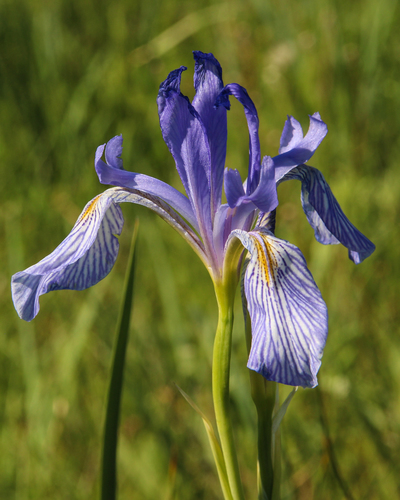
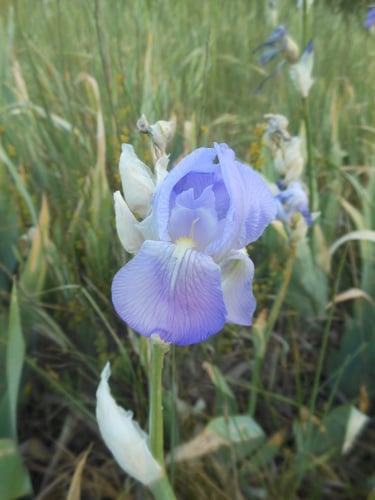
Iris cristata
Sol.
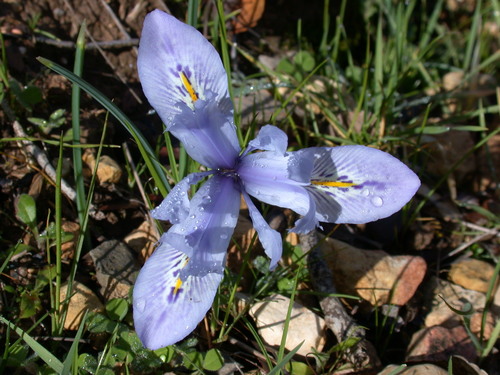
Crested Iris, Dwarf crested iris
iNaturalist· cc-by-nc-nd
(c) dbarronoss, some rights reserved (CC BY-NC-ND)
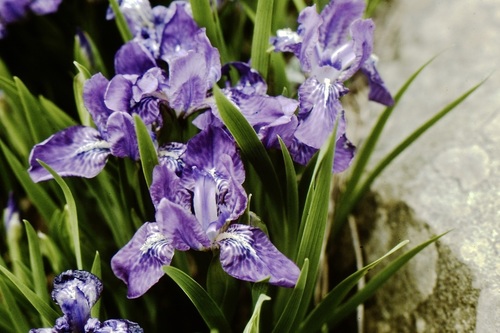
iNaturalist· cc-by
(c) U.S. Fish and Wildlife Service Southeast Region, some rights reserved (CC BY)
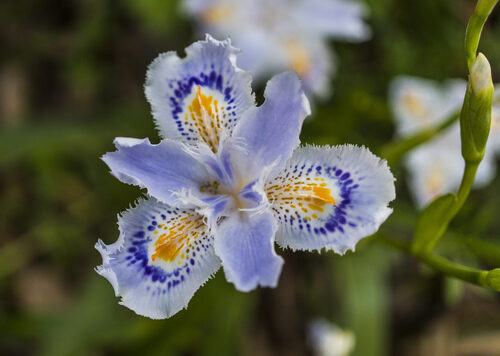
iNaturalist· cc-by-nc
(c) rachelherrmann, some rights reserved (CC BY-NC), uploaded by rachelherrmann
Description
Iris cristata is a PERENNIAL growing to 0.2 m (0ft 8in) by 0.5 m (1ft 8in) at a medium rate. It is in flower from May to June. The species is hermaphrodite (has both male and female organs) and is pollinated by Insects. The plant is self-fertile. Suitable for: light (sandy) and medium (loamy) soils and prefers well-drained soil. Suitable pH: mildly acid and neutral soils. It can grow in semi-shade (light woodland) or no shade. It prefers moist soil.
Edible Uses
Root - used as a spice. Frequently chewed by local people to alleviate thirst. When first chewed the roots have a pleasant sweet taste, within a few minutes this changes to a burning sensation far more pungent than capsicums. Caution is advised, see the notes above on toxicity.
Medicinal Uses
Hepatic PoulticeAn ointment made from the roots is applied to cancerous ulcers. A tea made from the roots is used in the treatment of hepatitis.
Known Hazards
Many plants in this genus are thought to be poisonous if ingested, so caution is advised. The roots are especially likely to be toxic. Plants can cause skin irritations and allergies in some people.
Distribution
Eastern N. America - Maryland to Ohio, south to Georgia, Tennessee and Missouri.
Where It Grows
NORTHERN AMERICA: United States, Indiana, Ohio, Pennsylvania, West Virginia, Illinois, Iowa, Missouri, Oklahoma, Alabama, Arkansas, Georgia, Kentucky, Maryland, Mississippi, North Carolina, South Carolina, Tennessee, Virginia, District of Columbia,
Cultivation
Requires a light or gravelly lime-free soil of a woodland nature in partial shade or full sun. Likes plenty of moisture in summer but the soil must be well-drained. Grows well on a peat bank. Plants are hardy to about -20°c. Another report says that it is best if the plants are lifted intact in October, stored in sand and planted out in March. Members of this genus are rarely if ever troubled by browsing deer and rabbits. Plants require protection from slugs. Frequent division and transplanting every other year is necessary if the plant is to thrive and persist. A clumping mat former. Forming a dense prostrate carpet spreading indefinitely.
Propagation
Seed - best sown as soon as it is ripe in a cold frame. It does not require cold stratification. Stored seed should be sown as early in the year as possible in a cold frame. Prick out the seedlings into individual pots when they are large enough to handle and grow them on in the greenhouse or cold frame for their first year. Plant out into their permanent positions in late spring or early summer. Division in July/August. Very easy, larger clumps can be replanted direct into their permanent positions, though it is best to pot up smaller clumps and grow them on in a cold frame until they are rooting well. Plant them out in the spring.