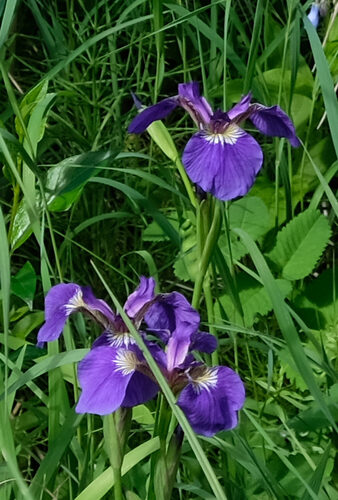
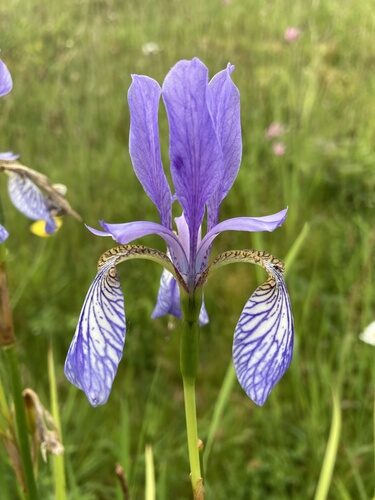
Iris histrio
Rchb.f.
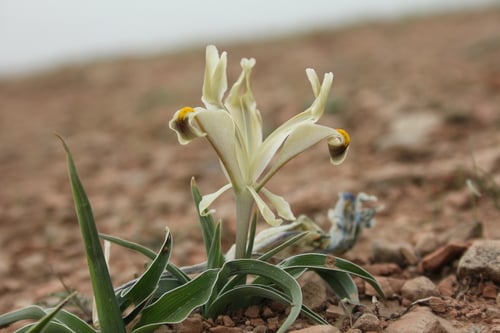
iNaturalist· cc-by
(c) Gidip, some rights reserved (CC BY)
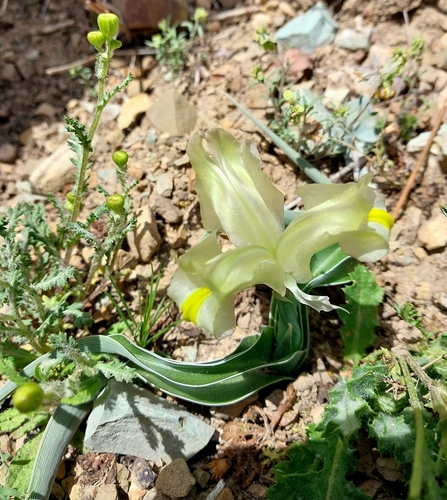
iNaturalist· cc-by-nc
(c) Humam Ghanim, some rights reserved (CC BY-NC)
Summary
Source: WikipediaIris histrio, the Syrian iris, is a species in the genus Iris, it is classified in the subgenus Hermodactyloides and section Reticulatae. It is a bulbous perennial from Central Asia: Kyrgyzstan, Israel, Lebanon, Syria and southern Turkey. It was first collected by Charles Gaillardot in Lebanon in 1854. In 1873, Heinrich Gustav Reichenbach (Rchb.f) wrote about the bulb in his 'Botanische Notizen'. This then joined the subspecies of iris reticulata, which has now been grouped with other under the subgenus of Hermodactyloides. It is commonly known as the Syrian iris. Iris histrio is an accepted name by the RHS. It has baby blue flowers with intricate markings, shading to purplish blue at the base. Like other members of the Reticulatae group, such as Iris vartanii and Iris danfordiae, it throws out a very large number of small bulbils round the base of the bulb. If these are planted separately in a reserve ground, they will develop into flowering bulbs in the course of two or three years. Seedlings of I. vartani certainly, and of I. histrio normally needs protection at all times, especially in the UK. It can grow in loamy soils.
Description
Iris histrio is a corm or bulb plant in the Iridaceae family, found in temperate regions.
This description is brief — help expand it
Edible Uses
The flowers are edible.
Distribution
It is a temperate plant.
Where It Grows
Europe, Turkey, Türkiye,
Synonyms
Also Known As
Sultan navruz
References (1)
- Ertug, F, Yenen Bitkiler. Resimli Türkiye Florası -I- Flora of Turkey - Ethnobotany supplement