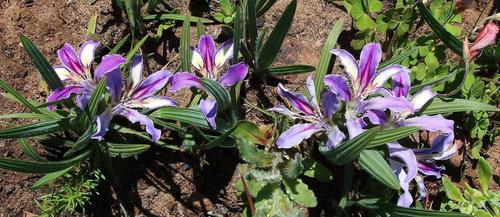
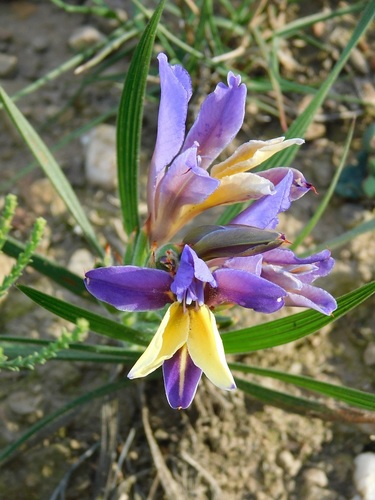
Iris missouriensis
Nutt.
Rocky Mountains iris
iNaturalist· cc-by-nc
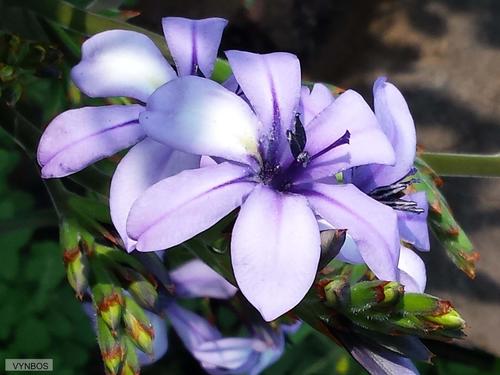
(c) stellaginella, some rights reserved (CC BY-NC), uploaded by stellaginella
iNaturalist· cc-by-nc
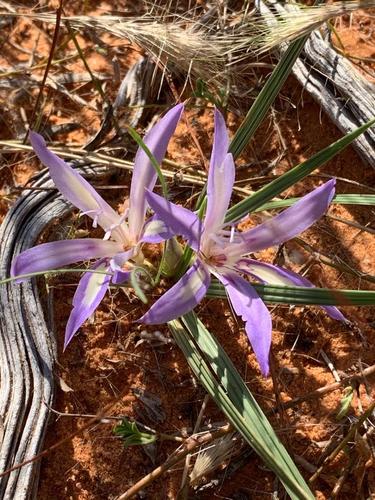
(c) mhays, some rights reserved (CC BY-NC), uploaded by mhays
iNaturalist· cc-by
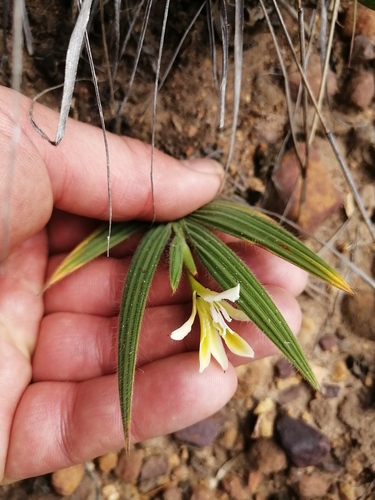
(c) Nick Block, some rights reserved (CC BY), uploaded by Nick Block
Summary
Source: WikipediaIris missouriensis (syn. I. montana) is a hardy flowering rhizomatous species of the genus Iris, in the family Iridaceae. Its common names include western blue flag, Rocky Mountain iris, and Missouri flag. It is native to western North America. Its distribution is varied; it grows at high elevations in mountains and alpine meadows and all the way down to sea level in coastal hills.
Description
Perennial iris growing 0.8 m tall with 1 m spread. Blooms May to June with insect-pollinated hermaphroditic flowers. Self-fertile. Prefers light sandy and medium loamy soils with mildly acid to mildly alkaline pH. Tolerates semi-shade to full sun. Requires moist to wet soil conditions.
Edible Uses
The roasted seed can be used as a coffee substitute.
Traditional Uses
The seeds are used as a substitute for coffee.
This uses section is brief — help expand it
Medicinal Uses
Rocky Mountain iris was used medicinally by several native North American Indian tribes, particularly as an external treatment for skin problems, and was for a time an officinal American medicinal plant, though it is little if at all used in modern herbalism. The root is emetic and odontalgic. An infusion has been used to treat kidney and bladder complaints and stomach aches. Pulped root is placed in the tooth cavity or on the gum to relieve toothache. A decoction of the root has been used as ear drops for earaches. A poultice of mashed roots has been applied to rheumatic joints and used as a salve on venereal sores. Caution is advised in the use of this plant, see the notes on toxicity. A paste of the ripe seeds has been used as a dressing on burns.
Known Hazards
Some Native American tribes made cordage from the plant's stems and leaves. Some Plateau Indian tribes used the roots to treat toothache. The Navajo used a decoction of the plant as an emetic. Plains Indians are said to have extracted the toxin irisin (also known as iridin and irisine) from the plant to use as arrow poison. The Zuni apply a poultice of chewed root to increase the strength of newborns and infants. This iris is listed as a weed in some areas, particularly in agricultural California. It is bitter and distasteful to livestock and heavy growths of the plant are a nuisance in pasture land. Heavy grazing in an area promotes the growth of this hardy iris. The plant is widely cultivated in temperate regions. The plant is toxic, particularly the rootstalks, which contain the potentially lethal irisin.
Distribution
It is a temperate plant.
Where It Grows
Australia, North America, Slovenia, USA,
Cultivation
Requires a moist soil, growing well in a moist border, but intolerant of stagnant water. Easily grown in a sunny position so long as the soil is wet in the spring. A polymorphic species. Members of this genus are rarely if ever troubled by browsing deer or rabbits.
Propagation
Seed is best sown as soon as it is ripe in a cold frame. Stored seed should be sown as early in the year as possible in a cold frame. Prick seedlings out into individual pots when large enough to handle and grow on in the greenhouse or cold frame for their first year, then plant out in late spring or early summer. Division is best done after flowering, though one account recommends spring or early autumn. Larger clumps can be replanted directly into permanent positions; smaller clumps are better potted up and grown on in a cold frame until rooting well, then planted out in spring.
Other Uses
The plant yields a green dye, though the specific part used is not recorded.
Synonyms
Also Known As
Mizurska perunika
References (4)
- Facciola, S., 1998, Cornucopia 2: a Source Book of Edible Plants. Kampong Publications, p 122
- http://www.botanic-gardens-ljubljana.com/en/plants
- J. Acad. Nat. Sci. Philadelphia 7:58. 1834
- Kunkel,