Eugenia bukobensis
Engl.
gbif· cc-by
Royal Botanic Gardens, Kew
Description
A shrub or small tree. It grows up to 5 m tall. The branches hang downwards. The stems can be hairy. The bark is smooth. The leaves are dull green and opposite. They are oval and 2-7 cm long. The tip is drawn out but the end is blunt. The leaf stalk is short. The leaves are thin and when crushed they have a sweet smell. The flowers occur as 3-9 together on thin stalks next to the leaves. There are 4-5 white sweet smelling petals. The fruit is purple black and about 1.5 cm across. As it ripens it turns hard brown like a coffee berry and has a crown of flower parts at the end.
Edible Uses
The ripe fruit are fleshy and sweet and eaten as a snack.
Traditional Uses
The ripe fruit are fleshy and sweet. They are eaten as a snack.
This uses section is brief — help expand it
Distribution
A tropical plant. It grows in Uganda. It is often at the edge of the forest.
Where It Grows
Africa, Central Africa, Congo, East Africa, Ethiopia, Kenya, Madagascar, South Africa, Southern Africa, Uganda, Tanzania, Zambia,
Cultivation
It is normally grown from seed. Seed can be stored for 4 months. Seed treatment is not necessary. It can be grown as a hedge or fence.
Production
Ripe fruit are collected from June to December.
Notes
There are about 550 Eugenia species. They are mostly in tropical and subtropical South America. The name Eugenia bukobensis is probably conserved. See Taxon reference.
Synonyms
Also Known As
Golasit, Kabikabika, Satol
References (7)
- Katende, A.B., Birnie, A & Tengnas B., 1995, Useful Trees and Shrubs for Uganda. Identification, Propagation and Management for Agricultural and Pastoral Communities. Technical handbook No 10. Regional Soil Conservation Unit, Nairobi, Kenya. p 292
- Malaisse, F., 1997, Se nourrir en floret claire africaine. Approche ecologique et nutritionnelle. CTA., p 63
- Ruffo, C. K., Birnie, A. & Tengnas, B., 2002, Edible Wild Plants of Tanzania. RELMA p 312 (As Eugenia capensis subsp. nyassensis)
- Senbeta, F., et al, 2013, Diversity of Useful Plants in the Coffee Forests of Ethiopia. Ethnobotany Research & Applications 11:049-069
- Verdcourt, B., Eilu, G., Katende, A., 2002, Proposal to Conserve the Name Eugenia bukobensis Engl. (Myrtaceae) with a Conserved Type. Taxon, Vol. 51, No. 2 p. 389
Show all 7 references Hide references
- World Checklist of Useful Plant Species 2020. Royal Botanic Gardens, Kew
- Yimer, A., et al, 2021, Ethnobotanical study of wild edible plants used by Meinit Ethnic Community at Bench-Maji Zone, Southwest Ethiopia. Research Square. p 6
More from Myrtaceae
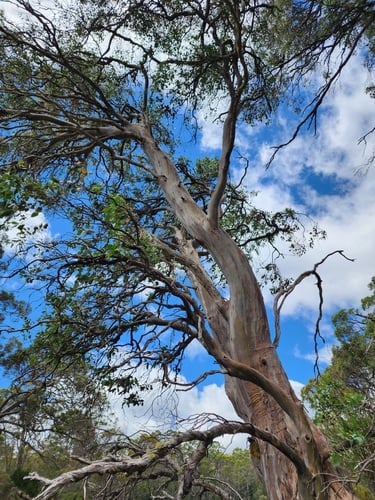
Eucalyptus gunnii
Cider Tree, Cider Gum
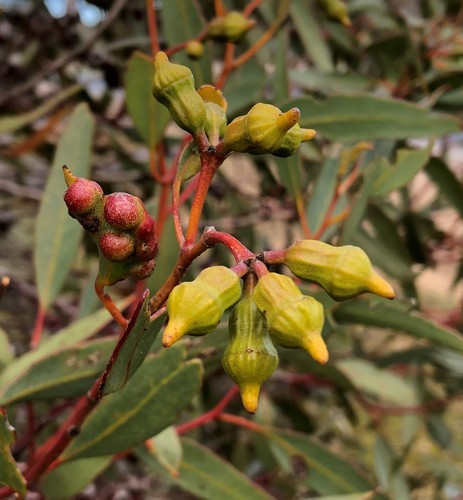
Eucalyptus incrassata
Yellow mallee, Ridge-fruited Mallee, Lerp Mallee, Mallee Box
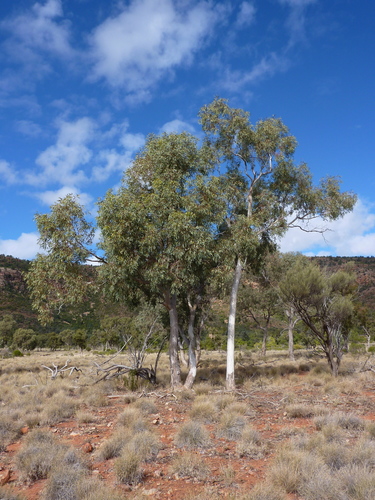
Eucalyptus intertexta
Inland Red Box, Gum-barked Coolibah, Western Red Box
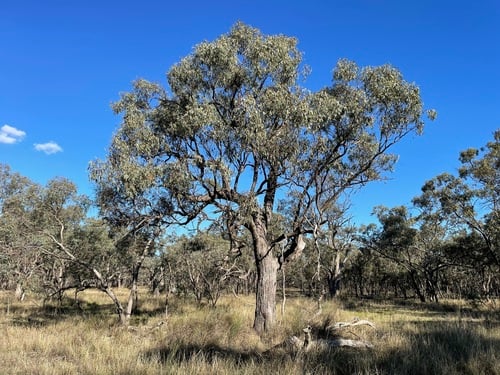
Eucalyptus largiflorens
Black Box, Flooded Box, River Box
Eucalyptus leptopoda
Tammin Mallee
Eucalyptus leucoxylon
Yellow gum