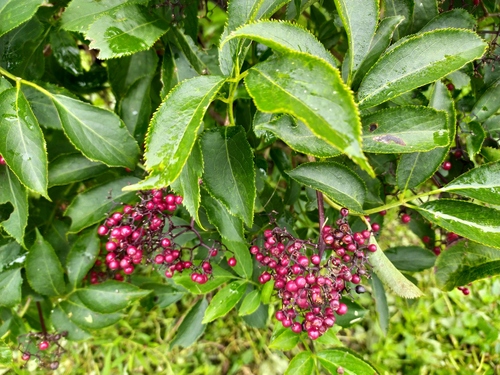
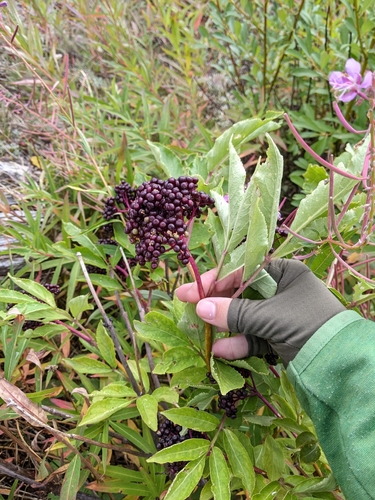
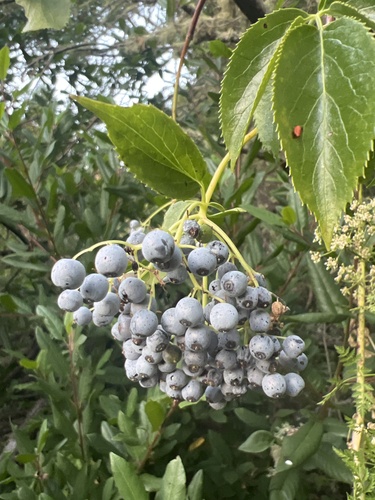
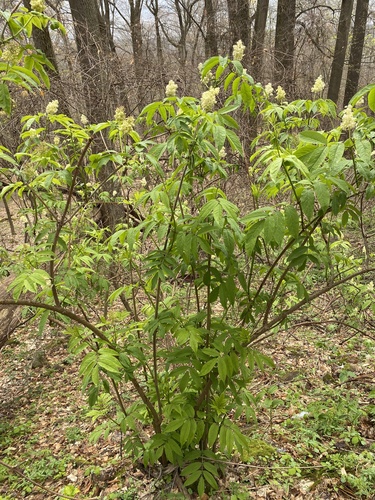
Viburnum erubescens gracilipes
Rehder.
gbif· cc-by-nc-sa
MBG
gbif· cc-by-nc-sa
MBG
gbif· cc-by-nc-sa
MBG
Description
Viburnum erubescens gracilipes is a deciduous Shrub growing to 5 m (16ft 5in). See above for USDA hardiness. It is hardy to UK zone 6. It is in flower in July, and the seeds ripen in October. The species is hermaphrodite (has both male and female organs) and is pollinated by Insects. Suitable for: light (sandy), medium (loamy) and heavy (clay) soils. Suitable pH: mildly acid, neutral and basic (mildly alkaline) soils. It can grow in semi-shade (light woodland) or no shade. It prefers moist soil.
Edible Uses
Fruit - raw or cooked. A sweet flavour but there is very little flesh in relation to the size of the single large seed.
Distribution
E. Asia - China to the Himalayas and Sri Lanka.
Where It Grows
Coming Soon
Cultivation
An easily grown plant, it succeeds in most soils but is ill-adapted for poor soils and for dry situations. It prefers a deep rich loamy soil in sun or semi-shade. Best if given shade from the early morning sun in spring. Not all forms of this species are hardy in Britain. Plants are self-incompatible and need to grow close to a genetically distinct plant in the same species in order to produce fruit and fertile seed. A polymorphic species. This form of V. erubescens fruits freely in Britain.
Propagation
Seed - best sown in a cold frame as soon as it is ripe. Germination can be slow, sometimes taking more than 18 months. If the seed is harvested 'green' (when it has fully developed but before it has fully ripened) and sown immediately in a cold frame, it should germinate in the spring. Stored seed will require 2 months warm then 3 months cold stratification and can still take 18 months to germinate. Prick out the seedlings into individual pots when they are large enough to handle and grow them on in a cold frame or greenhouse. Plant out into their permanent positions in late spring or early summer of the following year. Cuttings of soft-wood, early summer in a frame. Pot up into individual pots once they start to root and plant them out in late spring or early summer of the following year. Cuttings of half-ripe wood, 5 - 8 cm long with a heel if possible, July/August in a frame. Plant them into individual pots as soon as they start to root. These cuttings can be difficult to overwinter, it is best to keep them in a greenhouse or cold frame until the following spring before planting them out. Cuttings of mature wood, winter in a frame. They should root in early spring - pot them up when large enough to handle and plant them out in the summer if sufficient new growth is made, otherwise keep them in a cold frame for the next winter and then plant them out in the spring. Layering of current seasons growth in July/August. Takes 15 months.
Other Uses
Wood. Wood - soft to hard, close and even grained. The wood is hardest in the cooler parts of its range, the Himalayan form is a possible Boxwood (Buxus spp) substitute.