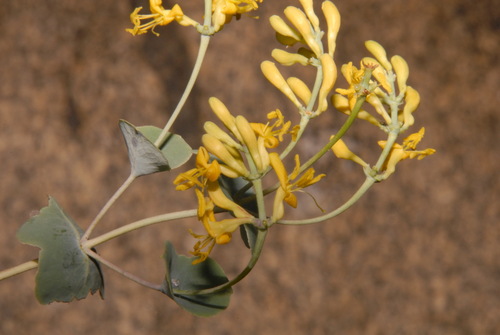
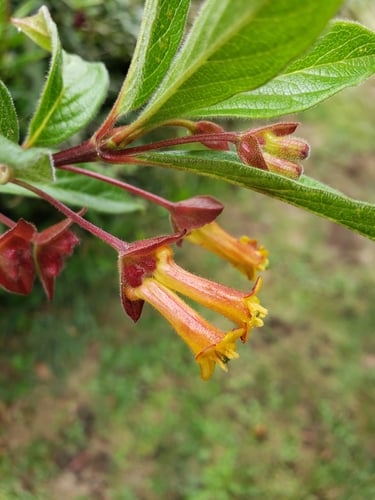
Lonicera ciliosa - (Pursh.)Poir.
(Pursh.)Poir.
Orange Honeysuckle
gbif· cc-by
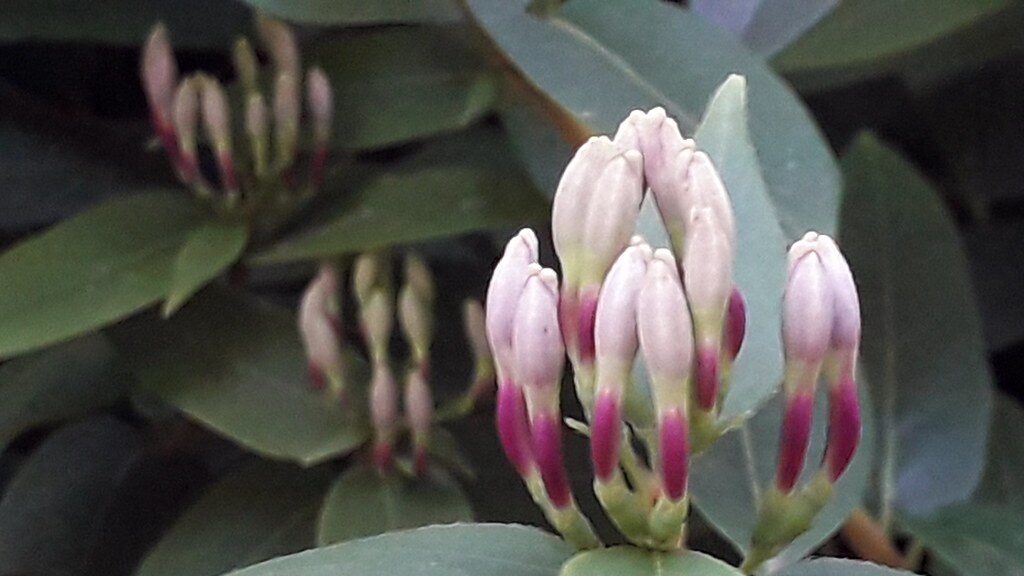
Murray McGoogan
gbif· cc-by
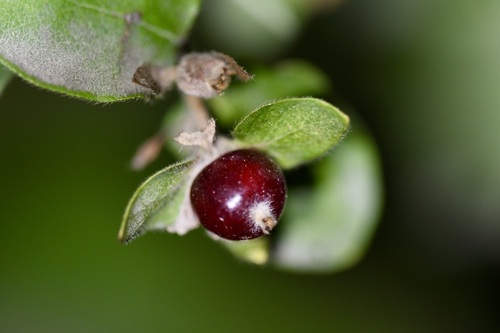
Murray McGoogan
gbif· cc-by
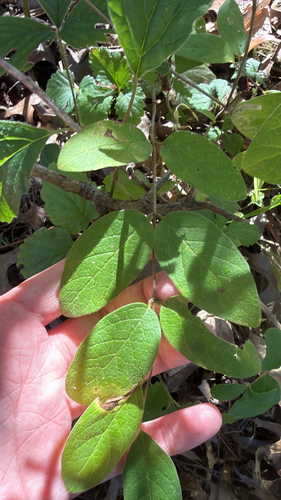
Murray McGoogan
Description
Lonicera ciliosa is an evergreen Climber growing to 10 m (32ft 10in) at a medium rate. See above for USDA hardiness. It is hardy to UK zone 5. It is in leaf all year, in flower in June, and the seeds ripen in August. The species is hermaphrodite (has both male and female organs) and is pollinated by Insects. Suitable for: light (sandy), medium (loamy) and heavy (clay) soils. Suitable pH: mildly acid, neutral and basic (mildly alkaline) soils. It can grow in semi-shade (light woodland) or no shade. It prefers moist soil.
Edible Uses
Fruit - raw or cooked. Not tasty enough to be widely sought. The fruit is about 5mm in diameter. Children enjoy sucking the nectar from the base of the flowers.
Medicinal Uses
Contraceptive Epilepsy Miscellany Poultice TB Women's complaints. The leaves are contraceptive and tonic. An infusion has been used as a contraceptive and also as a treatment for problems in the womb. A decoction has been used in the treatment of colds and tuberculosis. A poultice of the chewed leaves has been applied to bruises. An infusion of the woody part of the plant has been drunk in small amounts, or used as a bath, in the treatment of epilepsy.
Distribution
Western N. America - British Columbia to N. Carolina.
Where It Grows
NORTHERN AMERICA: Canada (British Columbia (southwest)), United States (Idaho (north), Montana (west), Oregon, Washington, California (north))
Cultivation
Prefers a good loamy soil and cool moist conditions at the roots. Succeeds in partial shade. Subject to attacks by aphis, especially in hot dry spells. Climbs by twining around other plants.
Propagation
Seed - best sown as soon as it is ripe in a cold frame. Stored seed requires 2 months cold stratification and should be sown as soon as possible in a cold frame. When they are large enough to handle, prick the seedlings out into individual pots and grow them on in the greenhouse for at least their first winter. Plant them out into their permanent positions in late spring or early summer, after the last expected frosts. Cuttings of half-ripe wood, 7 - 10cm with or without a heel, July/August in a frame. Good percentage. Cuttings of mature wood of the current season's growth, 15 - 20cm with or without a heel, November in a cold frame. Good percentage. Layering in autumn.
Other Uses
Fibre Hair MiscellanyAn infusion of the stems is used as a hair shampoo and tonic to make it grow. A fibre obtained from the stem is used in making mats, bags, blankets etc. The stems were used as building materials by the native North American Indians. They were used with willow withes to reinforce suspension bridges across canyons and rivers. They were also twisted with coyote willow to lash together the framing poles of underground pit houses and to make a pliable ladder.