Valeriana jatamansi
Jones
Indian valerian
iNaturalist· cc0
no rights reserved, uploaded by Jean-Paul Boerekamps
iNaturalist· cc-by-nc
(c) Basu Dev Neupane, some rights reserved (CC BY-NC)
iNaturalist· cc-by-nc
(c) Basu Dev Neupane, some rights reserved (CC BY-NC)
Summary
Source: WikipediaValeriana jatamansi, formerly known as Valeriana wallichii, is a rhizome herb of the genus Valeriana and the family Valerianaceae also called Indian Valerian or Tagar-Ganthoda, not to be confused with ganthoda, the root of Indian long pepper. It is an herb useful in Ayurvedic medicine used as an analeptic, antispasmodic, carminative, sedative, stimulant, stomachic, and nervine. The genus Valeriana, with about 200 species, belongs to the family Valerianaceae and has a distribution throughout the world. The Indian Valerian has long been used in Ayurveda (Charak Samhita and Susruta) and Unani systems of medicine, which describe its use in obesity, skin disease, insanity, epilepsy and snake poisoning. The crude drugs from roots/ rhizomes and Valerian derived phytomedicines are used as mild sedatives in pharmaceutical industry. The activity is largely attributed to the presence of valepotriates.
Description
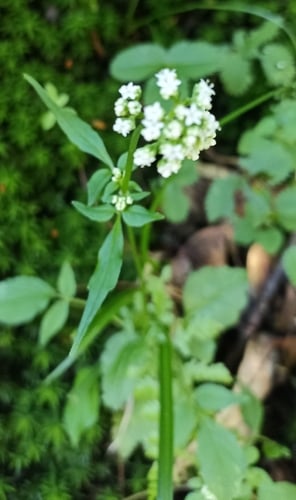
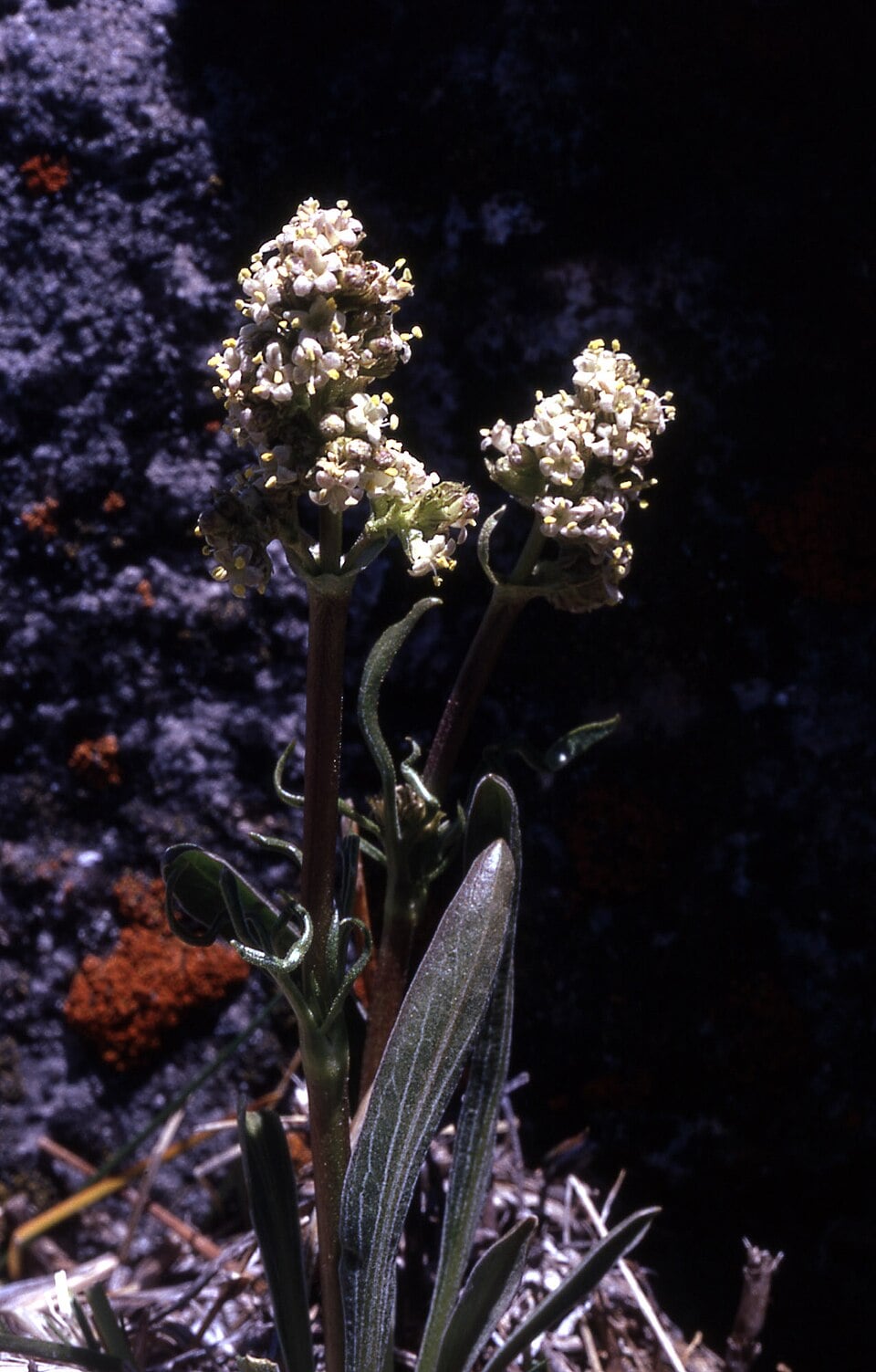
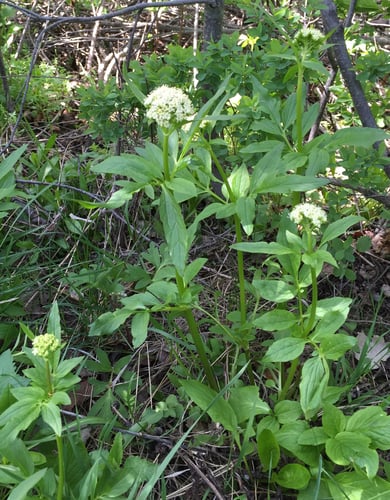
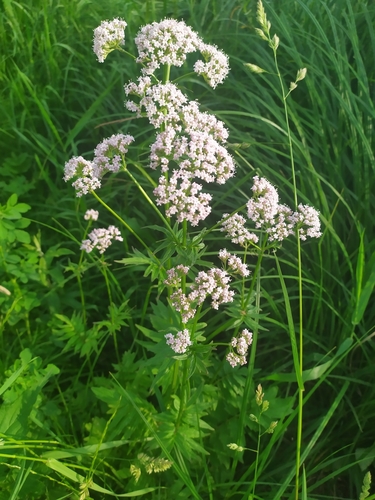
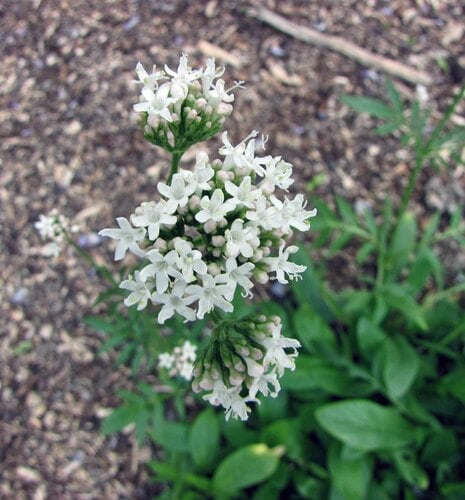
A herb. It grows 20-70 cm tall. It has short rhizomes. There can be one or several stems. The leaves at the base are in a ring. They are oval to heart shaped and 2-14 cm long by 3-10 cm wide. The edges are irregular and can have teeth. The flowers are pinkish or white.
Edible Uses
None known
Traditional Uses
The young leaves are cooked as a vegetable. They are used in stews and for a thick soup. The flowers are used as a potherb. The root is also stewed.
Medicinal Uses
The root is antispasmodic, carminative and stimulant, sharing many properties with V. officinalis and suitable for use as a nervine and sedative. In Nepal it is used to treat hysteria, insomnia, nausea, pimples, rheumatism and cholera. The juice of the root is applied to the forehead for headaches and dripped into the eyes for eye complaints. A paste of the plant is applied externally to boils. This species is considered an effective substitute for V. officinalis, whose properties are as follows: valerian is a well-known herb with a long and proven history of efficacy, noted especially as a tranquilliser and nervine for people suffering from nervous overstrain. It has been shown to encourage sleep, improve sleep quality and reduce blood pressure. It is used internally for painful menstruation, cramps, hypertension and irritable bowel syndrome, and should not be prescribed for patients with liver problems. Externally it treats eczema, ulcers and minor injuries. The active constituents are called valepotriates, which research has confirmed have a calming effect on agitated individuals while also acting as a stimulant in cases of fatigue. Roots of 2-year-old plants are harvested in autumn after the leaves have died down and used fresh or dried. The fresh root is approximately 3 times as effective as roots dried at 40°, while temperatures above 82° destroy the active principle. Use with caution.
Known Hazards
Some caution is advised with the use of this plant. At least one member of the genus is considered to be poisonous raw and V. officinalis is a powerful nervine and sedative that can become habit-forming.
Distribution
It is a tropical and subtropical plant. It grows in grassy slopes and beside streams below 2,500 m above sea level. In Nepal it grows between 1,200-3,600 m above sea level. In Sichuan and Yunnan.
Where It Grows
Afghanistan, Asia, Bhutan, China, Himalayas, India, Indochina, Myanmar, Nepal, Northeastern India, Pakistan, SE Asia, Thailand, Tibet, Vietnam,
Cultivation
We have very little information on this species and do not know if it will be hardy in Britain, though judging by its native range it should succeed outdoors in many parts of the country. The overcollection of its roots from the wild is becoming a cause fr conservation concern. The following notes are based on the general needs of the genus. Succeeds in ordinary garden soil. Dioecious, male and female plants must be grown if seed is required.
Propagation
Sow seed in spring in a cold frame, barely covering it as light is needed for germination. Prick seedlings out into individual pots when large enough to handle, then plant out into permanent positions in summer if sufficient growth has been made; otherwise overwinter in a greenhouse or frame and plant out early the following summer. Divide in spring — larger divisions can go straight into permanent positions, while smaller ones are best potted up and grown on in light shade in a greenhouse or cold frame until established, then planted out in summer or the following spring.
Other Uses
The dried rhizome is burned as incense. The root contains 0.8% essential oil, which is used in perfumery and in hair preparations.
Notes
Also put in the family Valerianaceae. It has anti-diabetic properties.
Synonyms
Also Known As
Bhutakesi, Huikhong, Jaboe, Matixiang, Na-poe, Nappu, Samayo, Soman, Sugandhawal
References (6)
- Geng, Y., et al, 2016, Traditional knowledge and its transmission of wild edibles used by the Naxi in Baidi Village, northwest Yunnan province. Journal of Ethnobiology and Ethnomedicine. 12:10
- Ghimire, S. K., et al, 2008, Non-Timber Forest Products of Nepal Himalaya. WWF Nepal p 158
- Luo, B., et al, 2019, Wild edible plants collected by Hani from terraced rice paddy agroecosystem in Honghe Prefecture, Yunnan, China. Journal of Ethnobiology and Ethnomedicine 15:56
- Weckerle, C. S., et al, 2006, Plant Knowledge of the Shuhi in the Hengduan Mountains, Southwest China. Economic Botany 60(1):2-23
- Wiersema, J. H. & Leon, B., 2013, World Economic Plants. A Standard Reference CRC Press. 2nd Ed. p 710
Show all 6 references Hide references
- World Checklist of Useful Plant Species 2020. Royal Botanic Gardens, Kew