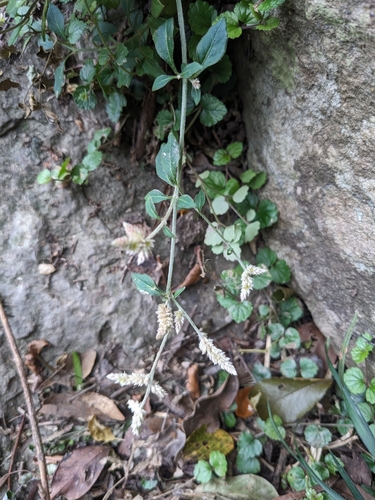
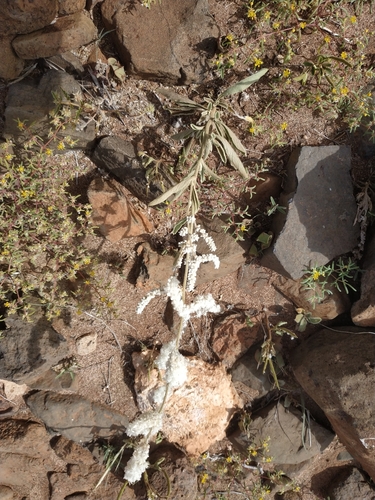
Deschampsia caespitosa - (L.)P.Beauv.
(L.)P.Beauv.
Tussock Grass, Tufted Hair Grass, Hair Grass
gbif· cc-by-nc-nd
Helmut Wittmann
gbif· cc-by-nc-nd
Helmut Wittmann
gbif· cc-by-nc-nd
Peter Pilsl
Description
Deschampsia caespitosa is an evergreen Perennial growing to 1 m (3ft 3in) by 0.5 m (1ft 8in) at a medium rate. See above for USDA hardiness. It is hardy to UK zone 5. It is in leaf all year, in flower from June to August. The species is hermaphrodite (has both male and female organs) and is pollinated by Wind. Suitable for: light (sandy), medium (loamy) and heavy (clay) soils and can grow in heavy clay soil. Suitable pH: mildly acid, neutral and basic (mildly alkaline) soils and can grow in very acid soils. It can grow in semi-shade (light woodland) or no shade. It prefers moist or wet soil.
Edible Uses
The edible part is the grain. Like most grasses, the seeds are small but nutritious and can be processed into meal or porridge. While not widely used today, they fit within the broader category of wild grass grains that have historically contributed to human diets. Edible Uses & Rating: Tufted hairgrass ranks as a moderate-value wild grain. Individually, each plant produces small seeds, but dense colonies can yield meaningful quantities. It is best considered a supplementary carbohydrate source rather than a primary staple, unless gathered in large stands. Its strength lies in reliability in moist, higher-elevation environments where fewer alternative grains are available. Taste, Processing & Kitchen Notes: The grains are mild and grassy, similar to other small wild cereals. Once cleaned and hulled, they can be ground into flour or cooked whole as a porridge. Toasting prior to cooking improves flavor, adding a nutty character and reducing any raw grassy notes. Because of their small size, efficient processing techniques such as winnowing and light milling are important. Mixing with other flours or grains improves texture and palatability. Seasonality (Phenology): Tufted hairgrass flowers in mid to late summer, typically from July through September in higher elevations. Seeds mature from late summer into autumn. Timing varies with elevation and moisture availability, with later maturation in colder or higher sites. Safety & Cautions (Food Use): There are no significant toxicity concerns associated with this species when properly identified. As with all wild grasses, care should be taken to harvest clean seed free of mold and other contaminants. Wetland habitats can introduce pathogens, so drying and cooking are recommended. Harvest & Processing Workflow: Harvest mature seed heads when they turn golden and begin to shed easily. Cut or strip seed heads into containers, then dry thoroughly. Thresh by rubbing or beating to release the seeds, then winnow to remove the chaff. Light milling or grinding produces flour, while whole grains can be simmered into porridge. Efficiency improves significantly when working with large stands. Cultivar/Selection Notes: Although not typically cultivated as a food crop, tufted hairgrass is widely used in ecological restoration and ornamental plantings. Selection for food use would focus on stands with larger seed heads and dense growth rather than named cultivars. Look-Alikes & Confusion Risks: Tufted hairgrass resembles other fine-leaved grasses in moist habitats, but its dense tussock growth and airy, branching panicles help distinguish it. As with most grasses, the risk of confusion is low from a safety perspective because grasses are broadly edible, though yield and ease of processing vary. Traditional/Indigenous Use Summary. The grains were traditionally gathered and used as food by Indigenous peoples in parts of western North America, particularly in regions where the species is abundant. Its use reflects a broader pattern of utilizing small wild grass seeds as seasonal carbohydrate sources. Seed. No further details are given, though it is likely that the seed was ground into a flour and used as a cereal. However, the seed is quite small and its use would be rather fiddly.
Known Hazards
There are no significant toxicity concerns associated with this species when properly identified. As with all wild grasses, care should be taken to harvest clean seed free of mold or contamination. Wetland habitats can introduce pathogens, so drying and cooking are recommended.
Distribution
Temperate areas of Europe, including Britain, Asia, N. Africa, N. America and Australasia.
Where It Grows
Afghanistan, Alaska, Albania, Alberta, Aleutian Is., Altay, Amur, Antipodean Is., Arizona, Austria, Baltic States, Belarus, Belgium, British Columbia, Bulgaria, Buryatiya, California, Cameroon, Central European Russia, Chatham Is., China North-Central, China South-Central, Chita, Colorado, Congo, Connecticut, Czechia-Slovakia, Denmark, DR Congo, East European Russia, East Himalaya, Ethiopia, Finland, France, Føroyar, Germany, Great Britain, Greece, Greenland, Gulf of Guinea Is., Hungary, Iceland, Idaho, Illinois, Indiana, Inner Mongolia, Iran, Ireland, Irkutsk, Italy, Japan, Kamchatka, Kazakhstan, Kentucky, Kenya, Khabarovsk, Kirgizstan, Korea, Krasnoyarsk, Krym, Kuril Is., Labrador, Magadan, Maine, Manchuria, Manitoba, Maryland, Massachusetts, Mexico Northeast, Michigan, Minnesota, Mongolia, Montana, Nepal, Netherlands, Nevada, New Brunswick, New Hampshire, New Jersey, New Mexico, New South Wales, New York, New Zealand North, New Zealand South, Newfoundland, North Carolina, North Caucasus, North Dakota, North European Russia, Northwest European Russia, Northwest Territories, Norway, Nova Scotia, Nunavut, NW. Balkan Pen., Ohio, Ontario, Oregon, Pakistan, Pennsylvania, Poland, Portugal, Primorye, Prince Edward I., Qinghai, Québec, Rhode I., Romania, Rwanda, Sakhalin, Saskatchewan, Sicilia, South Dakota, South European Russia, Spain, Svalbard, Sweden, Switzerland, Tadzhikistan, Taiwan, Tanzania, Tasmania, Tibet, Transcaucasus, Tuva, Türkiye, Türkiye-in-Europe, Uganda, Ukraine, Utah, Uzbekistan, Vermont, Victoria, Virginia, Washington, West Himalaya, West Siberia, West Virginia, Wisconsin, Wyoming, Xinjiang, Yakutiya, Yukon
Cultivation
Tufted hairgrass, now best referred to as Deschampsia cespitosa, belongs to the grass family (Poaceae) and the genus Deschampsia. Common names include tufted hairgrass and tussock grass. It is a cool-season perennial grass widely distributed across temperate and cold regions of the Northern Hemisphere. It performs across a very broad climatic range, roughly USDA Zones 2–9. Plants typically form dense clumps about 30–120 cm tall in flower, with basal tufts spreading 30–60 cm or more over time. Prefers a humus-rich acidic soil, but it succeeds in most soils. It prefers a soil on the heavier and wetter side, but it also grows in drier soils. Does well on damp or wet banks or in open woodland. There are several named varieties, selected for their ornamental value. Tufted hairgrass is a dependable but modest wild grain resource. Its ecological abundance in moist mountain and northern environments compensates for the small size of its seeds. While not a primary staple, it can contribute meaningfully to a forager’s diet when harvested in quantity and processed efficiently. Growing Conditions: This species thrives in cool, moist soils, including meadows, stream edges, wetlands, and subalpine environments. It tolerates seasonal flooding and prefers full sun to partial shade. Habitat & Range: It is widely distributed across the western and northern United States and extends throughout much of the Northern Hemisphere. In the Southwest, it is primarily restricted to higher elevations and moist habitats. Size & Landscape Performance: Tufted hairgrass forms attractive, arching clumps with airy flower panicles, making it a valuable ornamental grass. It performs well in naturalistic plantings, especially in moist or cool climates. Cultivation (Horticulture): It is easy to grow from seed or division and is commonly used in restoration and landscaping. It prefers consistent moisture and benefits from occasional thinning of old clumps. Pests & Problems: Generally pest-resistant, though overly wet conditions may promote fungal issues. In dry climates, it may struggle without supplemental water. Identification & Habit: A perennial, tufted grass forming dense clumps. Leaves are narrow and basal. Flowering stems bear open, airy panicles of small spikelets that give a soft, feathery appearance. Pollinators: Wind-pollinated, like most grasses, and does not rely on insect pollinators.
Propagation
Seed - sow in situ in spring or autumn. Only just cover the seed. Germination usually takes place within 2 - 3 weeks at 13°c. If seed is in short supply it can be sown in a cold frame in spring, pricked out into individual pots as soon as it is large enough to handle and planted out in early summer.
Other Uses
Plants form impenetrably dense clumps and when planted close together in drifts make an excellent ground cover. Provides habitat and cover for small animals and contributes to soil stabilization in wetland and meadow ecosystems. Seeds may be consumed by birds and small mammals.
Synonyms
Also Known As
Tufted hairgrass and tussock grass.