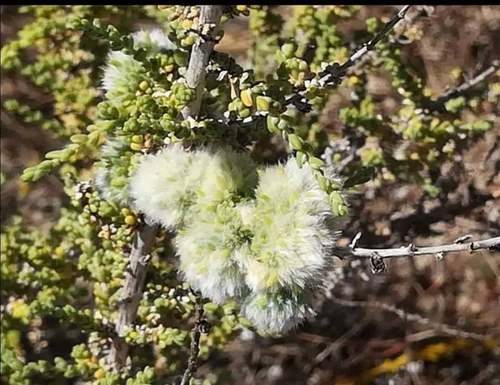
Allmania nodiflora

(L.) R. Br. ex Wight

Node flower allmania

iNaturalist· cc-by

(c) J.M.Garg, some rights reserved (CC BY)

iNaturalist· cc-by

(c) J.M.Garg, some rights reserved (CC BY)

iNaturalist· cc-by-nc

(c) V.Arun, some rights reserved (CC BY-NC)

Description

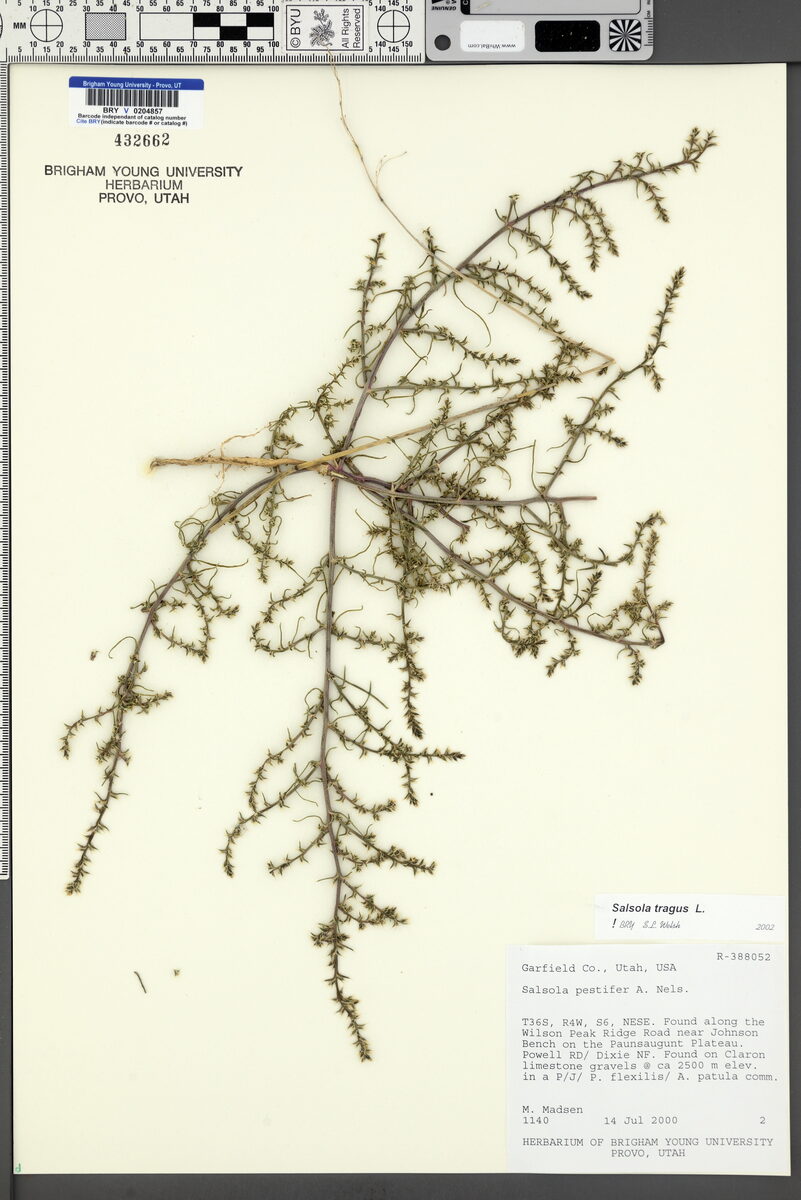
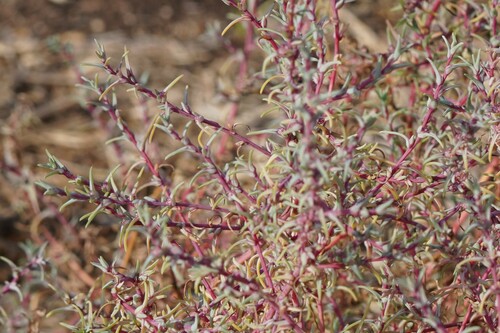
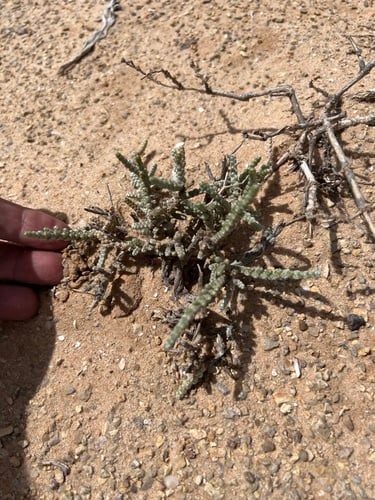
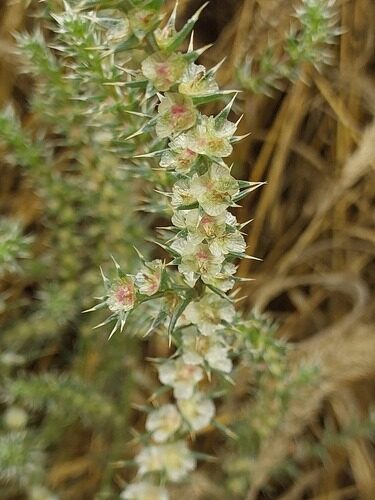
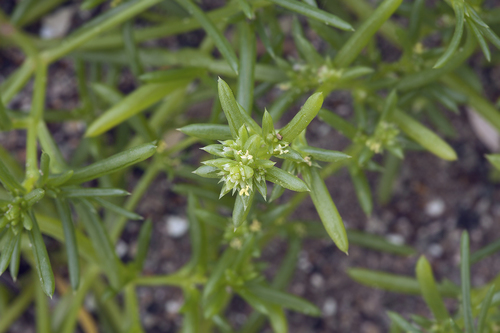
A herb. It can be erect or trailing on the ground. It grows to 80 cm high. The stems are branched near the base. The leaves are finely hairy underneath. The leaves are alternate. The leaves are narrowly oblong and 2-6 cm long by 1-2 cm wide. The flowers are in round heads. There are 3-7 flowers in a group. The flowers are red.

Edible Uses

Leaves - cooked and eaten as a vegetable. Leaves and young shoots. They are cut into small pieces and cooked with salt and chilli, and garnished with mustard seeds, curry leaves and onions in oil.

Traditional Uses

The leaves are used as a spinach.

This uses section is brief — help expand it

Medicinal Uses

The ripe fruits are used to treat constipation and dysentery. The leaves are febrifuge.

Distribution

It is a tropical plant. It grows on sandy soil or sandy shores up to 200 m in southern China. It can grow partly in water.

Where It Grows

Asia, China, India, Indochina, Laos, Pacific, Philippines, SE Asia, Singapore, Sri Lanka, Vietnam,

Cultivation

Grows best in a light soil and a sunny position. A very variable species, it has in the past been treated as several distinct species, but all forms grade into one another and are best treated as one.

Other Information

Leaves are sold in local markets.

Notes

There is only one Allmania species.
Synonyms

Arinathan, V., et al, 2007, Wild edibles used by Palliyars of the western Ghats, Tamil Nadu. Indian Journal of Traditional Knowledge. 6(1) pp 163-168 (As var. angustifolia and var. procumbens) Bao BojianSteve Clemants, Thomas Borsch, Amaranthaceae [Draft], Flora of China Binu, S., 2010, Wild edible plants by the tribals in Pathanamthitta district, Kerala. Indian Journal of Traditional Knowledge. 9(2): 309-312 Bircher, A. G. & Bircher, W. H., 2000, Encyclopedia of Fruit Trees and Edible Flowering Plants in Egypt and the Subtropics. AUC Press. p 20 Burkill, I.H., 1966, A Dictionary of the Economic Products of the Malay Peninsula. Ministry of Agriculture and Cooperatives, Kuala Lumpur, Malaysia. Vol 1 (A-H) p 103 Macmillan, H.F. (Revised Barlow, H.S., et al), 1991, Tropical Planting and Gardening. Sixth edition. Malayan Nature Society. Kuala Lumpur. p 356 Martin, F.W. & Ruberte, R.M., 1979, Edible Leaves of the Tropics. Antillian College Press, Mayaguez, Puerto Rico. p 173 (Also as Allmania albida) Narayanan Ratheesh, M. K. et al, 2011, Wild edible plants used by the Kattunaikka, Paniya and Kuruma tribes of Wayanad District, Kerala, India. Journal of Medicinal Plants Research Vol. 5(15), pp. 3520-3529 Pham-Hoang Ho, 1999, An Illustrated Flora of Vietnam. Nha Xuat Ban Tre. p 727 Rajkalkshmi, P. et al, 2001, Total carotenoid and beta-carotene contents of forest green leafy vegetables consumed by tribals of south India. Plant Foods for Human Nutrition 56:225-238 Reddy, K. N., et al, 2006, Traditional knowledge on wild food plants in Andhra Pradesh. Indian Journal of Traditional Knowledge 6(1) pp 223-229 Setiya, A. V., et al, 2016, Exploration and documentation of some wild edible plants used by the aboriginals from Gadchiroli District (M.S.) India. International Advanced Research Journal in Science, Engineering and Technology. 3(7) World Checklist of Useful Plant Species 2020. Royal Botanic Gardens, Kew Yesodharan, K. & Sujana, K. A., 2007, Wild edible plants traditionally used by the tribes in the Parambokulam Wildlife Sanctuary, Kerala, India. Natural Product Radiance 6(1) pp 74-80

More from Amaranthaceae