Campanula rotundifolia
L.
Harebell, Bluebell bellflower
iNaturalist· cc-by-nc
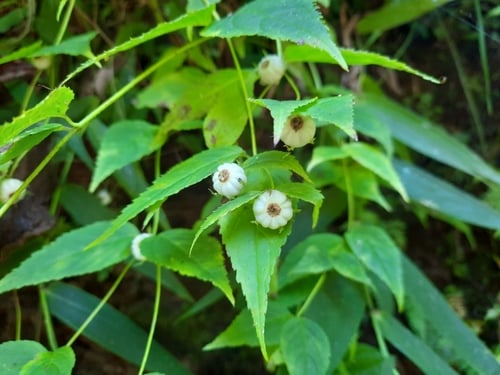
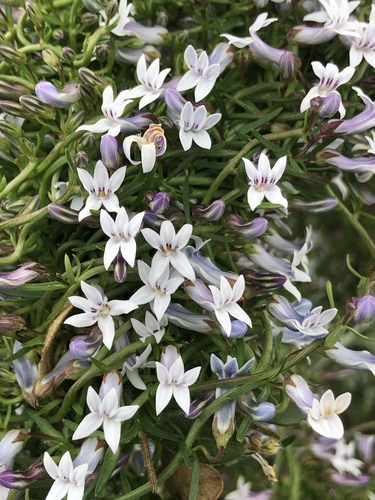
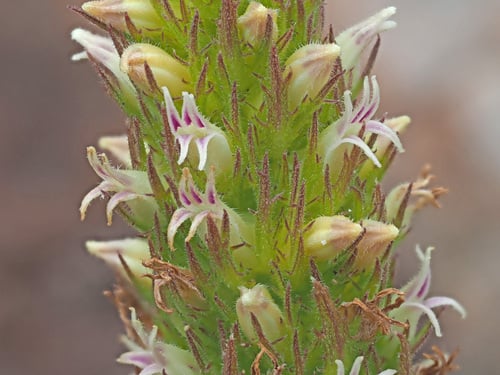
(c) Thomas Shahan, some rights reserved (CC BY-NC), uploaded by Thomas Shahan
iNaturalist· cc-by-nc
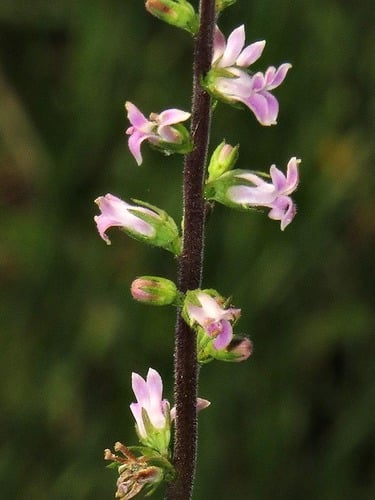
(c) Susan Elliott, some rights reserved (CC BY-NC), uploaded by Susan Elliott
iNaturalist· cc-by-nc
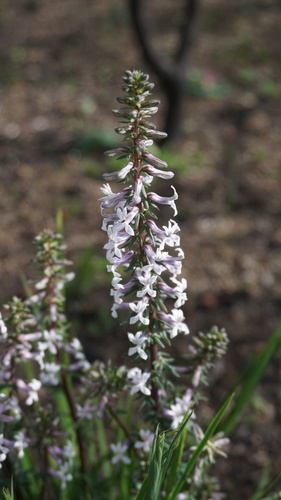
(c) Jason Headley, some rights reserved (CC BY-NC), uploaded by Jason Headley
Description
Campanula rotundifolia is a PERENNIAL growing to 0.4 m (1ft 4in) at a medium rate. See above for USDA hardiness. It is hardy to UK zone 3 and is not frost tender. It is in flower from July to September, and the seeds ripen from August to October. The species is hermaphrodite (has both male and female organs) and is pollinated by Bees, flies, beetles, Lepidoptera (Moths & Butterflies). The plant is self-fertile. Suitable for: light (sandy) and medium (loamy) soils, prefers well-drained soil and can grow in nutritionally poor soil. Suitable pH: neutral and basic (mildly alkaline) soils. It can grow in semi-shade (light woodland) or no shade. It prefers dry or moist soil.
Edible Uses
Leaves - raw or cooked. Edible Uses & Rating: Edible leaves resemble mild lettuce with no bitterness. Flowers are mild and pleasant. Fibre content is low in leaves and stems are softer than in C. parryi, though still not ideal to chew. Edibility rating is low due to yield but acceptable in flavour. Taste, Processing & Kitchen Notes: Fresh leaves work in salads and lightly cooked dishes. Flowers can be used fresh as garnish. Flavour is mild and refreshing. Seasonality (Phenology): Flowers from June to September; leaves persist through most of the growing season. Safety & Cautions (Food Use): Safe in modest amounts. Harvest & Processing Workflow: Leaves harvested by hand; flowers plucked individually. Traditional / Indigenous Use Summary: No documented significant Indigenous usage in North America, likely due to low yield.
Medicinal Uses
The root has been chewed in the treatment of heart and lung problems. An infusion of the roots has been used as ear drops for a sore ear. A decoction of the plant has been drunk or used as a wash in the treatment of sore eyes.
Distribution
Northern Temperate regions of the world, including Britain, to latitude 70° N.
Where It Grows
TEMPERATE ASIA: Russian Federation-Western Siberia (Western Siberia), Russian Federation-Eastern Siberia (Eastern Siberia), Mongolia NORTHERN AMERICA: Canada (Northwest Territories, Yukon, New Brunswick, Newfoundland and Labrador, Nova Scotia, Ontario, Québec, Alberta, British Columbia, Manitoba, Saskatchewan), United States (Alaska, Connecticut, Indiana (north), Maine, Massachusetts, Michigan, New Hampshire, New Jersey, New York, Ohio, Pennsylvania, Rhode Island, Vermont, West Virginia, Illinois, Iowa, Minnesota, Missouri (Shannon Co.), Nebraska, North Dakota, South Dakota, Wisconsin, Colorado, Idaho, Montana, Oregon, Washington, Wyoming, Maryland (Allegany Co.), New Mexico, Texas, Arizona, California (north), Utah), Mexico (Coahuila de Zaragoza, Nuevo León) EUROPE: Denmark, Finland, Faroe Islands, United Kingdom, Ireland, Iceland, Norway, Sweden, Austria, Belgium, Switzerland, Czech Republic, Germany, Hungary, Netherlands, Poland, Slovakia, Russian Federation (European part), Belarus, Estonia, Lithuania, Latvia, Moldova, Ukraine (incl. Krym), Albania, Bulgaria, Bosnia and Herzegovina, Greece, Croatia, Italy (n. & n.-c.), North Macedonia, Montenegro, Romania, Serbia, Slovenia, Spain, France AFRICA: Algeria
Cultivation
Prefers cool climates, moist meadows, well-drained soils, and full to partial sun. Suitable for USDA Zones 3–8. A very easily grown plant, it succeeds in most fertile well-drained soils, though it prefers a moist but well-drained rich sandy loam and a neutral or alkaline soil in sun or partial shade. Succeeds in poor soils. This species can be naturalized in finer turfs, on grassy banks and in chalk downland and heath associations. Plants are hardy to at least -15°c. A very variable species in the wild. When established, plants can spread fairly freely and also self-sow, though they are quite easily contained by hoeing. The species in this genus do not often hybridize and so seed can generally be relied upon to come true. The plants are self-fertile. Members of this genus are rarely if ever troubled by browsing deer or rabbits. A very ornamental plant, there are some named varieties. Pests & Problems: Generally trouble-free. Widespread across the northern United States, Canada, Alaska, the Rockies, and the circumpolar north. In the Southwest, primarily at higher elevations.
Propagation
Seed - surface sow in spring in a cold frame. Three or four weeks pre-chilling of the seed improves the germination rate. The seed usually germinates in 2 - 4 weeks at 18°c. When they are large enough to handle, prick the seedlings out into individual pots and grow them on in a cold frame for at least their first winter. Plant them out into their permanent positions in late spring or early summer, after the last expected frosts. The seed can also be sown outdoors in situ during the spring. Basal cuttings in spring. Harvest the shoots when they are about 10 - 15cm long with plenty of underground stem. Pot them up into individual pots and keep them in light shade in a cold frame or greenhouse until they are rooting well. Plant them out in the summer. Division in spring or autumn. Very easy, larger clumps can be replanted direct into their permanent positions, though it is best to pot up smaller clumps and grow them on in a cold frame until they are rooting well. Plant them out in the summer or following spring.
Other Uses
A beautiful alpine edible with little practical food value but pleasant flavour. Ecology & Wildlife: Pollinated by bumblebees, solitary bees, and syrphid flies, many of which are adapted to nodding campanulate flowers. Some butterflies may nectar from them, though bees are primary. Suitable for cut flowers.
Also Known As
Harebell / Roundleaf Bluebell (Campanula rotundifolia)