Codonopsis lanceolata
(Siebold & Zuccarini) Trautv.
Mountain periwinkle, Milk shen
iNaturalist· cc-by-nc
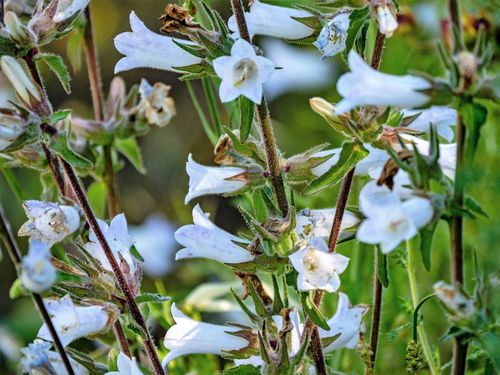
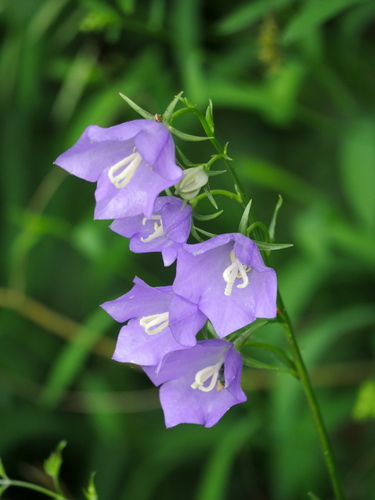
(c) 空猫 T. N, some rights reserved (CC BY-NC), uploaded by 空猫 T. N
iNaturalist· cc-by-nc
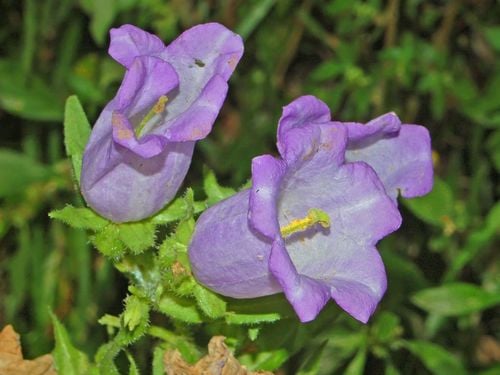
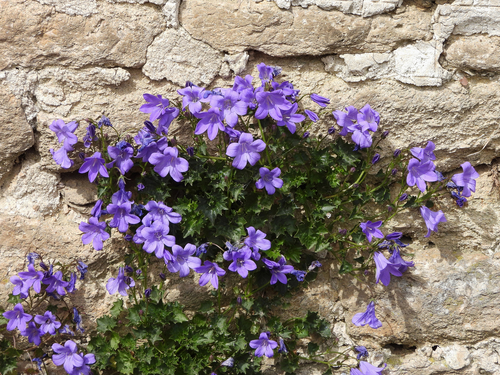
(c) Alexander Lakomov, some rights reserved (CC BY-NC), uploaded by Alexander Lakomov
iNaturalist· cc-by
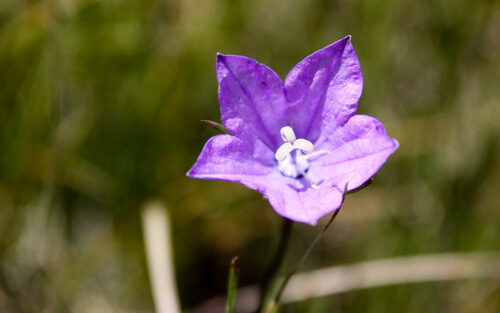
(c) Kim, Hyun-tae, some rights reserved (CC BY), uploaded by Kim, Hyun-tae
Summary
Source: WikipediaCodonopsis lanceolata, also called deodeok (더덕), todok, or lance asiabell, is a flowering plant native to East Asia (China, Japan, Korea, and the Russian Far East). It is a variety of bonnet bellflower.
Description
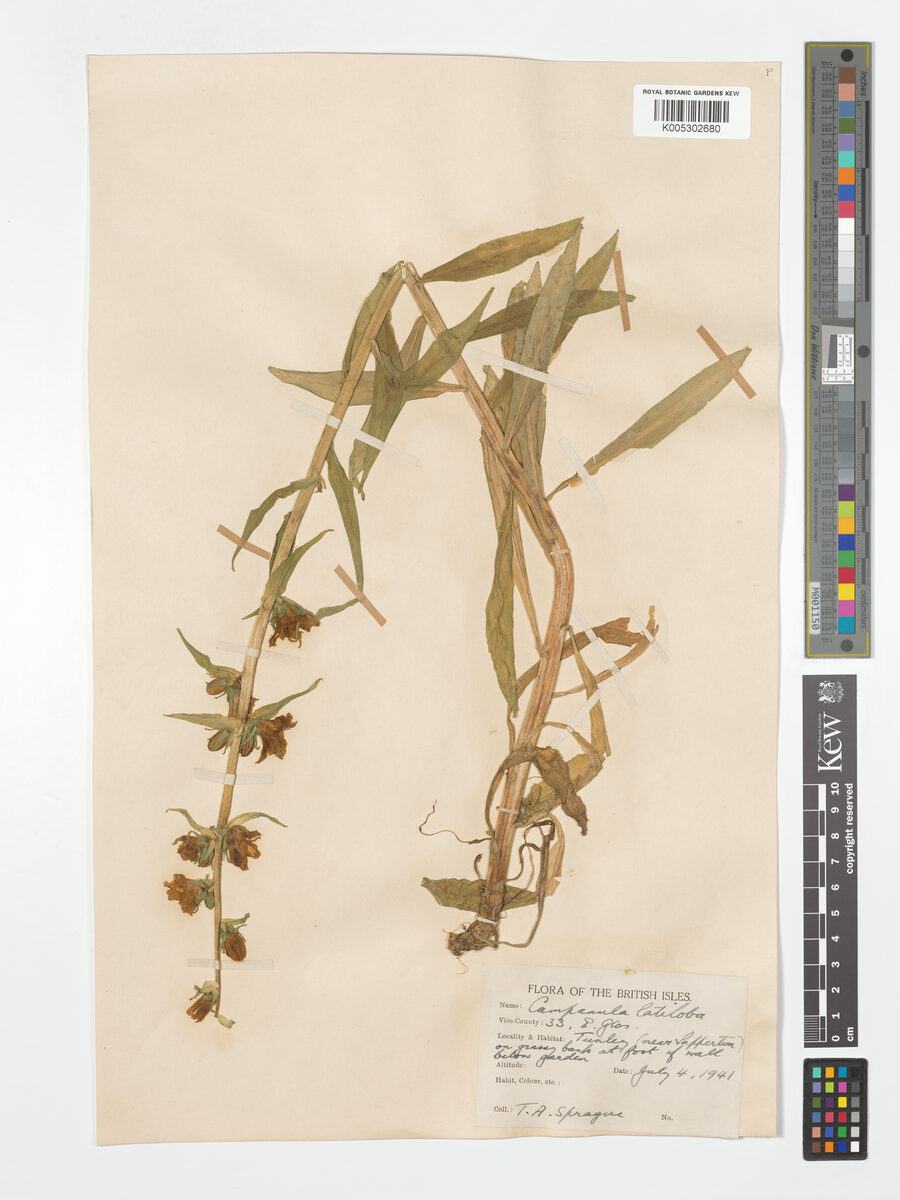
A climbing herb. It has milky sap. It keeps growing from year to year. The side branches are short. They are slender and purple. The leaves are crowded at the end of small side shoots. The leaves are oval or sword shaped and 3-10 cm long by 2-4 cm wide. The flowers are purple and creamy-white There are one or two on the leafy small branches. The fruit are flattened capsules 2 cm across.
Edible Uses
The root, which is produced as thick tubers, can be eaten raw or cooked. Young plants can also be eaten raw or cooked. A nutritional analysis of the leaves (dry weight) gives 416 calories per 100g, with 0% water, 12.9g protein, 19.7g fat, 61.2g carbohydrate, 36g fibre, and 6.2g ash. Mineral content per 100g includes 506mg calcium, 680mg phosphorus, and 11.8mg iron. Vitamin content per 100g includes 0.67mg thiamine (B1), 1.24mg riboflavin (B2), and 4.5mg niacin.
Traditional Uses
The large white roots are pounded, washed in salt water and cut into strips. It is then seasoned with sesame oil and soy sauce. They are also cooked with pig feet to prepare a dish. It is also mixed with milk and honey to make a drink.
Medicinal Uses
The root is aphrodisiac, anticancer, depurative, emmenagogue, galactogogue, and tonic. A decoction is used in the treatment of lung abscesses, milk-flow obstruction, amenorrhoea, acute and inflamed boils and abscesses, and lymphadenopathy.
Distribution
It is a temperate climate plant. It grows on hillsides and the edges of forests. It grows between 200-1,500 m above sea level.
Where It Grows
Asia, China, Japan, Korea, Mongolia, Russia,
Propagation
Surface sow seed in spring to early summer in ericaceous compost in a greenhouse, keeping the compost consistently moist. Seed usually germinates in 1–6 weeks at 20°c. Prick seedlings into individual pots as soon as they are large enough to handle and grow on under glass for their first winter. Plant out in late spring or early summer, protecting young plants from slugs until well established. Divide in spring with care, as the plant resents root disturbance. The best approach is to tease small divisions from the sides of the main clump to minimise disturbance, avoiding the need to dig up the whole plant. These divisions should be potted up and kept in light shade in a greenhouse until rooting well, then planted into permanent positions in summer if large enough, or the following spring.
Other Uses
None known Special Uses
Other Information
It is a commercially cultivated vegetable. It is a cultivated food crop sold in stores in Korea.
Notes
There are about 30 Codonopsis species.
Nutrition
| Part | Moisture | kJ | kcal | Protein | Vit A | Vit C | Iron | Zinc |
|---|---|---|---|---|---|---|---|---|
| Leaves raw | 82.2 | 301 | 72 | 2.3 | — | — | 2.1 | — |
Synonyms
Also Known As
Deodeok, Sun orhudai, Todok, Tsuru-ninjin, Yang ru
References (23)
- Bremness, L., 1994, Herbs. Collins Eyewitness Handbooks. Harper Collins. p 278
- Chen, B. & Qiu, Z., Consumer's Attitudes towards Edible Wild Plants, Ishikawa Prefecture, Japan. p 23 www.hindawi.com/journals/ijfr/aip/872413.pdf
- Facciola, S., 1998, Cornucopia 2: a Source Book of Edible Plants. Kampong Publications, p 70
- Fan, L., et al, The Use of Edible Wild Plants and Fungi in Korean-Chinese Villages. Journal of Environmental Information Science 44-5 p 71-79
- Food Composition Tables for use in East Asia FAO http://www.fao.org/infoods/directory No. 366
Show all 23 references Hide references
- Heo, B., et al., 2009, Antiproliferative Activity of Korean Wild Vegetables on Different Human Tumor Cell Lines. Plant Foods for Human Nutrition. 64:257-263
- https://en.wikipedia.org/wiki/List of wild edible plants in Mongolian cuisine
- Hu, Shiu-ying, 2005, Food Plants of China. The Chinese University Press. p 713
- Hwang, HS, et al, 2014, Distribution characteristics of plant in the Ungseokbong Mountain, Gyeongsangnam-do, Korea. Journal of Asia-Pacific Biodiversity. 7(2014) e164-e178
- Kays, S. J., and Dias, J. C. S., 1995, Common Names of Commercially Cultivated Vegetables of the World in 15 languages. Economic Botany, Vol. 49, No. 2, pp. 115-152
- Lee, Y., et al, 2013, Antioxidant Activity and Anti-Adipogenic Effects of Wild Herbs Mainly Cultivated in Korea. Molecules 2013, 18, 12937-12950
- Lee, Y. M., 2014, Important Plants of East Asia II: Endemic Plant Stories. East Asia Biodiversity Conservation Network p 10
- Lim, T. K., 2015, Edible Medicinal and Non Medicinal Plants. Volume 9, Modified Stems, Roots, Bulbs. Springer p 26
- Pemberton, R. W. & Lee, N. S., 1996, Wild Food Plants in South Korea: Market Presence, New Crops, and Exports to the United States. Economic Botany, Vol. 50, No. 1, pp. 57-70
- Plants for a Future database, The Field, Penpol, Lostwithiel, Cornwall, PL22 0NG, UK. http://www.scs.leeds.ac.uk/pfaf/
- Sachula, et al, 2020, Wild edible plants collected and consumed by the locals in Daqinggou, Inner Mongolia, China. Journal of Ethnobiology and Ethnomedicine (2020) 16:60
- Song, M., et al, 2013, Traditional knowledge of wild edible plants in Jeju Island, Korea. Indian Journal of Traditional Knowledge. 12(2) pp 177-194
- Tanaka,
- Trudy Imp. S.-Peterburgsk. Bot. Sada 6:46. 1879
- USDA, ARS, National Genetic Resources Program. Germplasm Resources Information Network - (GRIN). [Online Database] National Germplasm Resources Laboratory, Beltsville, Maryland. Available: www.ars-grin.gov/cgi-bin/npgs/html/econ.pl (10 April 2000)
- Wiersema, J. H. & Leon, B., 2013, World Economic Plants. A Standard Reference CRC Press. 2nd Ed. p 189
- World Checklist of Useful Plant Species 2020. Royal Botanic Gardens, Kew
- Wujisguleng, W., & Khasbagen. K., 2010, An integrated assessment of wild vegetable resources in Inner Mongolian Autonomous Region, China. Journal of Ethnobiology and Ethnomedicine 6:34