Codonopsis javanica
(Blume) Hook. f. & Thomson
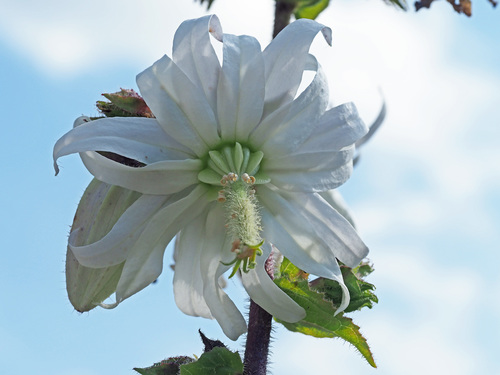
iNaturalist· cc-by-nc
(c) MP Zhou, some rights reserved (CC BY-NC), uploaded by MP Zhou
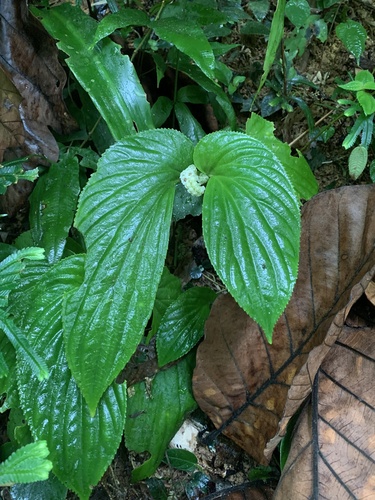
iNaturalist· cc-by-nc
(c) 江国彬, some rights reserved (CC BY-NC), uploaded by 江国彬
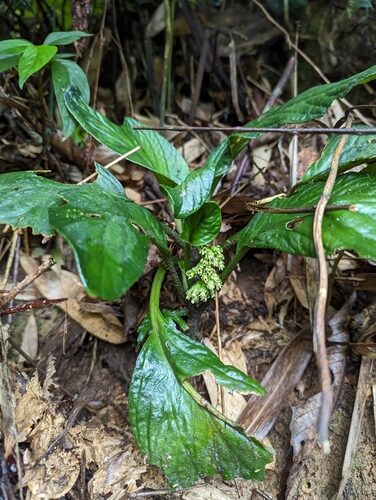
iNaturalist· cc-by-nc
(c) shiguangshi, some rights reserved (CC BY-NC), uploaded by shiguangshi
Summary
Source: WikipediaA perennial climbing plant with hermaphroditic flowers. Tolerates light sandy, medium loamy, and heavy clay soils with mildly acidic, neutral, and basic pH levels. Grows in semi-shade or full sun. Prefers moist soil conditions.
Description
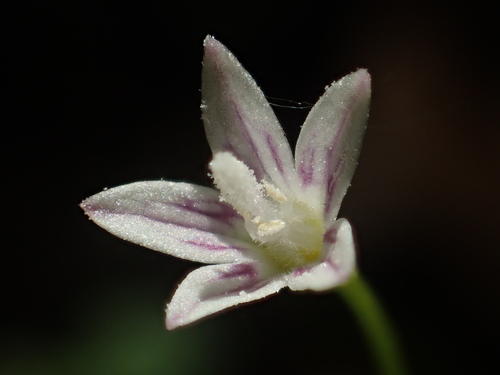
A twining herb. It grows 2 m high. It keeps growing from year to year. The roots are thickened. The stems are twining and branched. The leaves are opposite. They are heart shaped and 3-8 cm long by 2-8 cm wide. There are teeth along the edge. The flowers are in the axils of leaves. They are white or yellow-green. The fruit is a red round berry.
Edible Uses
Fruit. Fleshy. The violet or greenish white suffused with red, globose berry can range from 7 - 26mm in diameter.
Traditional Uses
The fruit are eaten raw. The dried root is used to prepare soup with spare ribs, Astragalus roots, sliced Chinese yam, dried jujube and Lycium berries. The leaves and stems are used as a potherb.
Medicinal Uses
The root contains an essential oil, glucose, fatty substances, the glucoside scutellarin, and a small amount of alkaloids. It is diuretic, expectorant, stomachic, and galactogogue. It is used in treating a wide range of conditions including general debility, fatigue, anaemia, jaundice, dyspepsia, diarrhoea, nephritis, haemorrhoids, oedema, and diseases of the lymphatic system. Roots are harvested in autumn and dried for later use.
Distribution
It is a tropical plant. It grows along the edges of forests. It grows between 900-2,200 m altitude. In Yunnan, China it grows between 700-1500 m altitude. In Sichuan.
Where It Grows
Asia, Bhutan, China, Himalayas, India, Indochina, Indonesia, Japan, Laos, Myanmar, Nepal, SE Asia, Taiwan, Thailand, Vietnam,
Cultivation
Codonopsis javanica is native from the warm temperate zone of China and Japan to the tropics of southeast Asia - though generally only at elevations of around 1,000 metres or more in the tropics. Species in this genus generaly prefer a well-drained fertile light soil in full sun or semi shade. Plants only succeed in full sun if the soil remains moist during the growing season.
Other Uses
None known Special Uses
Other Information
It is sold in local markets.
Notes
There are about 30-40 Codonopsis species.
Synonyms
Also Known As
Amixiagu, Dang sam, Dang shen, Ma gong gui, Nian bao biu, Ya li bo me
References (9)
- Anderson, E. F., 1993, Plants and people of the Golden Triangle. Dioscorides Press. p 207
- Bijdr. 726-727. 1826 (As Campanumoea javanica)
- Cao, Y., et al, 2020, Ethnobotanical study on wild edible plants used by three trans-boundary ethnic groups in Jiangcheng County, Pu’er, Southwest China. Journal of Ethnobiology and Ethnomedicine (2020) 16:66
- Ill. Himal. pl. 116, t. 16B. 1855
- Jin, Chen et al, 1999, Ethnobotanical studies on Wild Edible Fruits in Southern Yunnan: Folk Names: Nutritional Value and Uses. Economic Botany 53(1) pp 2-14 (As Campanumoea javanica)
Show all 9 references Hide references
- Lim, T. K., 2015, Edible Medicinal and Non Medicinal Plants. Volume 9, Modified Stems, Roots, Bulbs. Springer p 26
- Luo, B., et al, 2019, Wild edible plants collected by Hani from terraced rice paddy agroecosystem in Honghe Prefecture, Yunnan, China. Journal of Ethnobiology and Ethnomedicine 15:56 (As Campanumoea javanica)
- Moeliono & Tuyn, 1960, Campanulaceae, Flora Malesiana, Ser. 1 Vol. 6(1) p 120
- PROSEA handbook Volume 9 Plants yielding non-seed carbohydrates. p169