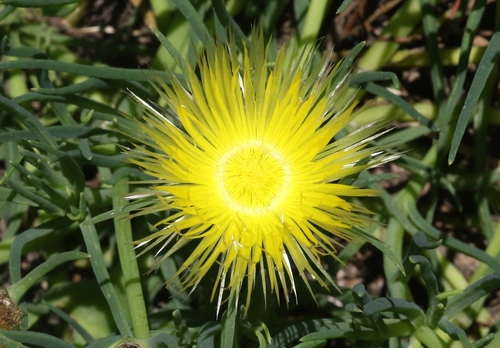
Mesembryanthemum crystallinum
L.
Ice Plant, Common iceplant
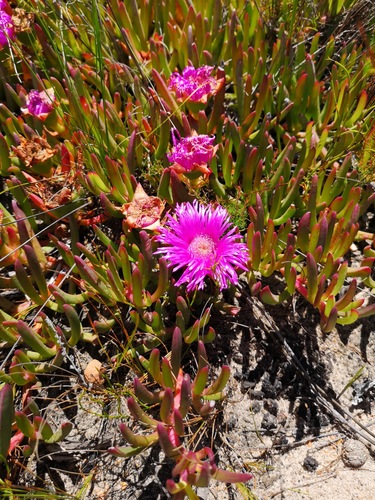
iNaturalist· cc-by-nc
(c) pkid4in, some rights reserved (CC BY-NC), uploaded by pkid4in
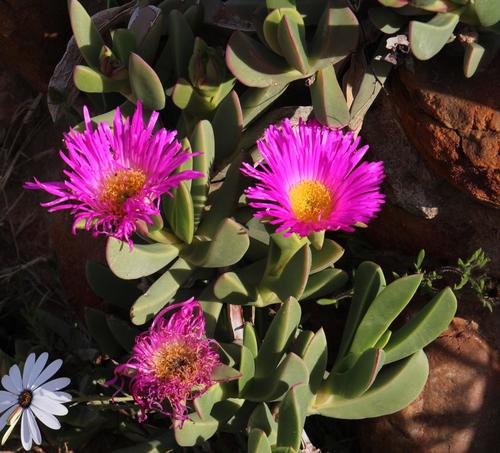
iNaturalist· cc-by-nc
(c) BJ Stacey, some rights reserved (CC BY-NC)
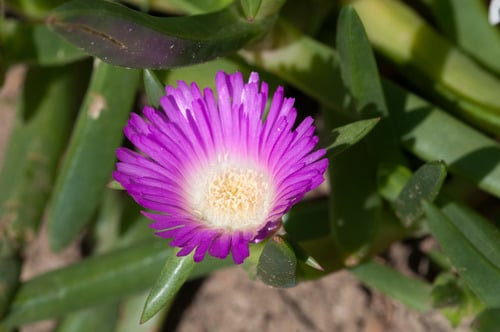
iNaturalist· cc-by-nc
(c) Alanis Cossio Gutiérrez, some rights reserved (CC BY-NC), uploaded by Alanis Cossio Gutiérrez
Description
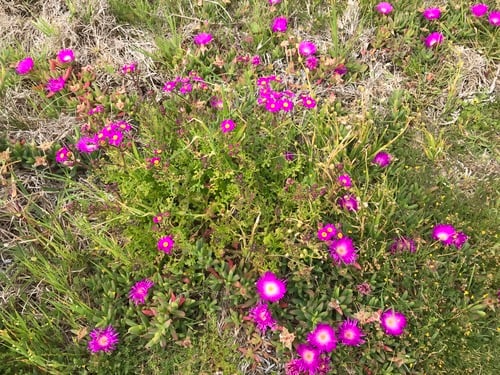
Mesembryanthemum crystallinum is a PERENNIAL growing to 0.1 m (0ft 4in) by 0.5 m (1ft 8in). See above for USDA hardiness. It is hardy to UK zone 9 and is frost tender. It is in flower from July to September. The species is hermaphrodite (has both male and female organs) and is pollinated by Insects. Suitable for: light (sandy), medium (loamy) and heavy (clay) soils, prefers well-drained soil and can grow in nutritionally poor soil. Suitable pH: mildly acid, neutral and basic (mildly alkaline) soils and can grow in saline soils. It cannot grow in the shade. It prefers dry or moist soil.
Edible Uses
Leaves and stems - raw or cooked. They can be used as a spinach substitute. The leaves have an acid flavour, they are thick and very succulent with a slightly salty tang. They can also be pickled like cucumbers or used as a garnish. Fruit. No more details are given. Seed - a famine food used when all else fails.
Medicinal Uses
Demulcent Diuretic Dysentery Urinary. The plant is demulcent and diuretic. It is used in the treatment of inflammations of the pulmonary and genito-urinary mucous membranes. The leaves are used in the treatment of ascites, dysentery and diseases of the liver and kidney.
Distribution
S. Africa. Introduced and naturalized in S. Europe.
Where It Grows
Coming Soon
Cultivation
Easily grown in an ordinary well-drained garden soil. Succeeds in any well-drained low-fertility soil so long as it is in a sunny position. A very ornamental plant, it is occasionally cultivated for its edible leaves. It is not very hardy in Britain and will be killed even by a light frost. It is, therefore, usually grown as a half-hardy annual, being sown in a greenhouse in the spring and used for summer bedding. Plants have few problems with pests or diseases though the young plants are prone to root rot and damping off unless given plenty of ventilation and dry growing conditions.
Propagation
Seed - sow spring in a greenhouse, only just covering the seed. When they are large enough to handle, prick the seedlings out into individual pots and plant them out after the last expected frosts. Seedlings are prone to damp off so should not be over watered and should be kept in a very sunny well-ventilated position.
Other Uses
Soap. The crushed foliage is a soap substitute.