Helosciadium nodiflorum - (L.) W.D.J.Koch
(L.) W.D.J.Koch
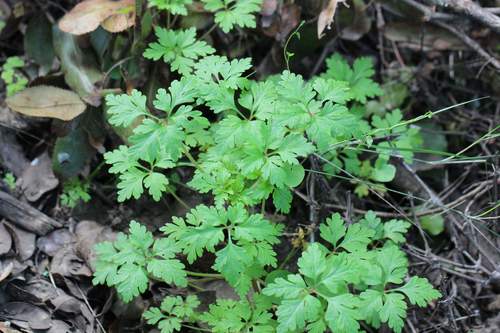
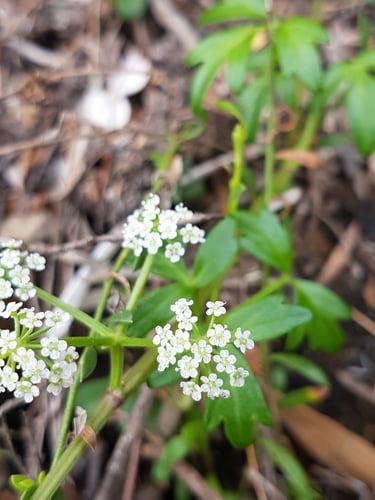
Fool's-water-cress
gbif· cc-by
Duarte Frade
gbif· cc-by-nc
carole_la
gbif· cc-by-nc
carole_la
Description
Helosciadium nodiflorum is an evergreen Perennial growing to 1 m (3ft 3in) by 1 m (3ft 3in) at a fast rate. See above for USDA hardiness. It is hardy to UK zone 6 and is not frost tender. Suitable for: light (sandy), medium (loamy) and heavy (clay) soils. Suitable pH: mildly acid, neutral and basic (mildly alkaline) soils. It can grow in semi-shade (light woodland) or no shade. It prefers moist or wet soil.
Edible Uses
Leaves and shoots. Wild fool's watercress has been traditionally harvested and consumed in several Mediterranean countries, including Spain, Italy, Portugal and Morocco. The edible young leaves and tender shoots can be used raw in salads, boiled, or as a condiment in soups and other dishes. Wild greens of the minestrella soup, in northwest Tuscany, Italy .
Known Hazards
None Known. This species is not considered to be toxic but can be confused with Berula erecta which is toxic to stock.
Distribution
Europe, Medit. to Central Asia and NW. Tanzania.
Where It Grows
Native to: Afghanistan, Albania, Algeria, Azores, Baleares, Belgium, Bulgaria, Canary Is., Chad, Corse, Cyprus, East Aegean Is., Egypt, Eritrea, Ethiopia, France, Germany, Great Britain, Iran, Iraq, Ireland, Italy, Kazakhstan, Kirgizstan, Lebanon-Syria, Libya, Madeira, Morocco, Netherlands, Pakistan, Palestine, Poland, Portugal, Sardegna, Saudi Arabia, Sicilia, Somalia, Spain, Switzerland, Tadzhikistan, Tanzania, Tunisia, Turkey, Turkey-in-Europe, Turkmenistan, Uzbekistan, Yemen.
Cultivation
Wild. Easily grown when given the correct conditions of slowly flowing clean water, preferably from chalky or limestone soils. It prefers to grow in water about 5cm deep with an optimum pH of 7.2. Plants can be grown in wet soil if the position is somewhat shaded and protection is given in winter, though the flavour may be hotter. Hardy to about -15°c. Found in ditches or streams, as well as fresh and brackish-water wetlands. It often grows with watercress in wet places. It blooms in July and August. The upper elevation limit is 3,000 metres, and the lower elevation limit is 0 metres. The genus is noted for the high rate of hybridisation between its species.
Propagation
Seed
Other Uses
A water plant.
Synonyms
Also Known As
European marshwort (USA). French: Ache aquatique, Ache faux-cresson, Ache nodiflore, Céleri nodiflore, Hélosciadie nodiflore, Hélosciadie à fleurs nodales. Italian: Crescione, Erba cannella, Gorgalestro, Sedania d'acqua, Sedano d'acqua. Portuguese: Rabaça, Rabaças, Salsa brava. Spanish; Castilian: Apio bastardo, Apio borde, Apio menor, Berraza, Berrios.
More from Apiaceae
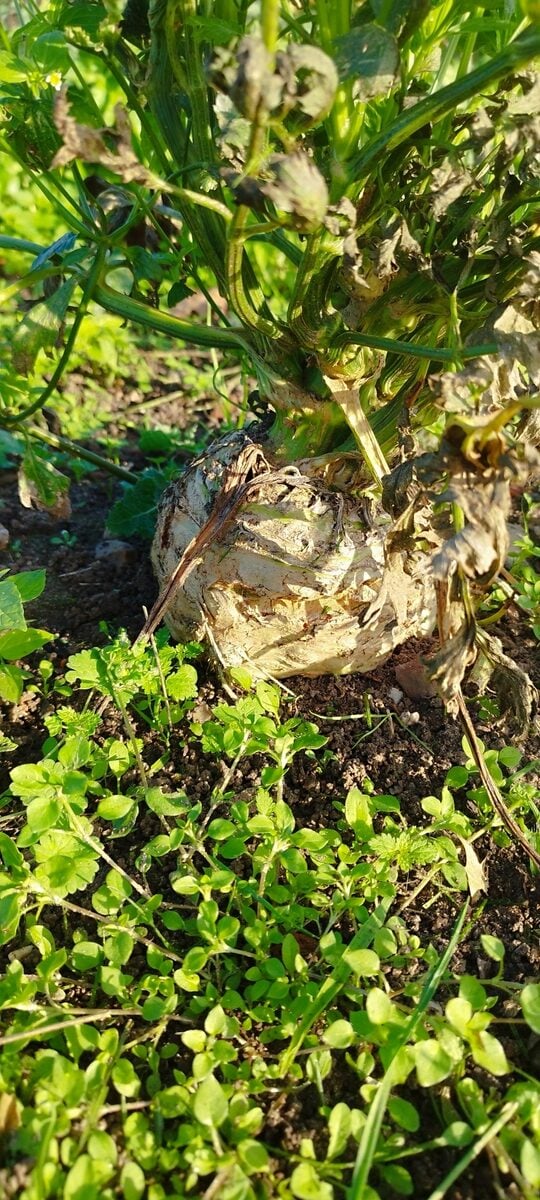
Apium graveolens var. rapaceum
Celeriac, Celery root, Turnip-rooted celery
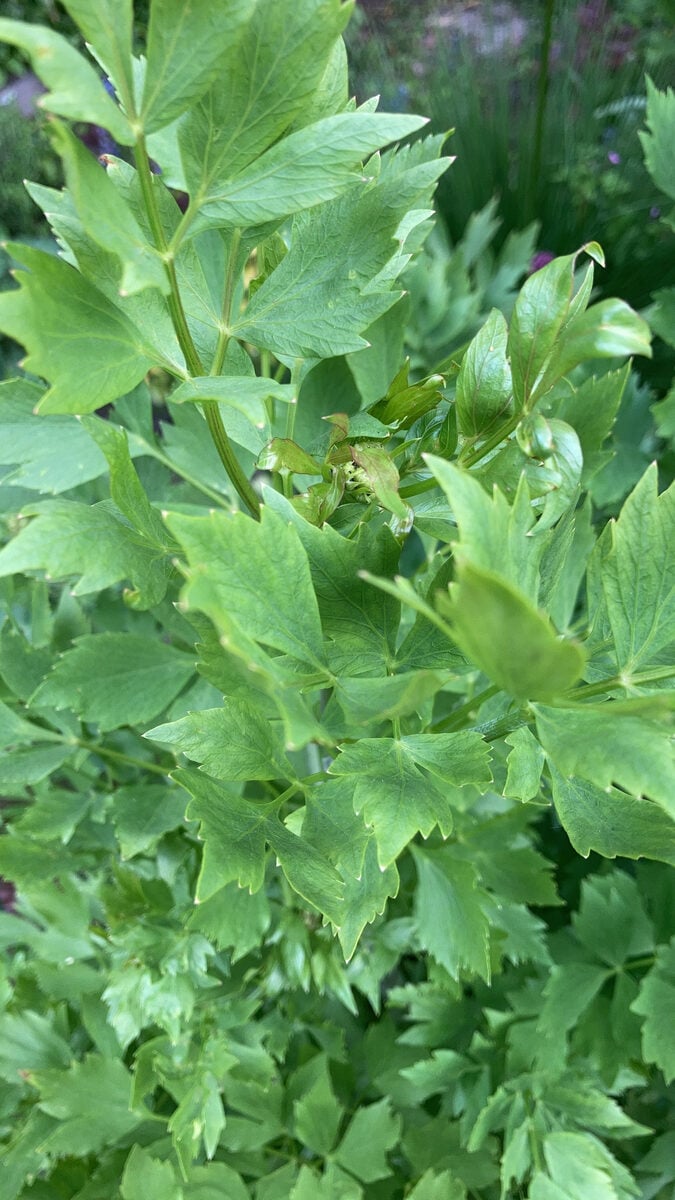
Apium graveolens var. secalinum
Chinese celery, Asian celery, Leaf celery
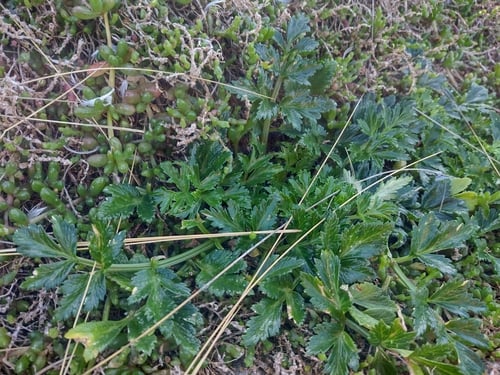
Apium insulare
Island celery
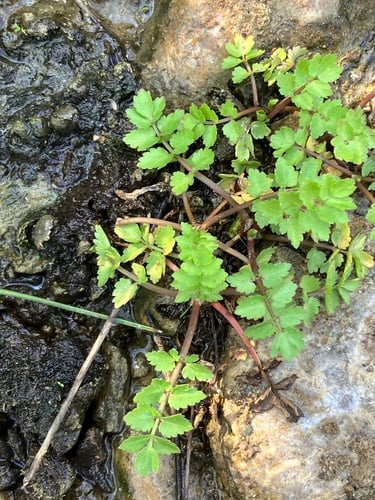
Apium nodiflorum
Crescione, Creeping marshwort, Water parsnip
Apium panul
Panul
Apium prostratum
Sea celery, Sea parsley, Australian celery, Slender sea celery