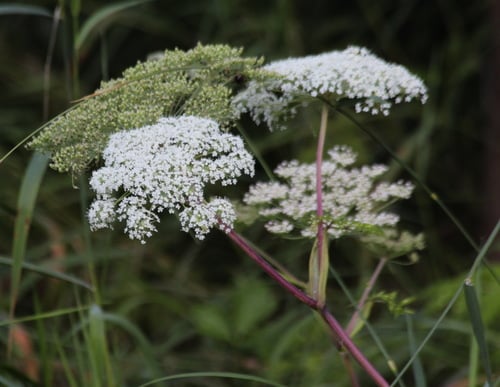
Eryngium foetidum
L.
Sawtooth Coriander, Culantro
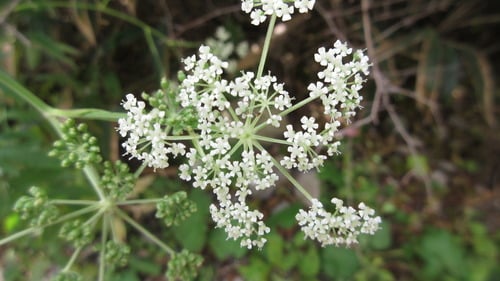
iNaturalist· cc-by-nc
(c) Calixto Barrera M, some rights reserved (CC BY-NC)
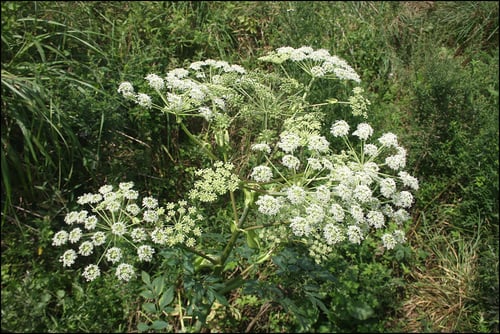
iNaturalist· cc-by-nc
(c) Calixto Barrera M, some rights reserved (CC BY-NC)
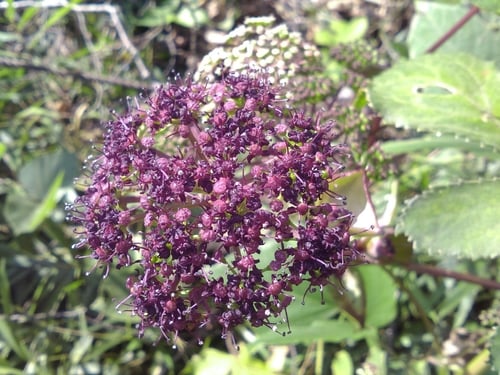
iNaturalist· cc-by-nc
(c) Joel Degracia, some rights reserved (CC BY-NC)
Summary
Source: WikipediaEryngium foetidum is a tropical perennial herb in the family Apiaceae. Common names include culantro (Costa Rica and Panama) ( or ), cimarrón, recao (Puerto Rico), chardon béni (Martinique), Mexican coriander, samat, ban dhaniya, wide coriander, Burmese coriander, sawtooth coriander, Shadow Beni (Trinidad and Tobago), and ngò gaicode: vie promoted to code: vi (Vietnam). It is native to Mexico, the Caribbean, and Central and South America, but is cultivated worldwide, mostly in the tropics as a perennial, but sometimes in temperate climates as an annual. In India it is called "Nagadhonia", specifically in the Northeast. In the United States, the common name culantro sometimes causes confusion with cilantro, a common name for the leaves of Coriandrum sativum (also in Apiaceae but in a different genus), of which culantro is said to taste like a stronger version.
Description
A herb. It grows 15-50 cm high. It has one stem. The leaves are all near the base of the plant. The leaves are 7-15 cm long by 1-2 cm wide. The leaves have teeth along the edge. The flower head is oval. It is 5-8 mm long by 3-4 mm wide. The flowers are greenish-white. The fruit is almost round and 2 mm across.
Edible Uses
Eryngium foetidum is widely used in seasoning, marinating and garnishing in the Caribbean (particularly in Cuba, the Dominican Republic, Haiti, Puerto Rico, and Trinidad and Tobago), as well as Guatemala, El Salvador, Honduras, Nicaragua, Panama, Costa Rica, Ecuador, Colombia and in Brazil's and Peru's Amazon regions. It is also used extensively as a culinary herb in the North-Eastern States of India (Tripura, Mizoram, Meghalaya, Assam, Nagaland, Manipur, Arunachal Pradesh and Sikkim), Cambodia [where it is called Chi Banla, Chi baraing ជីរបន្លា, ជីរបារាំង], Thailand, India, Nepal, Vietnam, Laos, Myanmar, Bangladesh, southwestern China and other parts of tropical Asia. It is sometimes used as a substitute for coriander leaves, but has a stronger, tangier taste. Unlike coriander, Eryngium foetidum dries well, retaining good color and flavor, which makes it valuable in the dried herb industry. In the United States, E. foetidum grows naturally in Florida, Georgia, Hawaii, Puerto Rico, and the Virgin Islands. The flower heads are not edible.
Traditional Uses
It is used in curries. The leaves are chopped and eaten raw in some dishes. They are mostly used to flavour cooked dishes. They are used in stir fries. The leaves are pickled and used to make chutney. The roots are used as a flavouring in soups and meat dishes. The seeds are used as a flavouring. The harvested leaves can be stored for 5 days.
Medicinal Uses
Eryngium foetidum has been used in traditional medicine in tropical regions for burns, earache, fevers, hypertension, constipation, fits, asthma, stomachache, worms, infertility complications, snake bites, diarrhea, and malaria. Eryngium foetidum is also known as E. antihystericum. The specific name antihystericum reflects the fact that this plant has traditionally been used for epilepsy. The plant is said to calm a person's 'spirit' and thus prevents epileptic 'fits', so is known by the common names spiritweed and fitweed. The anticonvulsant properties of this plant have been scientifically investigated. A decoction of the leaves has been shown to exhibit anti-inflammatory and analgesic effects in rats. Eryngial (trans-2-dodecenal) is the main constituent of essential oil of E. foetidum. The University of the West Indies at Mona, Jamaica, has investigated the use of eryngial as a treatment for human Strongyloides stercoralis infection (strongyloidiasis). It is used as an ethnomedicinal plant for the treatment of a number of ailments such as chills, vomiting, burns, fevers, hypertension, headache, earache, stomachache, asthma, arthritis, snake bites, scorpion stings, diarrhea, malaria and epilepsy. A pharmacological investigation claims to have demonstrated anthelmintic, anti-inflammatory, analgesic, anticonvulsant, anticlastogenic, anticarcinogenic, antidiabetic, and antibacterial activity.
Distribution
It is a tropical plant. In Nepal it grows from 700-1200 m altitude. In Indonesia it grows from sea level to 1,700 m above sea level. It grows in open rocky places. It is widespread in the tropics. It needs a temperature above 15-18°C. It can grow in shady, moist soils. It goes to flower in hot summers and with long day-length. In Yunnan.
Where It Grows
Amazon, Andamans, Antilles, Asia, Australia, Bangladesh, Belize, Brazil, Cambodia, Canada, Caribbean, Central America, China, Colombia, Costa Rica, Cuba*, Dominica, Dominican Republic, Ecuador, Europe, Fiji, Grenada, Guatemala, Guiana, Guianas, Guyana, Haiti*, Hawaii, Himalayas, Honduras, India, Indochina, Indonesia, Jamaica, Japan, Laos, Lesser Antilles, Liberia, Malaysia, Mexico, Myanmar, Nepal, Nicaragua, North America, Northeastern India, Pacific, Panama, Peru, Philippines, Puerto Rico, Sao Tome and Principe, SE Asia, Sikkim, Singapore, Solomon Islands, South America, St Lucia, Suriname, Tasmania, Thailand, Trinidad, USA, Venezuela, Vietnam, West Africa, West Indies*,
Cultivation
Plants are grown from seed. They can also be grown by division of the crown.
Propagation
Seed - best sown as soon as it is ripe, either in situ or in a nursery seedbed. Stem cuttings.
Other Uses
An essential oil can be distilled from the seed; its major constituents are carotol (19%), (E)-'BETA'-farnesene (10%), (E)-anethole (7%) and 'ALFA'-pinene (8%).
Other Information
It is sold in markets. It is sold internationally. It is popular.
Notes
There are 230 Eryngium species.
Nutrition
| Part | Moisture | kJ | kcal | Protein | Vit A | Vit C | Iron | Zinc |
|---|---|---|---|---|---|---|---|---|
| Leaves | 92 | 92 | 22 | 2.1 | 44 | — | 1.8 | 0.5 |
| Leaves | 89 | — | 355 | 6.5 | — | — | 1.1 | 1.1 |
Synonyms
Also Known As
Accho dhania, Awa phadigom, Ba-khawr, Bahkawr, Bahkhawr, Bakhor, Balang katunchur, Bandhana, Ban dhaniya, Bat nga, Barmeli dhaniya, Belatidhonia, Bilati-dhonepata, Bilta, Bongali gundhora, Brahmadhania, Brahmang ori, Brameli dhaniya, Broad dhaniya, Burmadonia, Chadon benni, Chi barang, Chilankua, Cilantro de espina, Coentro, Culantro, Dhania, Dhania-khlaw, Dhaniya pat, Dunia, Eryngo, Fitweed, Ghanger dundia, Hankeching, Jangali memedhu, Jintenan, Jongali-memedo, Juruju gunong, Kambong kerbau, Kanta dhania, Katumbar londa, Katumbar mungsi, Katuncha walang, Katunchar walanda, Ketumbar jawa, Kiasaura, Kolancho, Kolantro, Krah ksad, Kulandro, Kurandono, Long bia jing, Long coriander, Man dhania, Mandhania, Mountain Coriander, Naga dhania, Ngo gai, Ngo tay, Obo aibihi, Paboma, Pabong, Pa bong men pon, Padaiku, Pak chee farang, Panchi, Pasikhawm, Patikhom, Paung-bok, Perennial Coriander, Phakchee farang, Phak hom pe, Podomosolla, Recao de monte, Sacha culantro, Sampak, Sampap, Samskal, Saw leaf herb, Shadow bennie, Shan-nan-nan, Singa depa, Strankgeyu, Suica culantro, Thai Coriander, Tumbar mungsi, Tumbaran, Vorek jokasu, Walang anjing, Walang duri, Yashou, Yan xu, Yumbi
References (114)
- Aiguo, C. & Zhiling, D., 2001, Managing Agricultural Resources for Biodiversity Conservation. Case Study Yunnan, Southwest China. Environment Liaison Center International. p 41
- Altschul, S.V.R., 1973, Drugs and Foods from Little-known Plants. Notes in Harvard University Herbaria. Harvard Univ. Press. Massachusetts. no. 3136
- Ambasta, S.P. (Ed.), 2000, The Useful Plants of India. CSIR India. p 203
- Anderson, E. F., 1993, Plants and people of the Golden Triangle. Dioscorides Press. p 210
- Bandyopadhyay, S. et al, 2009, Wild edible plants of Koch Bihar district, West Bengal. Natural Products Radiance 8(1) 64-72
Show all 114 references Hide references
- Baro, D., Baruah, S. and Borthukar, S. K. 2015, Documentation on wild vegetables of Baksa district, BTAD (Assam). Scholars Research Library. Archives of Applied Science Research, 2015, 7 (9):19-27
- Bennett, B. C., 1990, Useful Plants of Amazonian Ecuador. US Agency for International Development. Fifth Progress Report. New York Botanical Gardens.
- Bremness, L., 1994, Herbs. Collins Eyewitness Handbooks. Harper Collins. p 249
- Brown, D., 2002, The Royal Horticultural Society encyclopedia of Herbs and their uses. DK Books. p 205
- Burkill, I.H., 1966, A Dictionary of the Economic Products of the Malay Peninsula. Ministry of Agriculture and Cooperatives, Kuala Lumpur, Malaysia. Vol 1 (A-H) p 959
- Caballero-Serrano, V., et al, 2019, Traditional ecological knowledge and medicinal plant diversity in Ecuadorian Amazon home gardens. Global Ecology and Conservation 17 (2019) e00524 p 7
- Cao, Y., et al, 2020, Ethnobotanical study on wild edible plants used by three trans-boundary ethnic groups in Jiangcheng County, Pu’er, Southwest China. Journal of Ethnobiology and Ethnomedicine (2020) 16:66
- Castaneda, H. & Stepp, J. R., 2007, Ethnoecological Importance Value (EIV) Methodology: Assessing the Cultural Importance of Ecosystems as Sources of Useful Plants for the Guaymi People of Costa Rica. Ethnobotany Research & Applications 5:249-257
- Cheng, Z., et al, 2022, Ethnobotanical study on wild edible plants used by Dulong people in northwestern Yunnan, China. Journal of Ethnobiology and Ethnomedicine (2022) 18:3
- Chizmar Fernandez, C., et al, 2009, Plantas comestibles de Centroamerica. Instituto de Biodiversidad, Costa Rica. p 40
- Coe, F. G., and Anderson, G. J., 1996, Ethnobotany of the Garifuna of Eastern Nicaragua. Economic Botany 50(1) pp 71-107
- Coe, F. G. & Anderson, G. J., 1997, Ethnobotany of the Miskitu of Eastern Nicaragua. Journal of Ethnobiology 17(2): 171-214
- Coe, F. G. and Anderson, G. J., 1999, Ethnobotany of the Sumu (Ulwa) of Southeastern Nicaragua and Comparisons with Miskitu Plant Lore. Economic Botany Vol. 53. No. 4. pp. 363-386
- Creasey, R., 2000, Edible Mexican Garden. Periplus. p 30
- Creasy, R., 2000, The Edible Asian Garden. Periplus p 34
- D'Ambrosio, U., & Puri, R. K., 2016, Foodways in transition: food plants, diet and local perceptions of change in a Costa Rican Ngäbe community. Journal of Ethnobiology and Ethnomedicine (2016) 12:3 p 22
- Devi, O.S., P. Komor & D. Das, 2010, A checklist of traditional edible bio-resources from Ima markets of Imphal Valley, Manipur, India. Journal of Threatened Taxa 2(11): 1291-1296
- Dobriyal, M. J. R. & Dobriyal, R., 2014, Non Wood Forest Produce an Option for Ethnic Food and Nutritional Security in India. Int. J. of Usuf. Mngt. 15(1):17-37
- Dutta, U., 2012, Wild Vegetables collected by the local communities from the Churang reserve of BTD, Assam. International Journal of Science and Advanced Technology. Vol. 2(4) p 121
- Ekman Herbarium records Haiti
- Ethnobotany of Karbis. Chapter 4 in p 107
- Facciola, S., 1998, Cornucopia 2: a Source Book of Edible Plants. Kampong Publications, 18
- Foo, J.T.S.(ed), 1996, A Guide to Common Vegetables. Singapore Science Foundation. p 146
- Gangte, H. E., et al, 2013, Wild Edible Plants used by the Zou Tribe in Manipur, India. International Journal of Scientific and Research Publications, Volume 3, Issue 5
- Gautam, R. S., et al, 2022, Ethnobotanical Review of Wild Edible Plants of Nepal. Journal of Natural History Museum Volume 32, 2021-22 p 103
- Ghorbani, A., et al, 2012, A comparison of the wild food plant use knowledge of ethnic minorities in Naban River Watershed Nature Reserve, Yunnan, SW China. Journal of Ethnobiology and Ethnomedicine; 8:17
- Ghosh, C. & Das A. P., 2011, Some useful and poisonous tea garden weeds from the Darjiling District of West Bengal, India. Pleione 5(1): 91 - 114
- Giraldi, M. & Hanazaki, N., 2014, Use of Cultivated and Harvested Edible Plants by Caiçaras—What Can Ethnobotany Add to Food Security Discussions? Human Ecology Review, Volume 20, Number 2, 2014
- Guite, C., 2016, A study of wild edible plants associated with the Paite tribe of Manipur, India, International Journal of Current Research. Vol. 8, Issue, 11, pp. 40927-40932
- Hermandez Bermejo, J.E., and Leon, J. (Eds.), 1994, Neglected Crops. 1492 from a different perspective. FAO Plant Production and Protection Series No 26. FAO, Rome. p 13
- Hoare, A., 2003, Food use of the Lundayeh SW Sabah. Borneo Research Council.
- Hossain, U. & Rahman, A., 2018, Study and quantitative analysis of wild vegetable floral diversity available in Barisal district, Bangladesh. Asian J. Med. Biol. Res. 2018, 4 (4), 362-371
- Hutton, W., 1997, Tropical Herbs and Spices of Indonesia. Periplus. p 25
- Hu, Shiu-ying, 2005, Food Plants of China. The Chinese University Press. p 596
- Hunter, D., et al, 2019, The potential of neglected and underutilized species for improving diets and nutrition. Planta (2019) 250:709-729
- Ibarra-Manriquez, G., et al, 1997, Useful Plants of the Los Tuxtlas Rain Forest (Veracruz, Mexico): Considerations of their Market Potential. Economic Botany, Vol. 51, No. 4, pp. 362-376
- Jacquat, C., 1990, Plants from the Markets of Thailand. D.K. Book House p 84
- Jiwajinda, S., et al, 2002, Suppressive Effects of Edible Thai Plants on Superoxide and Nitric Oxide Generation. Asian Pacific Journal of Cancer Prevention, Vol 3, 2002
- Johnson, N., 2002, Environmental Change in northern Thailand: Impact on Wild Edible Plant Availability. Ecology of Food and Nutrition, 41: 5, 373-399
- Joshi, N., et al, 2007, Traditional neglected vegetables of Nepal: Their sustainable utilization for meeting human needs. Tropentag 2007. Conference on International Agricultural Research for Development.
- Kapelle, M., et al, 2000, Useful plants within a Campesino Community in a Costa Rican Montane Cloud Forest. Mountain Research and Development, 20(2): 162-171.
- Kar, A., et al, 2013, Wild Edible Plant Resources used by the Mizos of Mizoram, India. Kathmandu University Journal of Science, Engineering and Technology. Vol. 9, No. 1, July, 2013, 106-126
- Katz, E., et al, 2012, No greens in the forest? Note on the limited consumption of greens in the Amazon. Acta Soc Bot Pol 81(4):283–293
- Khodram,S. D., et al, 2019, Local knowledge of edible flowers used in Mizoram. Indian Journal of Traditional Knowledge Vol 18(40 pp 715-723
- Kiple, K.F. & Ornelas, K.C., (eds), 2000, The Cambridge World History of Food. CUP p 1803
- Konsam, S., et al, 2016, Assessment of wild leafy vegetables traditionally consumed by the ethnic communities of Manipur, northeast India. Journal of Ethnobiology and Ethnomedicine, 12:9
- Kumar, S. A., Manus, D. & Mallika, M., 2018, Impact of non-timber forest products on Forest and in Livelihood Economy of the People of Adjoining Areas of Jalpaiguri Forest Division, West Bengal, India. Int. J. of Life Sciences, 2018; 6 (2):365-385
- Kumar, Y J. et al, 1987, Further Contribution to the Ethnobotany of Meghalaya: Plants used by "War jaintia" of Jaintia Hill District. Econ. Tax. Bot. Vol 11 No. 1 pp 65-
- Lalfakzuala, R., 2007, Ethnobotanical usages of plants in western Mizoram. Indian Journal of Traditional Knowledge. Vol 6(3) pp 480-493
- Langlois, H. C., 2004, Ethnobotanical analysis of different successional stages as sources of wild edible plants for the Guaymi people in Costa Rica. M. Sc. thesis University of Florida.
- Lentz, D. L., 1993, Medicinal and Other Economic Plants of the Paya of Honduras. Economic Botany, Vol. 47, No. 4, pp. 358-370
- Luczaj, L., et al, 2021, Wild food plants and fungi sold in the markets of Luang Prabang, Lao PDR. Journal of Ethnobiology and Ethnomedicine (2021) 17:6
- Lungphi, P., Wangpan, T. & Tangjang, S., 2018, Wild edible plants and their additional uses by the Tangsa community living in the Changlang district of Arunachal Pradesh, India. Pleione 12(2): 151 - 164. 2018.
- Luo, B., et al, 2019, Wild edible plants collected by Hani from terraced rice paddy agroecosystem in Honghe Prefecture, Yunnan, China. Journal of Ethnobiology and Ethnomedicine 15:56
- Maas, P.J. M., Non-Timber Forest Products of the North-West District of Guyana Part 2. The 85 most important NTFP species. p 88
- Maikhuri, R, K, and Gangwar, A. K., 1993, Ethnobiological Notes on the Khasi and Garo Tribes of Meghalaya, Northeast India, Economic Botany, Vol. 47, No. 4, pp. 345-357
- Manandhar, N.P., 2002, Plants and People of Nepal. Timber Press. Portland, Oregon. p 224
- Marandi, R. R. & Britto, S. J., 2015, Medicinal Properties of Edible Weeds of Crop Fields and Wild plants Eaten by Oraon Tribals of Latehar District, Jharkhand. International Journal of Life Science and Pharma Research. Vo. 5. (2) April 2015
- Martin, F.W. & Ruberte, R.M., 1979, Edible Leaves of the Tropics. Antillian College Press, Mayaguez, Puerto Rico. p 77, 80, 222
- Medhi, P. & Borthakur, S. K., 2012, Phytoresources from North Cachur Hills of Assam -3: Edible plants sold at Hflong market. Indian Journal of Natural Products and Resources. 3(1) pp 84-109
- Medhi, P., Sarma, A and Borthakur, S. K., 2014, Wild edible plants from the Dima Hasao district of Assam, India. Pleione 8(1): 133-148
- Miguel, E., et al, 1989, A checklist of the cultivated plants of Cuba. Kulturpflanze 37. 1989, 211-357
- Miya, M. S. & Gautum, D., 2021, Checklist of floral species at the Institute of Forestry, Pokhara Campus, Pokhara, Nepal. Journal of Institute of Forestry, Nepal 18 (2021) 133-177
- Mot So Rau Dai an Duoc O Vietnam. Wild edible Vegetables. Ha Noi 1994, p 234
- Murtem, G. & Chaudhrey, P., 2016, An ethnobotanical note on wild edible plants of Upper Eastern Himalaya, India. Brazilian Journal of Biological Sciences, 2016, v. 3, no. 5, p. 63-81
- Nicholson, D. H., et al, 1991, Fora of Dominica, Part 2: Dicotyledoneae. Smithsonian Institution Press. Washington DC. p 23
- Norrington, L., & Campbell, C., 2001, Tropical Food Gardens. Bloomings Books. p 74
- Ochse, J. J. et al, 1931, Vegetables of the Dutch East Indies. Asher reprint. p 712
- Ogle, B. M., et al, 2003, Food, Feed or Medicine: The Multiple Functions of Edible Wild Plants in Vietnam. Economic Botany 57(1): 103-117
- Omawale, 1973, Guyana's edible plants. Guyana University, Georgetown p 67
- Pascual-Mendoza, S. et al, 2021, Traditional knowledge of edible plants in an indigenous community in the Sierra Norte of Oaxaca, Mexico. Plant Biosystems - An International Journal Dealing with all Aspects of Plant Biology
- Patiri, B. & Borah, A., 2007, Wild Edible Plants of Assam. Geethaki Publishers. p 64
- Pegu, R., et al, 2013, Ethnobotanical study of Wild Edible Plants in Poba Reserved Forest, Assam, India. Research Journal of Agriculture and Forestry Sciences 1(3):1-10
- Penafield Anchundia, D. D., 2017, Traditional food consumption and its nutritional contribution in Guasaganda, Central Ecuador. PhD Ghent University p 71
- Pfoze, N. L., et al, 2012, Survey and assessment of floral diversity on wild edible plants from Senapati district of Manipur, Northeast India. Journal or Biodiversity and Environmental Sciences. 1(6):50-52
- Phon, P., 2000, Plants used in Cambodia. © Pauline Dy Phon, Phnom Penh, Cambodia. p 278
- Piedra-Malagón, E. M. et al, 2022, Edible native plants of the Gulf of Mexico Province. Biodiversity Data Journal 10: e80565 p 9
- Pradheep, K., et al, 2016, Wild edible plants used by Konyak tribe in Mon district of Nagaland: Survey and inventorisation. Indian Journal of Natural Products and Resources. Vol 7(1) pp 74-81
- PROSEA (Plant Resources of South East Asia) handbook, Volume 13, 1999, Spices
- Ramachandran,V. S., & Udhayavani, C., 2013, Knowledge and uses of wild edible plants by Paniyas and Kurumbas of Western Nilgiris, Tamil Nadu. Indian Journal of Natural Products and Resources. 4(4) December 2013, pp 412-418
- Roa, J. A. G. & Boada, D. S. G., 2018, Fundación para el Fortalecimiento de la Fruticultura y Plantas Alimenticias no Convencionales en Colombia.
- Rodriguez-Amaya, D. B., 1999, Carotenoides y Prepracion de Alimentos. University Estadual de Campinas, Brasil, Ph.D. thesis. p 21
- Saikia, M., 2015, Wild edible vegetables consumed by Assamese people of Dhemaji District of Assam, NE India and their medicinal values. Archives of Applied Science Research, 2015, 7 (5):102-109
- Sangma, A. j. T., 2018, Non-timber forest products (NTFPs) used by Garo tribe of Rongram block in West Garo Hills, Meghalaya. Indian Journal of Traditional Knowledge Vol 18 (1), pp 151-161
- Sarma, H., et al, 2010, Updated Estimates of Wild Edible and Threatened Plants of Assam: A Meta-analysis. International Journal of Botany 6(4): 414-423
- Sasi, R. et al, 2011, Wild edible plant Diversity of Kotagiri Hills - a Part of Nilgiri Biosphere Reserve, Southern India. Journal of Research in Biology. Vol. 1 No. 2, pp 80-87
- Sawian, J. T., et al, 2007, Wild edible plants of Meghalaya, North-east India. Natural Product Radiance Vol. 6(5): p 416
- Seal, T., et al, 2017, Nutritional potential of five unexplored wild edible plants consumed by the tribal people of Arunachal Pradesh state in India. International Journal of Food Science and Nutrition. Volume 2; Issue 2; Page No. 101-105
- Seidemann J., 2005, World Spice Plants. Economic Usage, Botany, Taxonomy. Springer. p 147
- Setiya, A. V., et al, 2016, Exploration and documentation of some wild edible plants used by the aboriginals from Gadchiroli District (M.S.) India. International Advanced Research Journal in Science, Engineering and Technology. 3(7)
- Singh, P.K., Singh, N.I., and Singh, L.J., 1988, Ethnobotanical Studies on Wild Edible Plants in the Markets of Manipur - 2. J. Econ. Tax. Bot. Vol. 12 No. 1 pp 113-119
- Smith, A.C., 1985, Flora Vitiensis Nova: A New flora of Fiji, Hawai Botanical Gardens, USA Vol 3 p 656
- Smith, N., Mori, S.A., et al, 2004, Flowering Plants of the Neotropics. Princeton. p
- Solomon, C., 2001, Encyclopedia of Asian Food. New Holland. p 140
- Sp. pl. 1:232. 1753
- Sundriyal, M., et al, 2004, Dietary Use of Wild Plant Resources in the Sikkim Himalaya, India. Economic Botany 58(4) pp 626-638
- Teron, R. & Borthakur, S. K., 2016, Edible Medicines: An Exploration of Medicinal Plants in Dietary Practices of Karbi Tribal Population of Assam, Northeast India. In Mondal, N. & Sen, J.(Ed.) Nutrition and Health among tribal populations of India. p 148
- Terra, G.J.A., 1973, Tropical Vegetables. Communication 54e Royal Tropical Institute, Amsterdam, p 45
- Thitiprasert, W., et al, 2007, Country report on the State of Plant Genetic Resources for Food and Agriculture in Thailand (1997-2004). FAO p 95
- Torre, de la L., et al, 2008, Enciclopedia de las Plantas Útiles del Ecuador. Herbario QCA. Pontificia Universidad Católica del Ecuador. p 170
- Turreira-Garcia, N., et al, 2015, Wild edible plant knowledge, distribution and transmission: a case study of the Achi Mayans of Guatemala. Journal of Ethnobiology and Ethnomedicine. 11:52
- Vael, L., 2015, Ethnobotanical study of the plant use in the natural landscape of two mestizo communities in the Ucayali region of the Peruvian Amazon. Universiteit Gent.
- Vazquez-Garcia. V., 2008, Gender, ethnicity, and economic status in plant management: Uncultivated edible plants among the Nahuas and Popolucas of veracruz, Mexico. Agriculture and Human Values 25: 65-77
- Villachica, H., (Ed.), 1996, Frutales Y hortalizas promisorios de la Amazonia. FAO, Lima. p 337
- Wiersema, J. H. & Leon, B., 2013, World Economic Plants. A Standard Reference CRC Press. 2nd Ed. p 282
- Woodward, P., 2000, Asian Herbs and Vegetables. Hyland House. p 71
- World Checklist of Useful Plant Species 2020. Royal Botanic Gardens, Kew
- Xu, You-Kai, et al, 2004, Wild Vegetable Resources and Market Survey in Xishuangbanna, Southwest China. Economic Botany. 58(4): 647-667.
- Zaldivar, M. E., et al, 2002, Species Diversity of Edible Plants Grown in Homegardens of Chibehan Amerindians from Costa Rica. Human Ecology, Vol. 30, No. 3, pp. 301-316