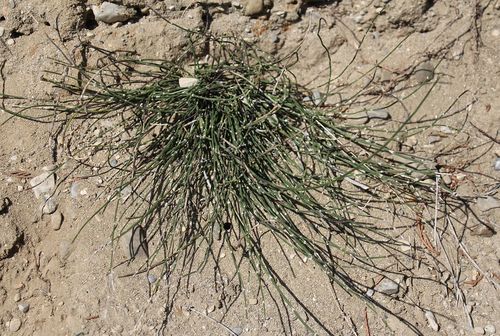
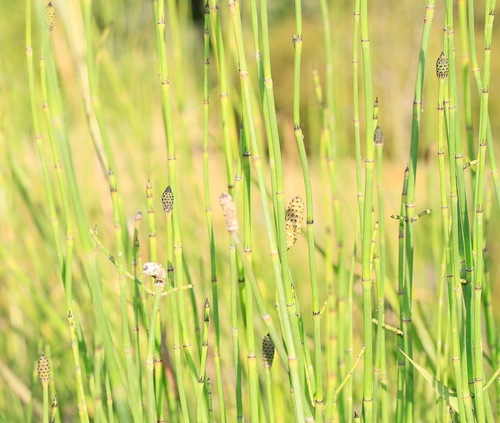
Equisetum pratense
Ehrh.
Meadow horsetail
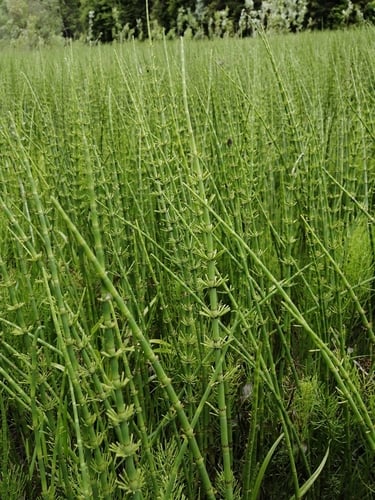
iNaturalist· cc-by-nc
(c) degsis04, some rights reserved (CC BY-NC)
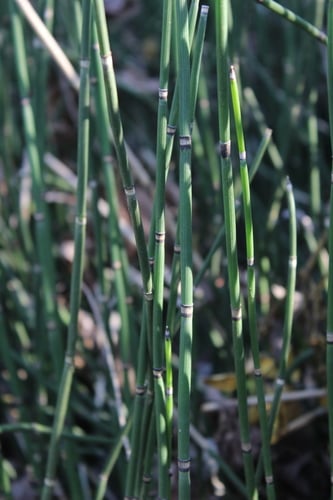
iNaturalist· cc-by
(c) Vladimir Atachkin, some rights reserved (CC BY), uploaded by Vladimir Atachkin
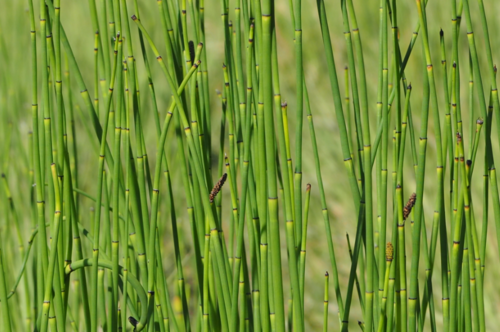
iNaturalist· cc-by-nc
(c) Соколков Юрий Павлович, some rights reserved (CC BY-NC), uploaded by Соколков Юрий Павлович
Summary
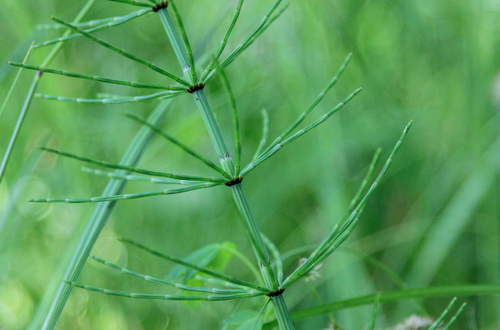
Source: WikipediaEquisetum pratense, commonly known as meadow horsetail, shade horsetail or shady horsetail, is a widespread horsetail (Equisetophyta) and it is a pteridophyte. Shade horsetail can be commonly found in forests with tall trees or very thick foliage that can provide shade and tends to grow closer and thicker around streams, ponds and rivers. The specific epithet pratense is Latin, meaning pasture or meadow dwelling.
Description
A perennial horsetail reaching 60 cm (2 ft) tall. Hardy to UK zone 5. Grows in light sandy, medium loamy, and heavy clay soils with mildly acidic, neutral, or mildly alkaline pH. Tolerates semi-shade or full sun and prefers moist soil. Seeds ripen in April.
Edible Uses
The roots can be eaten raw or cooked, though caution is advised regarding toxicity. One further report notes that Native Americans also ate the peeled stems, base of the plant, roots, and tubers raw, but cautions that this may be inadvisable.
Traditional Uses
CAUTION: The roots are eaten with oil. The roots are also stored and used later. The leaves are dried for a tea drink.
This uses section is brief — help expand it
Medicinal Uses
Horsetails have an unusual chemistry compared to most other plants — they are rich in silica, contain several alkaloids including nicotine, and various minerals.
Known Hazards
Large quantities of the plant can be toxic. This is because it contains the enzyme thiaminase, a substance that can rob the body of the vitamin B complex. In small quantities this enzyme will do no harm to people eating an adequate diet that is rich in vitamin B, though large quantities can cause severe health problems. The enzyme is destroyed by heat or thorough drying, so cooking the plant will remove the thiaminase. The plant also contains equisetic acid - see the notes on medicinal uses for more information.
Distribution
It is a temperate plant. In northern China it grows along the edges of streams between 500-2,800 m above sea level.
Where It Grows
Asia, Britain, Canada, China, Europe, Japan, Korea, Lithuania, Mongolia, North America,Russia, Slovenia, USA,
Cultivation
Prefers a moist soil with a pH between 6.5 and 7.5. Plants are hardy to about -30°c. Plants have a deep and penetrating root system and can be invasive. If grown in the garden they are best kept in bounds by planting them in a large container which can be sunk into the ground.
Propagation
Spores should ideally be collected as soon as they ripen in spring and surface-sown immediately on sterile compost. Keep moist and pot up as soon as plants are large enough to handle. Germination is very difficult. Division is also possible; plants usually spread freely when well sited and rarely need assistance.
Other Uses
Dynamic accumulator.
Notes
There are about 25 Equisetum species.
Also Known As
Ozkabarzdis, Travniška preslica
References (6)
- Beckstrom-Sternberg, Stephen M., and James A. Duke. "The Foodplant Database." http://probe.nalusda.gov:8300/cgi-bin/browse/foodplantdb.(ACEDB version 4.0 - data version July 1994)
- Kermath, B. M., et al, 2014, Food Plants in the Americas: A survey of the domesticated, cultivated and wild plants used for Human food in North, Central and South America and the Caribbean. On line draft. p 339
- Kuhnlein, H. V. and Turner, N. J., 1991, Traditional Plant Foods of Canadian Indigenous Peoples. Food and Nutrition in History and Anthropology Volume 8. Gordon and Breach. p 30
- Moerman, D. F., 2010, Native American Ethnobotany. Timber Press. p 216
- Plants for a Future database, The Field, Penpol, Lostwithiel, Cornwall, PL22 0NG, UK. http://www.scs.leeds.ac.uk/pfaf/
Show all 6 references Hide references
- Urgamal, M., et al, 2014, Conspectus of the Vascular Plants of Mongolia. Mongolia Academy of Sciences Institute of Botany and National University of Mongolia Department of Biology. p 31