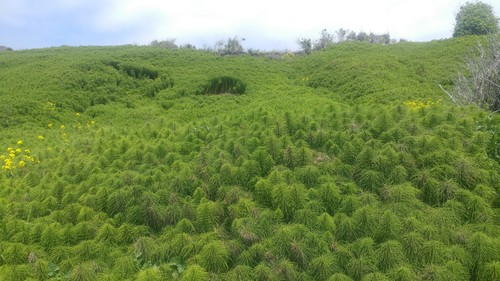
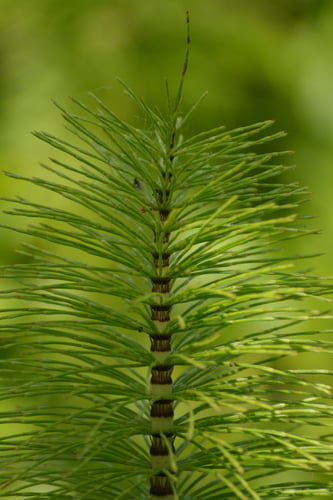
Equisetum fluviatile
L.
Swamp horsetail, Joint grass, Scrub grass
iNaturalist· cc-by
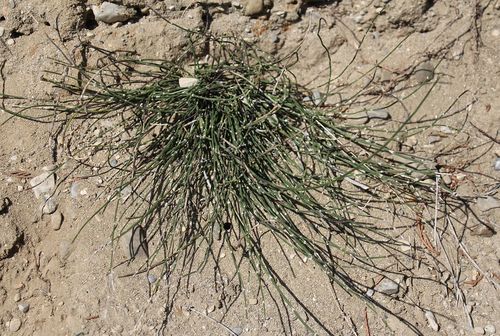
(c) Tatiana Strus, some rights reserved (CC BY), uploaded by Tatiana Strus
iNaturalist· cc-by
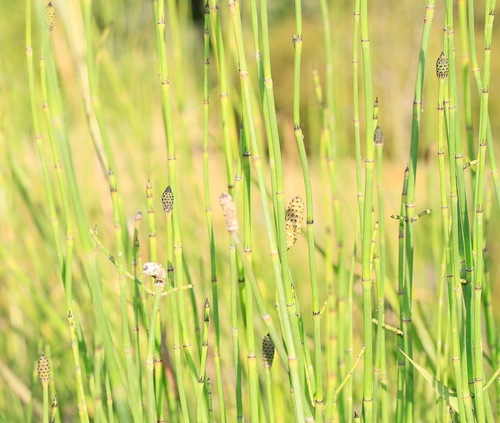
(c) Thomas Gyselinck, some rights reserved (CC BY), uploaded by Thomas Gyselinck
iNaturalist· cc-by-nc
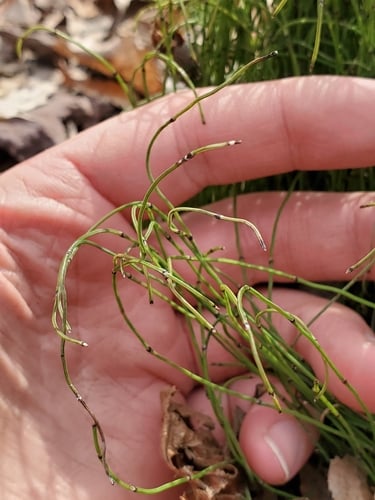
(c) Vladimir Tkalčić, some rights reserved (CC BY-NC), uploaded by Vladimir Tkalčić
Summary
Source: WikipediaEquisetum fluviatile, the water horsetail or swamp horsetail, is a vascular plant in the horsetail family Equisetaceae. It is a perennial herbaceous pteridophyte that reproduces using spores.
Description
A large herb. It has creeping rhizomes. They are hollow in the centre. It grows 40-60 cm tall.
This description is brief — help expand it
Edible Uses
The fertile shoots (strobili), harvested in spring, can be cooked as an asparagus substitute, though they are considered neither particularly palatable nor nutritious. Caution is advised regarding toxicity. The roots can also be cooked; they contain a nutritious starch, though again caution is advised regarding toxicity.
Traditional Uses
CAUTION: The starch from the root tubers is eaten. The young tips are boiled and fried and eaten.
This uses section is brief — help expand it
Medicinal Uses
Horsetails have an unusual chemistry compared to most other plants — they are rich in silica, contain several alkaloids including nicotine, and various minerals. The plant is styptic. The barren stems are used and are most active when fresh, though they can also be dried; sometimes the ashes of the plant are used. A decoction applied externally will stop the bleeding of wounds and promote healing.
Known Hazards
Large quantities of the plant can be toxic. This is because it contains the enzyme thiaminase, a substance that can rob the body of the vitamin B complex. In small quantities this enzyme will do no harm to people eating an adequate diet that is rich in vitamin B, though large quantities can cause severe health problems. The enzyme is destroyed by heat or thorough drying, so cooking the plant will remove the thiaminase. The plant also contains equisetic acid - see the notes on medicinal uses for more information.
Distribution
It is a temperate plant. It grows along river valleys and on the edge of streams. In north China it grows between 500-3,000 m above sea level.
Where It Grows
Alaska, Asia, Britain, China, Europe, Japan, Korea, Luxembourg, Mongolia, North America, Russia,
Cultivation
Prefers a moist soil with a pH between 6.5 and 7.5. Plants are hardy to about -30°c. Plants have a deep and penetrating root system and can be invasive. If grown in the garden they are best kept in bounds by planting them in a large container which can be sunk into the ground.
Propagation
Spores should ideally be collected as soon as they ripen in spring and surface-sown immediately on sterile compost. Keep moist and pot up as soon as plants are large enough to handle. Germination is very difficult. Division is also possible; plants usually spread freely when well sited and rarely need assistance.
Other Uses
Dynamic accumulator.
Notes
There are about 25 Equisetum species.
Synonyms
Also Known As
Water horsetail
References (6)
- Bowser, M., 2017, Handout on Edible Plants of the Kenai Peninsula. USFWS Kenai National Wildlife Refuge p 8
- Hedrick, U.P., 1919, (Ed.), Sturtevant's edible plants of the world. p 291
- Plants for a Future database, The Field, Penpol, Lostwithiel, Cornwall, PL22 0NG, UK. http://www.scs.leeds.ac.uk/pfaf/
- Sp. pl. 2:1062. 1753
- Urgamal, M., et al, 2014, Conspectus of the Vascular Plants of Mongolia. Mongolia Academy of Sciences Institute of Botany and National University of Mongolia Department of Biology. p 30
Show all 6 references Hide references
- www.eFloras.org Flora of China