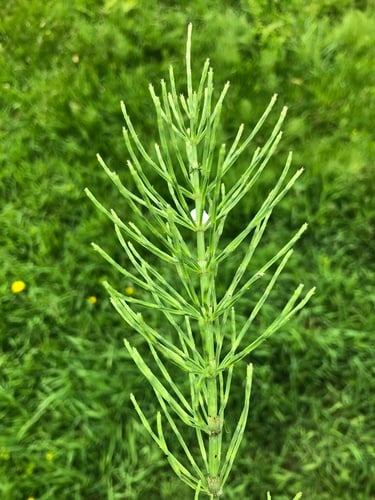
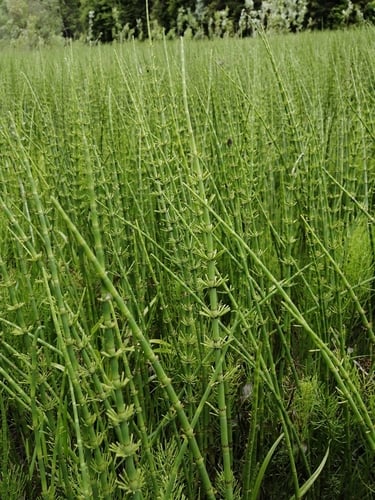
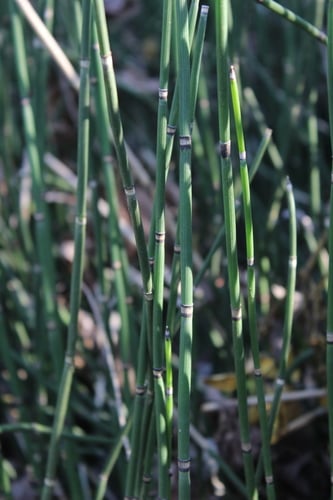
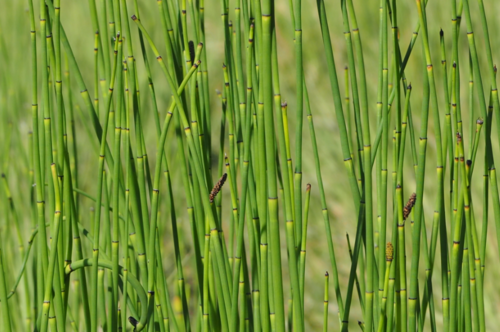
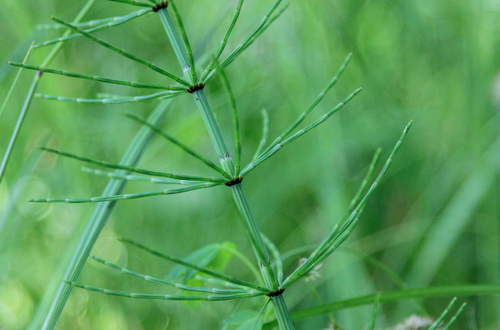
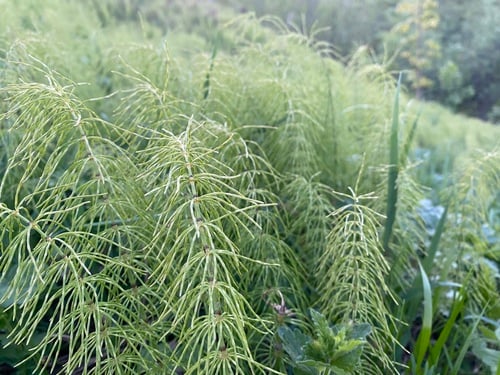
Equisetum ramosissimum
Desf.
iNaturalist· cc-by-nc
(c) Norbert Sauberer, some rights reserved (CC BY-NC), uploaded by Norbert Sauberer
iNaturalist· cc-by
(c) Robert Taylor, some rights reserved (CC BY), uploaded by Robert Taylor
iNaturalist· cc-by-nc
(c) Norbert Sauberer, some rights reserved (CC BY-NC), uploaded by Norbert Sauberer
Summary
Source: WikipediaEquisetum ramosissimum Desf., known as branched horsetail, is a species of evergreen horsetail (genus Equisetum, subgenus Hippochaete).
Description
A Mediterranean herb in the horsetail family with underground rhizomes.
This description is brief — help expand it
Edible Uses
The shoots and stems are eaten.
Medicinal Uses
The juice of the roots is used to relieve the pain of toothache. The stem, which is sweet and slightly bitter tasting, is diuretic. It is said to cleanse the liver and clear the eyesight. It is used in the treatment of hypertension, reddening and swelling pain in the eye, pterygium of the cornea, enteritis, diarrhoea, jaunditic hepatitis and renal lithiasis.
Distribution
It is a Mediterranean plant.
Where It Grows
Africa, Asia, Central Asia, China, Europe, North America, South Africa, Spain, Switzerland, Tajikistan, Tibet, Turkey, Türkiye,
Cultivation
A plant with a very wide range, found from temperate Europe and Asia through to the tropics of Africa and Asia. Easily grown in ordinary garden soil, so long as it remains moist.
Propagation
Spores - Division of the rhizomes. Even small sections will grow away so long as they have a node.
Other Uses
The stems accumulate crystals of silica. They are used as a scourer for cleaning cooking utensils etc. The sandpaper-like qualities of the stem lead to its use in shaping and smoothing tools, ornaments and weapons.
Also Known As
Cola de caballo, Nyer-tshyu
References (3)
- Blanco-Salas, J., et al, 2019, Wild Plants Potentially Used in Human Food in the Protected Area “Sierra Grande de Hornachos” of Extremadura (Spain). Sustainability 2019, 11, 456
- Li, S., et al, 2020, Monpa, memory, and change: an ethnobotanical study of plant use in Mêdog County, South-east Tibet, China. Journal of Ethnobiology and Ethnomedicine. (2020) 16:5 p 17
- World Checklist of Useful Plant Species 2020. Royal Botanic Gardens, Kew