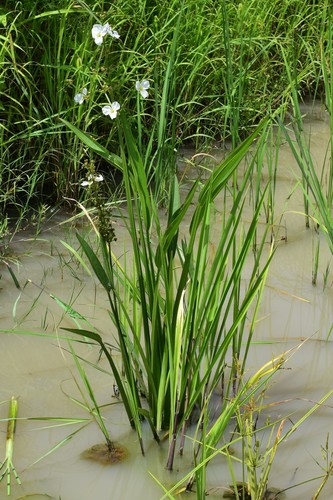
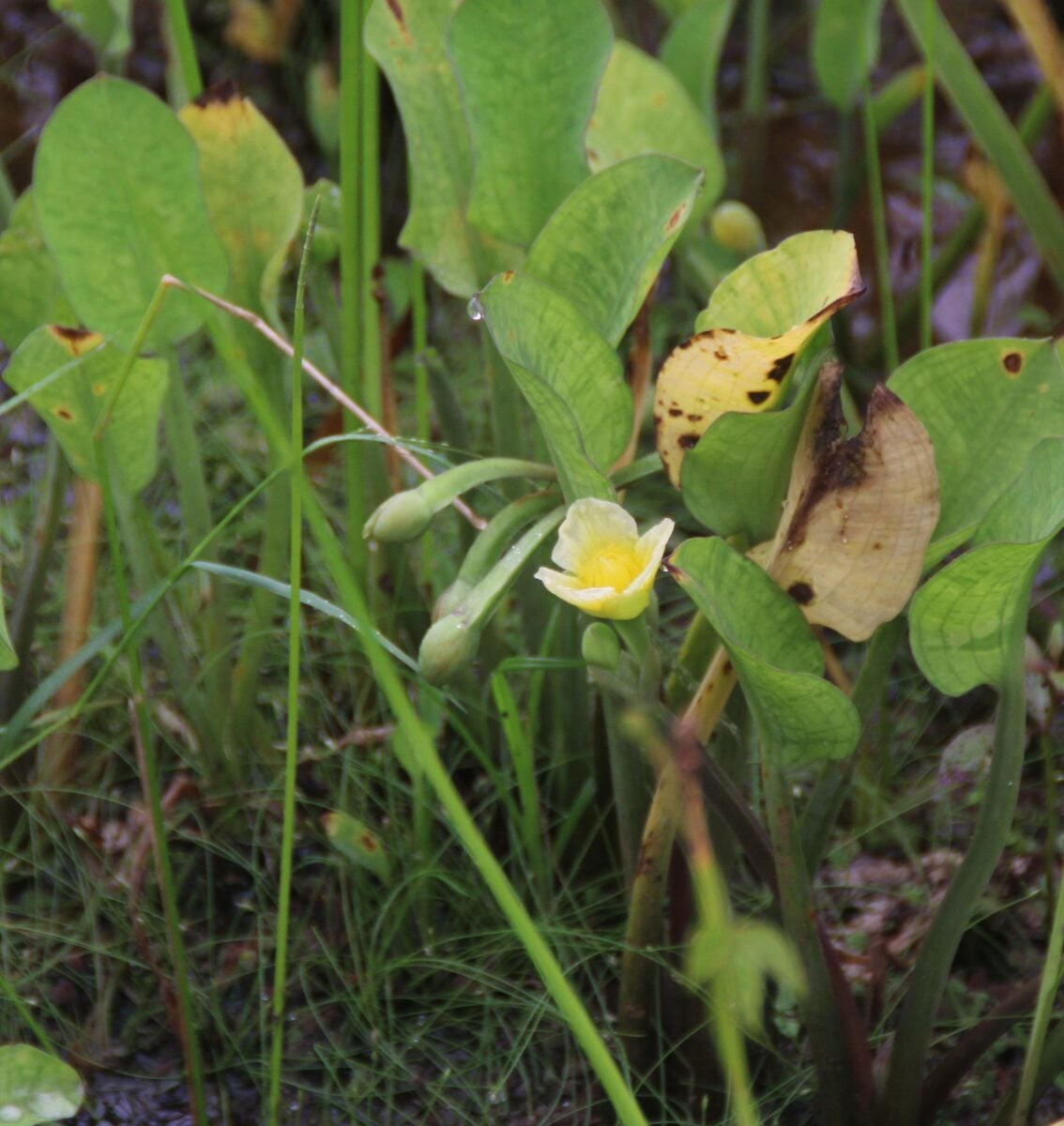
Sagittaria cuneata
Sheldon.
Wapato, arumleaf arrowhead
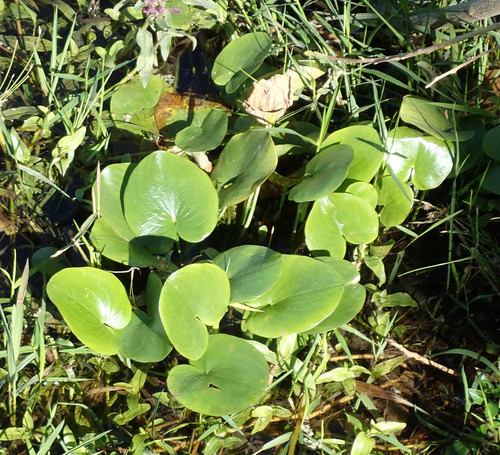
iNaturalist· cc-by-nc
(c) Brittney Miller, some rights reserved (CC BY-NC), uploaded by Brittney Miller
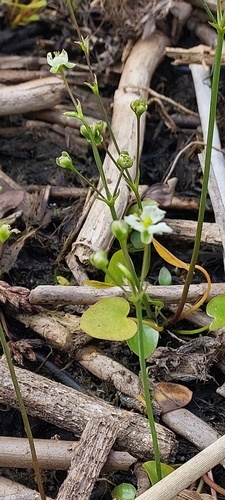
iNaturalist· cc-by
(c) Rob Foster, some rights reserved (CC BY), uploaded by Rob Foster
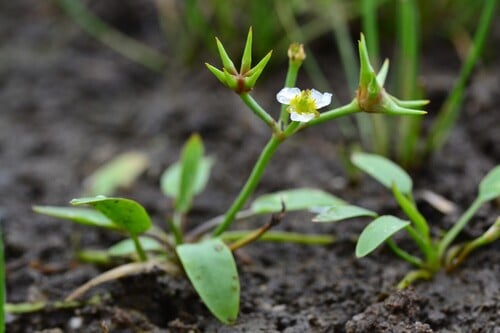
iNaturalist· cc-by-nc
(c) Matthias Buck, some rights reserved (CC BY-NC), uploaded by Matthias Buck
Description
Sagittaria cuneata is a PERENNIAL growing to 0.8 m (2ft 7in). See above for USDA hardiness. It is hardy to UK zone 6. It is in flower from July to August. The species is monoecious (individual flowers are either male or female, but both sexes can be found on the same plant) and is pollinated by Insects. Suitable for: light (sandy), medium (loamy) and heavy (clay) soils. Suitable pH: mildly acid, neutral and basic (mildly alkaline) soils and can grow in very alkaline soils. It cannot grow in the shade. It prefers wet soil and can grow in water.
Edible Uses
Root - raw or cooked. Slightly bitter raw, the roasted tubers are sweet-tasting. Those tubers found at the end of the rootstock are the best. When broken off from the roots the tubers rise to the water surface and are then easily gathered.
Medicinal Uses
Analgesic Stomachic. The plant has been used to treat headaches. The corms have been eaten as a treatment for indigestion.
Distribution
N. America - Nova Scotia to British Columbia, south to Connecticut, Kansas, and California.
Where It Grows
NORTHERN AMERICA: Canada (Northwest Territories, Yukon, Québec, Nova Scotia, Ontario, New Brunswick, Newfoundland and Labrador, Saskatchewan, Alberta, Manitoba, British Columbia), United States (Alaska, Connecticut, Indiana, Maine, Massachusetts, Michigan, New Hampshire, New Jersey, New York, Ohio, Pennsylvania, Vermont, Illinois, Iowa, Kansas, Minnesota, Nebraska, North Dakota, Oklahoma, South Dakota, Wisconsin, Colorado, Idaho, Montana, Oregon, Washington, Wyoming, Arkansas, New Mexico, Texas, California, Nevada, Utah)
Cultivation
A pond or bog garden plant, it requires a moist or wet loamy soil in a sunny position. Succeeds in shallow, still or slowly flowing water. Plants are usually monoecious but dioecious forms are sometimes found. A very polymorphic species. In mud or shallow water the leaves are broad, but in deep water the plant only produces long slender leafstalks. This plant has potential for commercial cultivation as a root crop.
Propagation
Seed - best sown as soon as it is ripe in a pot standing in about 5cm of water. Prick out the seedlings into individual pots when they are large enough to handle, and gradually increase the depth of water as the plants grow until it is about 5cm above the top of the pot. Plant out in late spring or early summer of the following year. Division of the tubers in spring or autumn. Easy. Runners potted up at any time in the growing season.