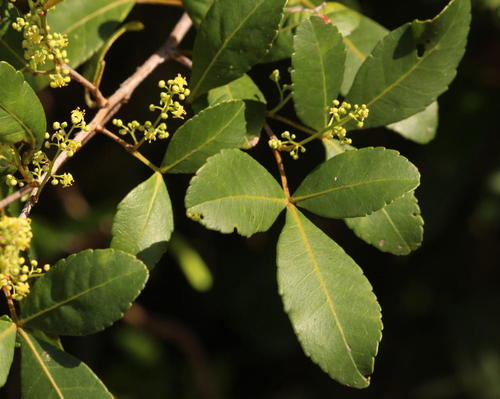
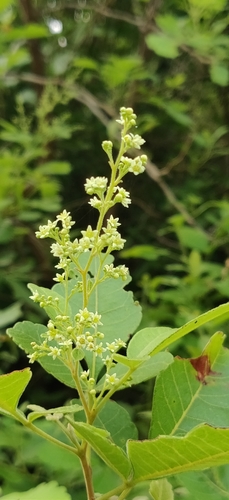
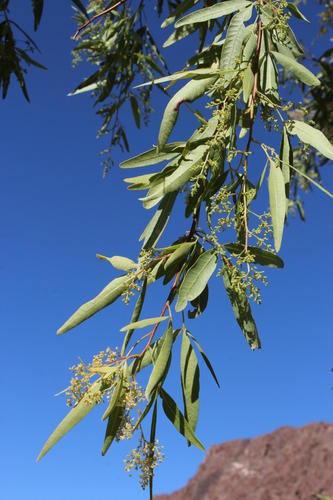
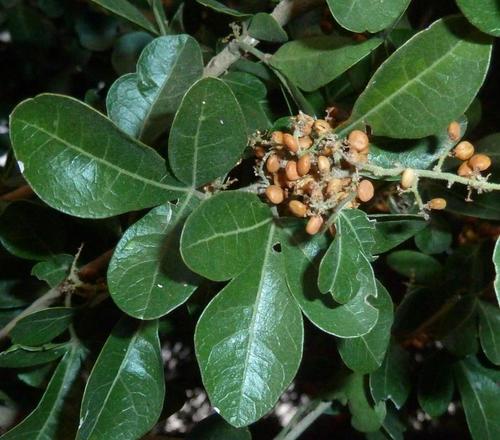
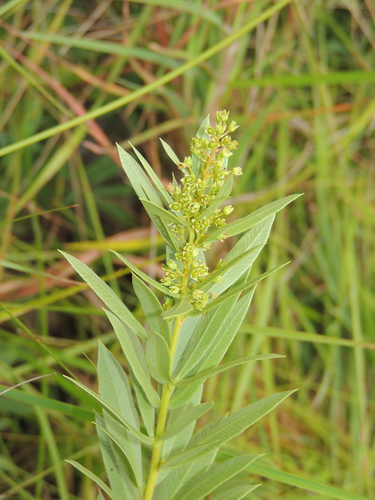
Rhus copallina
L.
Dwarf Sumach, Winged sumac, Flameleaf Sumac, Winged Sumac, Shining Sumac
gbif· cc-by-nc
Wayne Longbottom
gbif· cc-by-nc
spharvell
gbif· cc-by-nc
Luke Blanchard
Description
Rhus copallina is a deciduous Shrub growing to 2 m (6ft) by 2 m (6ft) at a fast rate. See above for USDA hardiness. It is hardy to UK zone 5 and is not frost tender. It is in flower from July to September, and the seeds ripen from October to December. The species is dioecious (individual flowers are either male or female, but only one sex is to be found on any one plant so both male and female plants must be grown if seed is required). and is pollinated by Bees. The plant is not self-fertile. Suitable for: light (sandy), medium (loamy) and heavy (clay) soils, prefers well-drained soil and can grow in nutritionally poor soil. Suitable pH: mildly acid, neutral and basic (mildly alkaline) soils. It cannot grow in the shade. It prefers dry or moist soil and can tolerate drought. The plant can tolerates strong winds but not maritime exposure.
Edible Uses
Oil. Fruit - raw or cooked. An agreeable acid flavour. The fruit is only 3 - 5mm long with very little flesh, but it is borne on dense panicles and is thus easily harvested. When soaked for 10 - 30 minutes in hot or cold water it makes a very refreshing lemonade-like drink (without any fizz of course)[95, 105, 149, 159, 183]. The mixture should not be boiled since this will release tannic acids and make the drink astringent.
Medicinal Uses
Astringent Dysentery Enuresis Galactogogue Poultice SalveA decoction of the root has been used in the treatment of dysentery. An infusion of the roots has been used in the treatment of VD. A poultice of the root has been applied to sores and skin eruptions. A tea made from the bark has been drunk to stimulate milk flow in nursing mothers. A decoction of the bark has been used as a wash for blisters and sunburn blisters. An infusion of the leaves has been used to cleanse and purify skin eruptions. The berries were chewed in the treatment of bed-wetting and mouth sores. Some caution is advised in the use of the leaves and stems of this plant, see the notes above on toxicity.
Known Hazards
There are some suggestions that the sap of this species can cause a skin rash in susceptible people, but this has not been substantiated. See also notes in 'Cultivation Details'.
Distribution
Eastern N. America - Maine to Florida, west to Texas and Illinois.
Where It Grows
NORTHERN AMERICA: Eastern North America from New York to Alabama and Florida,
Cultivation
Experimental Crop Industrial Crop: Dye Industrial Crop: Hydrocarbon Industrial Crop: Tannin Management: Coppice. Succeeds in a well-drained fertile soil in full sun. Tolerates poor soils. Established plants are drought resistant. A very hardy species, when fully dormant it can tolerate temperatures down to about -25°c. However, the young growth in spring can be damaged by late frosts. A very ornamental plant. It is quite fast-growing but short-lived in the wild. In the north of its range plants are dwarf, around 1.2 metres tall, but in the south they can be up to 7 metres tall. Some botanists divide this species into separate species, whilst others see it as a single species with geographical forms. R. copallina is usually a shrub and is found in moist soils in sun or shade. R. copallina lanceolata. Gray. is more tree-like and is found in drier soils. Transplants easily. Plants have brittle branches and these can be broken off in strong winds. Plants are also susceptible to coral spot fungus. Many of the species in this genus are highly toxic and can also cause severe irritation to the skin of some people, whilst other species such as this one are not poisonous. It is relatively simple to distinguish which is which, the poisonous species have axillary panicles and smooth fruits whilst non-poisonous species have compound terminal panicles and fruits covered with acid crimson hairs. The toxic species are sometimes separated into their own genus, Toxicodendron, by some botanists. Plants in this genus are notably resistant to honey fungus. Dioecious. Male and female plants must be grown if seed is required. Carbon Farming - Cultivation: experimental. Management: coppice.
Propagation
Seed - best sown in a cold frame as soon as it is ripe. Pre-soak the seed for 24 hours in hot water (starting at a temperature of 80 - 90c and allowing it to cool) prior to sowing in order to leach out any germination inhibitors. This soak water can be drunk and has a delicious lemon-flavour. The stored seed also needs hot water treatment and can be sown in early spring in a cold frame. When they are large enough to handle, prick the seedlings out into individual pots and grow them on in the greenhouse for their first winter. Plant them out into their permanent positions in late spring or early summer, after the last expected frosts. Cuttings of half-ripe wood, 10cm with a heel, July/August in a frame. Root cuttings 4cm long taken in December and potted up vertically in a greenhouse. Good percentage. Suckers in late autumn to winter.
Other Uses
Dye Hedge Hedge Mordant Oil Resin Soil stabilization Tannin Varnish Wood. The leaves are rich in tannin, so is the bark and the fruit. The leaves can be collected as they fall in the autumn and used as a brown dye or as a mordant. The leaves contain 10 - 25% tannin. Up to 35.8% has been obtained from some plants. An oil is extracted from the seeds. It attains a tallow-like consistency on standing and is used to make candles. These burn brilliantly, though they emit a pungent smoke. The plants extensive root system makes it useful for stabilizing soils. A black dye is obtained from the fruit. A resin, 'copal resin', is obtained from the sap of this plant. When dissolved in any volatile liquid, such as oil of turpentine, it makes a beautiful varnish. (Is this a mistaken entry? Perhaps it belongs with one of the toxic species). Wood - light, soft, coarse grained. It weighs 32lb per cubic foot. Sometimes used for small posts.
Synonyms
Also Known As
Black sumac, Flameleaf sumac, Mountain sumac, Pohon sumak amerika, Shining sumac, Winged sumac