Searsia natalensis
(Bernh. ex Krauss) F. A. Barkley
Natal rhus
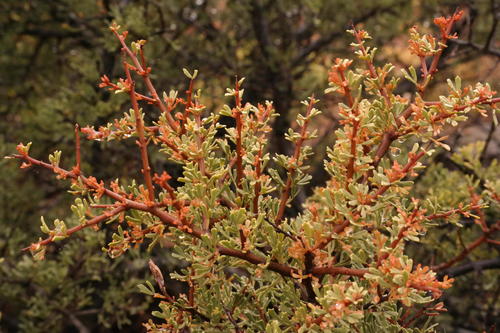
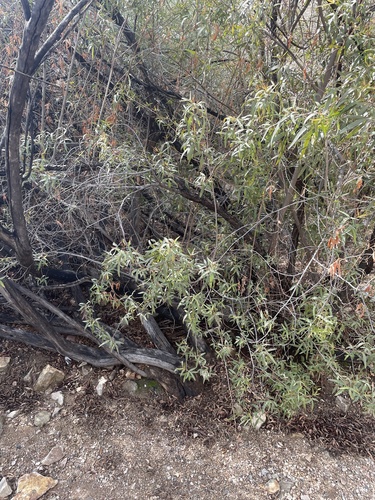
iNaturalist· cc-by
(c) Robert Taylor, some rights reserved (CC BY), uploaded by Robert Taylor
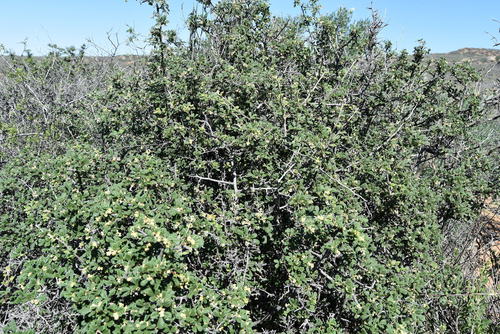
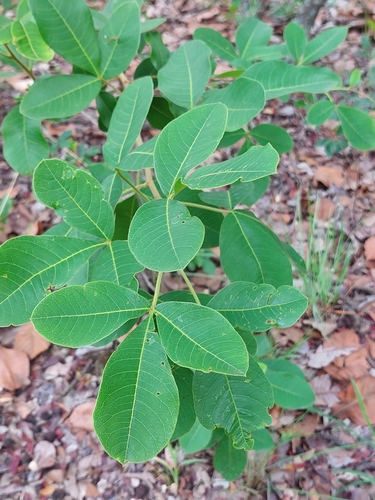
iNaturalist· cc-by-nc
(c) Mike Plagens, some rights reserved (CC BY-NC), uploaded by Mike Plagens
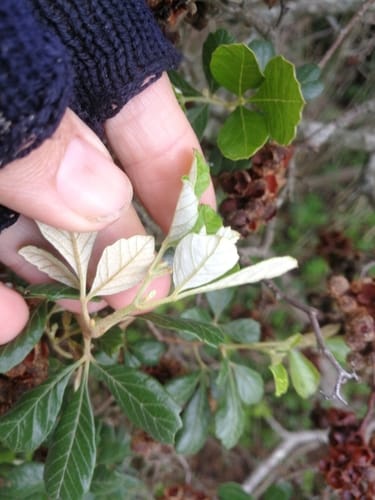
iNaturalist· cc-by-nc
(c) Errol Douwes, some rights reserved (CC BY-NC), uploaded by Errol Douwes
Description
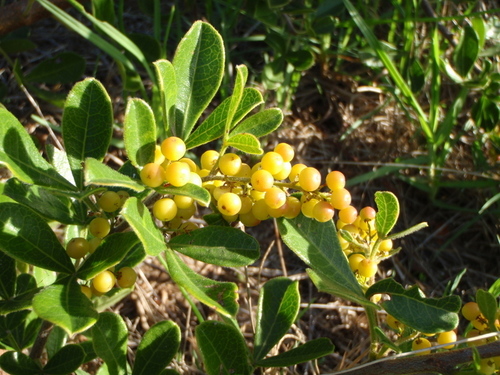
A shrub. It grows to 6 m tall. The branches are rough and grey. The leaves have 3 leaflets. The leaves are leathery. They are a darker green on the upper surface than the lower surface. The leaflets are oblong and narrowing to the base. The tip is notched or bluntly pointed. The central leaflet is up to 9 cm long and 4 cm wide. Young leaves are a red colour. The flowers are small and greenish-white. They occur in branched bunches in the axils of leaves. The fruit are small, round or somewhat flattened and yellow-brown when ripe. They are edible.
Edible Uses
The ripe and green fruit are eaten fresh, squeezed between the hands before eating. The tender shoots and leaves are chewed. The roots are used to flavor soups. The bark is made into tea.
Traditional Uses
The green and the ripe fruit are eaten fresh. It is squeezed between the hands before eating. The roots are used in soup. The tender shoots and leaves are chewed. The bark is used to make tea.
Medicinal Uses
The bark is used to make tea.
Distribution
A tropical plant. It grows in the lowlands and the highlands. It grows on coastal sand dunes, in dune forest and in open woodland. In East Africa it grows from sea level to 3,000 m altitude. It is mostly between 1,600-2,400 m altitude. It can grow in arid places.
Where It Grows
Africa, Arabia, Congo DR, East Africa, Eswatini, Ethiopia, Guinea, Guinée, Kenya, Malawi, Middle East, Mozambique, Saudi Arabia, Somalia, South Africa, Southern Africa, South Sudan, Swaziland, Tanzania, Uganda, West Africa, Zambia, Zimbabwe,
Cultivation
Plants can be grown by seeds.
Other Uses
The twigs are used as toothbrushes. The bark of E African material yields 15.2% tannins. The wood is used to make household items, tool handles and poles for hut-building. The wood is of good quality for fuel and making charcoal. The plant can be grown to help prevent soil erosion on slopes.
Production
Fruit are collected in the dry season.
Other Information
The fruit are eaten especially by children. Adults only eat them during famines.
Notes
There are about 200 Rhus species.
Synonyms
Also Known As
Atami, Awawaca, Busojole, Dabobecha, Dabobeisa, Daboobessa diidaa, Dewa, Elakas, Ewayo, Ilka-adeis, Kabutayta, Kakonsokonso, Kimo, Kitheu, Kubri, Mapirankukute, Mbambi, Mechecho, Mhunguu, Mhugulu, Mkichaka, Mkono-chuma, Mkumba, Mpungulu, Msempele, Msulu, Mtatu, Mtunumbi, Muhehefu, Musekeyo, Mutheo, Metheu, Natal karee, Natal taaibos, Ng'hungulu, Ol-mesigie, Olmisigiyioi, Omusangura, Ongaprie, Ormisigiyoi, Ozokwere, Rwa-rwa, Sangala, Sangia, Sangla, Sangula, Selif, Seria, Shamutet, Siria, Siriewo, Sirongi, Sofa, Tetale, Tomotayita, Umbalamuno
References (60)
- Addis, G., Asfaw, Z & Woldu, Z., 2013, Ethnobotany of Wild and Semi-wild Edible Plants of Konso Ethnic Community, South Ethiopia. Ethnobotany Research and Applications. 11:121-141 (As Rhus natalensis)
- Addis, G., et al, 2013, The Role of Wild and Semi-wild Edible Plants in Household Food Sovereignty in Hamer and Konso Communities, South Ethiopia. Ethnobotany Research & Applications. 11:251-271 (As Rhus natalensis)
- Asfaw, Z. and Tadesse, M., 2001, Prospects for Sustainable Use and Development of Wild Food Plants in Ethiopia. Economic Botany, Vol. 55, No. 1, pp. 47-62 (As Rhus natalensis)
- Balemie, K., & Kebebew, F., 2006, Ethnobotanical study of wild edible plants in Derashe and Kucha Districts, South Ethiopia. Journal of Ethnobiology and Ethnomedicine. 2:53 (As Rhus natalensis)
- Bekele-Tesemma A., Birnie, A., & Tengnas, B., 1993, Useful Trees and Shrubs for Ethiopia. Regional Soil Conservation Unit. Technical Handbook No 5. p 390 (As Rhus natalensis)
Show all 60 references Hide references
- Burkill, H. M., 1985, The useful plants of west tropical Africa, Vol. 1. Kew. (As Rhus natalensis)
- Bussman, R. W., 2006, Ethnobotanyof the Samburu of Mt Nyiru, South Turkana, Kenya. Journal of Ethnobiology and Ethnomedicine. 2:35 (As Rhus natalensis)
- Dale, I. R. and Greenway, P. J., 1961, Kenya Trees and Shrubs. Nairobi. p 28 (As Rhus natalensis)
- Demise, S. & Asfaw, Z., 2020, Ethno Botanical Study of Wild Edible Plants in Adola District, Southern, Ethiopia. International Journal of Research and Analytical Reviews (IJRAR) 7(2). (As Rhus natalensis)
- Dharani, N., 2002, Field Guide to common Trees & Shrubs of East Africa. Struik. p 258 (As Rhus natalensis)
- Emire, A., et al, 2021, Ethnobotanical Study of Wild Edible Fruit Tree and Shrub Species in Adola Rede and Odo Shakiso Midland Districts of Guji Zone, Southern Ethiopia. Int. J. Adv. Res. Biol. Sci. (2021). 8(12): 96-109 (As Rhus natalensis)
- Ethiopia: Famine Food Field Guide. http://www.africa.upenn.edu/faminefood/category3.htm (As Rhus natalensis)
- Feyssa, D. H., et al, 2011, Seasonal availability an consumption of wild edible plants in semiarid Ethiopia; Implications to food security and climate change adaptation. Journal of Horticulture and Forestry 3(5): 138-149 (As Rhus natalensis)
- Fowler, D. G., 2007, Zambian Plants: Their Vernacular Names and Uses. Kew. p 8(As Rhus natalensis)
- Fox, F. W. & Young, M. E. N., 1982, Food from the Veld. Delta Books. p 78 (As Rhus natalensis)
- Gemedo-Dalle, T., et al, 2005, Plant Biodiversity and Ethnobotany of Borana Pastoralists in Southern Oromia, Ethiopia. Economic Botany 59(1) pp. 43-65 (As Rhus natalensis)
- Glover et al, 1966b, (As Rhus natalensis)
- Goode, P., 1989, Edible Plants of Uganda. FAO p 27 (As Rhus natalensis)
- Grivetti, L. E., 1980, Agricultural development: present and potential role of edible wild plants. Part 2: Sub-Saharan Africa, Report to the Department of State Agency for International Development. p 43, 44 (As Rhus natalensis)
- Herb., E. A., 1981, (As Rhus natalensis)
- http://www.fao.org/forestry/25323-096344a3de335832e8f363c3ac5184a66.pdf (As Rhus natalensis)
- Jardin, C., 1970, List of Foods Used In Africa, FAO Nutrition Information Document Series No 2.p 158 (As Rhus natalensis)
- Johns, T., and Kokwaro, J.O., 1991, Food Plants of the Luo of Siayo District, Kenya. Economic Botany 45(1), pp 103-113 (As Rhus natalensis)
- Johns, T., Mhoro, E. B. and Sanaya, P., 1996, Food Plants and Masticants of the Batemi of Ngorongoro District, Tanzania. Economic Botany, Vol. 50, No. 1, pp. 115-121 (As Rhus natalensis)
- Kebebew, M. & Leta, G., 2016, Wild Edible Plant Bio-diversity and Utilization System in Nech Sar National Park, Ethiopia. International Journal of Bio-resource and Stress Management 2016, 7(4):885-896 (As Rhus natalensis)
- Kidane, B., et al, 2014, Ethnobotany of Wild and Semi-wild Edible Fruit Species used by Maale and Ari Ethnic Communities in South Ethiopia. Ethnobotany Research and Applications. Vol. 12, 1546-3465-12-455 (As Rhus natalensis)
- Kokwaro, J. O. and Johns. T., Luo Biological Dictionary. p 121 (As Rhus natalensis)
- Kuhnlein, H. V., et al, 2009, Indigenous Peoples' food systems. FAO Rome p 239 (As Rhus natalensis)
- Le Houerou, H. N., (Ed.), 1980, Browse in Africa. The current state of knowledge. International Livestock Centre for Africa, Ethiopia. p 161 (As Rhus natalensis)
- Long, C., 2005, Swaziland's Flora - siSwati names and Uses http://www.sntc.org.sz/flora/ (As Rhus natalensis)
- Lulekal, E., et al, 2011, Wild edible plants in Ethiopia: a review on their potential to combat food insecurity. Afrika Focus - Vol. 24, No 2. pp 71-121 (As Rhus natalensis)
- Makonda, F. B. S., & Ruffo, C. K., 2011, Species List. NAFORMA, Tanzania (As Rhus natalensis)
- Masters, T., 2021, Traditional food plants of the upper Aswa River catchment of northern Uganda—a cultural crossroads. Journal of Ethnobiology and Ethnomedicine (2021) 17:24
- Maundu, P. et al, 1999, Traditional Food Plants of Kenya. National Museum of Kenya. 288p (As Rhus natalensis)
- Mbuvi, M. T. E., et al, 2019, Annonated checklist of plant species of Loita Forest Narok County, Kenya. Int. J. Adv. Res. Biol. Sci. (2019). 6(3): 54-110 (As Rhus natalensis)
- Mbuya, L.P., Msanga, H.P., Ruffo, C.K., Birnie, A & Tengnas, B., 1994, Useful Trees and Shrubs for Tanzania. Regional Soil Conservation Unit. Technical Handbook No 6. p 426 (As Rhus natalensis)
- Moffett, R. O., 2007, Name changes in the Old World Rhus and recognition of Searsia (Anacardiaceae). Bothalia 37,2: 165-175 (2007)
- Molla, A., Ethiopian Plant Names. http://www.ethiopic.com/aplants.htm (As Rhus natalensis)
- Mpasiwakomu, R. A., 2017, The Diversity and Utilization of Wild Edible and Medicinal Plant Species found in Uvinza Miombo Woodlands, Tanzania. M. Sc. thesis University of Tanzania. (As Rhus natalensis)
- Msuya, T. S., et al, 2010, Availability, Preference and Consumption of Indigenous Foods in the Eastern Arc Mountains, Tanzania, Ecology of Food and Nutrition, 49:3, 208-227 (As Rhus natalensis)
- Mutie, F. G., 2020, Conservation of Wild Food Plants and Their Potential for Combatting Food Insecurity in Kenya as Exemplified by the Drylands of Kitui County. Plants 2020, 9, 1017
- Mutie, F. M., et al, 2023, Important Medicinal and Food Taxa (Orders and Families) in Kenya, Based on Three Quantitative Approaches. Plants 2023, 12, 1145
- Ocho, D. L., et al, 2012, Assessing the levels of food shortage using the traffic light metaphor by analyzing the gathering and consumption of wild food plants, crop parts and crop residues in Konso, Ethiopia. Journal of Ethnobiology and Ethnomedicine 8:30 (As Rhus natalensis)
- Ojelel, S. & Kakudidi E. K., 2015, Wild edible plant species utilized by a subsistence farming community in the Obalanga sub-county, Amuria district, Uganda. Journal of Ethnobiology and Ethnomedicine. 11:7 (As Rhus natalensis)
- Oryema, C., et al, 2013, Edible wild fruit species of Gulu District, Uganda. International Journal of Biology and Biological Sciences Vol 2(4) pp 068-082 (As Rhus natalensis)
- Palgrave, K.C., 1996, Trees of Southern Africa. Struik Publishers. p 485 (As Rhus natalensis)
- Peters, C. R., O'Brien, E. M., and Drummond, R.B., 1992, Edible Wild plants of Sub-saharan Africa. Kew. p 51 (As Rhus natalensis)
- Royal Botanic Gardens, Kew (1999). Survey of Economic Plants for Arid and Semi-Arid Lands (SEPASAL) database. Published on the Internet; http://www.rbgkew.org.uk/ceb/sepasal/internet [Accessed 28th March 2011] (As Rhus natalensis)
- Ruffo, C. K., Birnie, A. & Tengnas, B., 2002, Edible Wild Plants of Tanzania. RELMA p 560 (As Rhus natalensis)
- Ruiters-Welcome, A. K., 2019, Food plants of southern Africa. Ph.D. thesis. Univ. of Johannesburg p 16
- Swaziland's Flora Database http://www.sntc.org.sz/flora (As Rhus natalensis)
- Tabuti, J. R. S., 2012, Important Woody Plant Species, their Management and Conservation Status in Balawoli Sub-country, Uganda. Ethnobotany Research & Applications 10:269-286 (As Rhus natalensis)
- Teklehaymanot, T., 2017, An ethnobotanical survey of medicinal and edible plants of Yalo Woreda in Afar regional state, Ethiopia. Journal of Ethnobiology and Ethnomedicine 13:40 (As Rhus natalensis)
- Termote, C., et al, 2014, Assessing the potential of wild foods to reduce the cost of a nutritionally adequate diet: An example from eastern Baringo District, Kenya. Food and Nutrition Bulletin, vol. 35, no. 4 (As Rhus natalensis)
- von Katja Rembold, 2011, Conservation status of the vascular plants in East African rain forests. Dissertation Universitat Koblenz-Landau p 180 (As Rhus natalensis)
- Walsh, M., 2009, The Use of Wild and Cultivated Plants as famine Foods on Pemba Island, Zanzibar. Études océan Indien. 42-43 (As Rhus natalensis)
- Welcome, A. K. & Van Wyk, B.-E., 2019, An inventory and analysis of the food plants of southern Africa. South African Journal of Botany 122 (2019) 136–179
- Williamson, J., 2005, Useful Plants of Malawi. 3rd. Edition. Mdadzi Book Trust. p 215 (As Rhus natalensis)
- World Checklist of Useful Plant Species 2020. Royal Botanic Gardens, Kew
- www.worldagroforestrycentre.org/treedb/ (As Rhus natalensis)