Searsia parviflora
(Roxb.) F. A. Barkley
Sumac
iNaturalist· cc-by
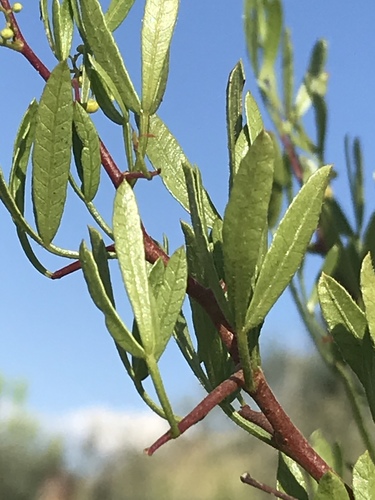
(c) T R Shankar Raman, some rights reserved (CC BY), uploaded by T R Shankar Raman
iNaturalist· cc-by-sa
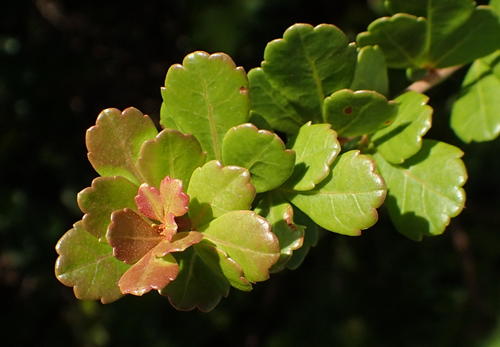
(c) Dinesh Valke, some rights reserved (CC BY-SA)
iNaturalist· cc-by-sa
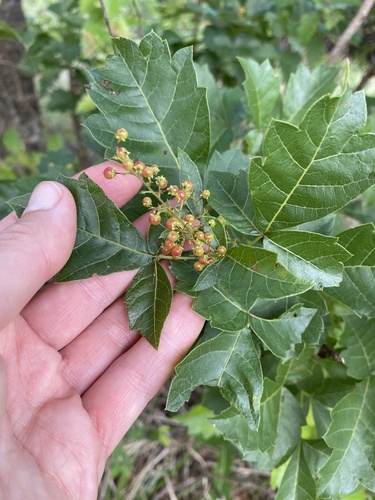
(c) Dinesh Valke, some rights reserved (CC BY-SA)
Summary
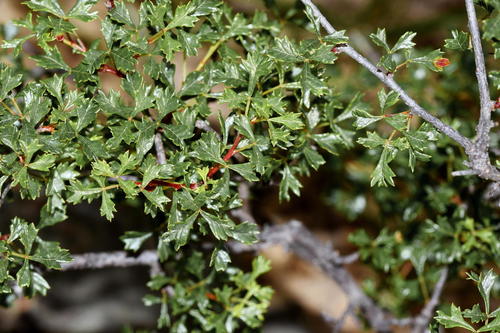
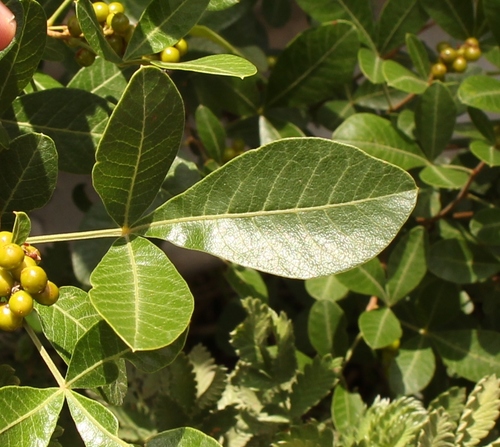
Source: WikipediaSearsia parviflora, commonly known as small-flowered poison sumac, is a species of flowering plant native to the northern Indian subcontinent and Myanmar. It is a much-branched shrub or small tree bearing stalked leaves with three leaflets; the end leaflet is larger than the other two. The leaflets are obovate, with rounded tips, tapering bases and irregularly toothed margins. The flowers are tiny, yellowish and fragrant. The fruit is small, round and red when ripe. S. parviflora is found in the Himalayas, from Kumaun to Bhutan, at elevations of 700–1,100 metres (2,300–3,600 ft).
Description
An evergreen shrub. It has many branches. The leaves have stalks. They are alternate and have 3 leaflets. The lower pair of leaflets are smaller. They have irregular teeth. They are hairy on both surfaces. The tip is rounded. They gradually taper to the base. The flowers are yellowish and have a scent. The fruit are small and round. They are red when ripe.
Edible Uses
The ripe fruit are eaten raw, pickled, or dried and mixed with salt for use like tamarind. They have a sour taste and are sold in markets.
Traditional Uses
The ripe fruit eaten raw or pickled. They are sour in taste. They are also dried. They are mixed with salt and used like tamarind.
This uses section is brief — help expand it
Distribution
A tropical and subtropical plant. In Nepal plants grow between 700-1400 m altitude. The grow on open, dry hillsides.
Where It Grows
Asia, Bhutan, Himalayas, India, Myanmar, Nepal, SE Asia, Sri Lanka,
Cultivation
Plants are grown from seed.
Other Information
Fruit are sold in markets.
Notes
There are about 200 Rhus species.
Nutrition
| Part | Moisture | kJ | kcal | Protein | Vit A | Vit C | Iron | Zinc |
|---|---|---|---|---|---|---|---|---|
| Fruit | — | — | 5.1 | — | — | — | — | — |
Synonyms
Also Known As
Dantya, Dungla, Mai-kokkyin, Ninas, Ninawa, Raitung, Ranel, Samak, Samakdana, Satibair, Saunla, Tumra, Tung, Tunga, Tungla
References (11)
- Ambasta S.P. (Ed.), 2000, The Useful Plants of India. CSIR India. p 523 (As Rhus parviflora)
- Bajracharya, D., 1980, Nutritive Values of Nepalese Edible Wild Fruits. Z. Lebensm. Unters. Forsch. 171: 363-366 (As Rhus parviflora)
- Dhyani, S.K., & Sharma, R.V., 1987, Exploration of Socio-economic plant resources of Vyasi Valley in Tehri Garwhal. J. Econ. Tax. Bot. Vol. 9 No. 2 pp 299-310 (As Rhus paniflora)
- Dobriyal, M. J. R. & Dobriyal, R., 2014, Non Wood Forest Produce an Option for Ethnic Food and Nutritional Security in India. Int. J. of Usuf. Mngt. 15(1):17-37 (As Rhus parviflora)
- Fl. ind. ed. 1832, 2:100. 1832 (As Rhus parviflora)
Show all 11 references Hide references
- GUPTA (As Rhus parviflora)
- Hedrick, U.P., 1919, (Ed.), Sturtevant's edible plants of the world. p 560 (As Rhus parviflora)
- Malhotra, C.L.., et al, 1985, Additional Notes on the wild edible plants of India J. Econ. Tax. Bot. Vol 6. No.2 pp 481-482 (As Rhus parviflora)
- Manandhar, N.P., 2002, Plants and People of Nepal. Timber Press. Portland, Oregon. p 398 (As Rhus parviflora)
- Moffett, R. O., 2007, Name changes in the Old World Rhus and recognition of Searsia (Anacardiaceae). Bothalia 37,2: 165-175 (2007)
- Negi, K.S., 1988, Some little known wild edible plants of U.P. Hills. J. Econ. Tax. Bot. Vol. 12 No. 2 pp 345-360 (As Rhus parviflora)